
Thyroid Artery Embolization
- Home / Thyroid Artery Embolization
What Is Thyroid Artery Embolization?
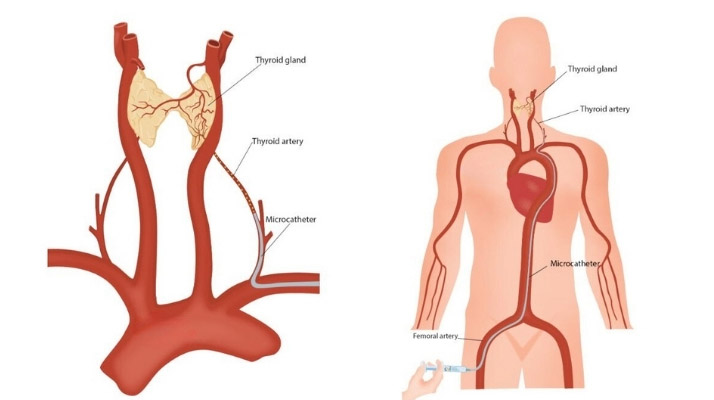
Thyroid Artery Embolization is a minimally invasive, image-guided procedure used to treat selected thyroid conditions by selectively reducing blood flow to the thyroid gland or abnormal thyroid tissue. By decreasing the blood supply, overactive or enlarged thyroid tissue gradually shrinks, leading to improvement in symptoms. This treatment is typically considered for patients with symptomatic thyroid enlargement (goitre) or hyperfunctioning thyroid tissue who are not ideal candidates for surgery, or who wish to avoid surgical removal of the thyroid. Thyroid artery embolization allows targeted treatment without a neck incision, while preserving surrounding structures. A detailed imaging assessment of thyroid is essential to determine whether embolization is an appropriate and safe option for each patient.
Symptoms That May Benefit From Thyroid Artery Embolization
Thyroid artery embolization may be advised when thyroid-related symptoms begin to interfere with daily life or quality of health.
01

Visible neck swelling or enlarged thyroid (goitre)
Noticeable swelling in the neck due to thyroid gland enlargement.
02
Pressure or discomfort in the neck
Persistent pressure or discomfort experienced around the neck area during daily activities.
03
Difficulty swallowing or a choking sensation
Trouble swallowing or choking sensation caused by pressure on throat structures.
04
Shortness of breath due to compression
Breathing difficulty caused by compression of the airway or nearby structures.
05
Symptoms of excess thyroid hormone such as palpitations, tremors, heat intolerance, or weight loss in selected cases
Why Choose Thyroid Artery Embolization at Vikash IR Clinic?
Treatment of thyroid conditions depends on symptom severity, thyroid function, anatomy, and overall health. At Vikash IR Clinic, thyroid artery embolization is offered only after a careful imaging-based and clinical evaluation confirms that it is the most appropriate option. The procedure targets the thyroid’s blood supply using image guidance, reducing gland size or activity while avoiding a neck incision and preserving surrounding structures. The emphasis is on correct patient selection, precise procedural planning, and coordination with endocrinologists and referring physicians. This approach aims to achieve symptom relief with lower procedural risk, shorter recovery time, and without permanent removal of the thyroid gland.
Procedure Overview & Recovery Timeline
Thyroid artery embolization is performed through a small puncture in the wrist or groin, without any surgical incision. Using real-time imaging guidance, a thin catheter is navigated to the arteries supplying the thyroid gland. Embolic materials are then delivered to selectively reduce blood flow to the targeted thyroid tissue. The procedure usually takes one to two hours and is performed under local anesthesia with mild sedation. Most patients are monitored for a short period and may require a brief hospital stay, depending on clinical condition. Recovery is generally smooth. Mild neck discomfort, low-grade fever, or fatigue may occur temporarily and are managed with medications. Most patients can return to normal activities within a few days. Improvement in symptoms and reduction in thyroid size or activity occur gradually over weeks to months, with follow-up imaging and blood tests used to monitor outcomes.

Surgery is not always the first answer. Find out if a minimally invasive, thyroid-preserving treatment is right for you.
Book your scan today for fast, accurate diagnosis and expert care you can trust.
Your health is our priority. Book an appointment or speak with our care team now.
Book an Appointment
Frequently Asked Questions About Thyroid Artery Embolization
MRI is recommended when you experience persistent pain, neurological symptoms, or unexplained changes in your body. It helps doctors identify the exact cause and plan accurate treatment with clear internal imaging.
1. What is thyroid artery embolization?
Thyroid artery embolization is a minimally invasive, image-guided procedure that reduces blood flow to overactive or enlarged thyroid tissue to improve symptoms.
2. Is thyroid artery embolization a surgical procedure?
No. It is a non-surgical treatment performed through a small puncture in the wrist or groin, without any neck incision.
3. Who may benefit from thyroid artery embolization?
It may be considered for selected patients with thyroid enlargement or hyperfunctioning thyroid tissue without the risks of surgery
4. Will my thyroid be removed during the procedure?
No. The thyroid gland is not removed. The procedure works by selectively reducing blood supply to targeted thyroid tissue.
5. Is thyroid artery embolization safe?
Yes, when performed in by experienced specialists, the procedure has a good safety profile.
6. How long does the procedure take?
The procedure typically takes one to two hours and is performed under local anesthesia with mild sedation.
7. Will thyroid function be affected after embolization?
Thyroid function is closely monitored. In many cases, hormone levels improve or stabilise after treatment, but follow-up blood tests are important.
8. How long is the recovery period?
Most patients experience mild discomfort and can return to normal daily activities within a few days.
9. Will I still need medications after embolization?
Some patients may require continued or adjusted medication depending on thyroid function and clinical response.
10. How is eligibility for thyroid artery embolization decided?
Eligibility is determined through detailed imaging, thyroid function tests, and clinical evaluation to ensure the procedure is appropriate and safe.