
Thyroid Nodule Ablation Treatment in Bangalore
Shrink benign thyroid nodules without surgery, without a neck scar and without losing your thyroid
A lump in the neck. Trouble swallowing. A tight, choking feeling when you lie down. Or simply a visible swelling that makes you self-conscious. When a thyroid nodule starts affecting your life, the word “surgery” is often the next thing you hear.
For many benign nodules, it does not have to be.
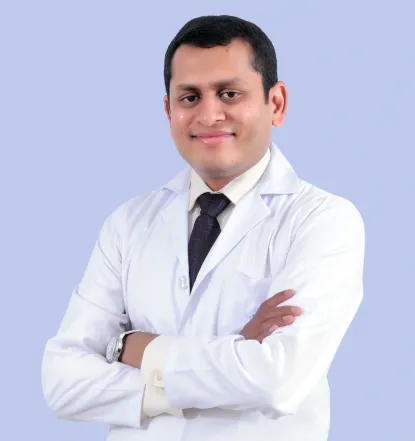
Thyroid nodule ablation treatment in Bangalore is available at Vikash IR Clinic with Dr. Vikash Chennur, a fellowship-trained interventional radiologist. Using ultrasound-guided thyroid radiofrequency ablation (RFA), the nodule is treated through a needle puncture: no incision, no stitches, no general anaesthesia and, in most cases, no hospital stay.
- AIIMS Gold Medalist
- Fellowship-trained interventional radiologist
- Practice across India, Canada and Australia
- Two decades of experience
What Is Thyroid Nodule Ablation?
Thyroid nodule ablation is a minimally invasive, image-guided treatment that uses heat to shrink a benign thyroid nodule. The most widely used technique is radiofrequency ablation (RFA).
Under real-time ultrasound guidance, a thin electrode is placed inside the nodule through the skin. Radiofrequency energy heats and destroys the abnormal nodule tissue in a controlled way. Over the following weeks and months, your body gradually absorbs the treated tissue, the nodule shrinks, and symptoms such as pressure and the visible swelling improve.
Because the treatment is targeted at the nodule, the healthy part of the thyroid is left to keep working, which is one of the biggest advantages over surgery.
Is Thyroid Nodule Treatment Needed? Signs to Look For
Most thyroid nodules are benign, and many are harmless and only need regular monitoring. Treatment is worth discussing when a nodule:
- Is visible as a lump or swelling in the front of the neck
- Causes difficulty swallowing or a feeling of something stuck in the throat
- Causes a sense of pressure or tightness in the neck, especially when lying down
- Causes voice changes, a hoarse voice or a persistent cough
- Is growing steadily on follow-up ultrasound
- Produces excess thyroid hormone (a “hot” or autonomously functioning nodule)
- Is a cosmetic concern that affects your confidence
If any of these sound familiar, a consultation for thyroid nodule treatment in Bangalore can tell you whether ablation is a suitable option for you.
First, We Confirm the Nodule Is Benign
Ablation is meant for benign nodules. Before recommending any treatment, Dr. Vikash will review:
- Neck ultrasound, to assess the size, structure and risk features of the nodule
- FNAC (fine needle aspiration cytology) or biopsy, to confirm that the nodule is not cancerous. Sometimes this is repeated for certainty
- Thyroid function tests (TSH, T3, T4), to see how the gland is working
If your reports suggest a suspicious or malignant nodule, we will tell you honestly, and guide you to the right specialist and treatment. Ablation is never offered when it is not the safest choice for you.
How Thyroid Radiofrequency Ablation Is Done: Step by Step
- Consultation and reports
Dr. Vikash reviews your symptoms, ultrasound, FNAC and blood tests, and examines your neck.
- Preparation
You lie comfortably on your back with your neck gently extended. The skin of the neck is cleaned and the area is numbed with local anaesthesia. No general anaesthesia is needed.
- Ultrasound guidance
A detailed ultrasound maps the nodule and the nearby structures that must be protected, such as the voice-box nerves, the carotid artery and the windpipe. A thin layer of fluid is sometimes placed around the thyroid to create a safe margin.
- Ablation
A fine electrode is guided into the nodule, and radiofrequency energy is delivered in a controlled, step-by-step manner until the whole nodule has been treated. You are awake and can communicate throughout, and we may ask you to speak so we can check your voice during treatment.
- Observation
After the procedure you rest briefly. Most patients go home the same day.
- Follow-up
The nodule shrinks progressively over the coming months. Follow-up ultrasounds and thyroid tests track the response.
Benefits of Thyroid Nodule Ablation
- No neck scar: treatment is done through a needle puncture
- No general anaesthesia: performed under local anaesthesia
- Thyroid function usually preserved: healthy thyroid tissue is spared, so many patients avoid lifelong thyroid tablets
- Day-care procedure: most patients go home the same day
- Quick recovery: many return to routine activities within a day or two
- Lower risk than open surgery in suitable patients
- Meaningful shrinkage: nodules commonly reduce by around half or more in volume over several months, with the best results often seen at 6 to 12 months, though individual results vary
- Symptom relief: pressure, swallowing difficulty and visible swelling usually improve as the nodule shrinks
Thyroid Ablation vs Thyroid Surgery
| Thyroid Radiofrequency Ablation | Thyroid Surgery | |
|---|---|---|
| Approach | Needle with RF energy under ultrasound | Surgical removal of part or all of the thyroid |
| Neck scar | None | Yes |
| Anaesthesia | Local | General |
| Hospital stay | Usually same day | 1 to 3 days |
| Recovery | A day or two | One to two weeks or longer |
| Healthy thyroid tissue | Preserved | Partly or fully removed |
| Lifelong thyroid tablets | Usually not needed | Often needed after total removal |
| Best suited for | Benign nodules | Cancer, suspicious or very large nodules |
| Result | Gradual shrinkage over months | Immediate removal |
Neither option is better for everyone. Dr. Vikash will explain which one fits your reports and your priorities.
Who Is a Good Candidate for Thyroid Ablation?
Thyroid nodule ablation is commonly considered for people who:
- Have a nodule confirmed benign on FNAC or biopsy
- Have symptoms such as pressure, swallowing difficulty or a visible lump, or have a nodule that is growing
- Have an autonomously functioning (“hot”) nodule and prefer to avoid surgery or radioactive iodine
- Wish to avoid a neck scar or general anaesthesia
- Want to preserve thyroid function
- Are not suitable for surgery because of other medical conditions
Ablation may not be suitable if the nodule is suspicious or cancerous, is very large or extends behind the breastbone, lies dangerously close to critical structures, or if you are pregnant. For mostly fluid-filled (cystic) nodules, a related technique such as ethanol ablation may be a better first choice, and your doctor will advise you.
Risks and Safety: What You Should Know
In carefully selected patients, treated by an experienced operator under ultrasound guidance, RFA is considered a safe procedure. As with any treatment, there are some risks, which Dr. Vikash will discuss with you beforehand:
- Neck pain or soreness for a few days, controlled with simple medication
- Mild swelling, bruising or a small collection of blood near the puncture site
- Temporary hoarseness from irritation of the voice-box nerve, which usually settles on its own and is uncommon
- Rarely, a lasting voice change, skin burn or infection
- Regrowth of part of the nodule over time in some patients, which may need follow-up or a repeat session
Careful patient selection, ultrasound-guided technique and attention to the structures around the thyroid are central to doing this safely.
Recovery After Thyroid Radiofrequency Ablation
- Same day: you rest, and most patients go home after a short observation
- First few days: mild neck soreness or a feeling of fullness, managed with simple pain relief
- One to two days: most people return to desk work and routine activities, with exact timing advised by the doctor
- Weeks to months: the nodule shrinks progressively as the body absorbs the treated tissue
- Follow-up: ultrasound and thyroid tests, usually at about one, three, six and twelve months
Contact the clinic if you have a fever, rapidly increasing neck swelling, difficulty breathing or swallowing, or a sudden change in your voice.
Thyroid Nodule Ablation Cost in Bangalore
Patients often ask about thyroid nodule ablation cost in Bangalore. There is no single fixed price, because the total depends on factors such as:
- The hospital or facility where the procedure is done
- The size, number and type of nodules
- Whether one or more treatment sessions are needed
- Pre-procedure tests such as ultrasound, FNAC and thyroid profile
- Follow-up scans and consultations
- Whether health insurance covers the procedure
After reviewing your reports, our team gives you a clear estimate so you know what to expect. When comparing costs, it helps to look at the whole picture: no general anaesthesia, no scar, no hospital stay, quicker return to work and a lower chance of needing lifelong thyroid medication. Please call or WhatsApp the clinic for a personal estimate.
How to Choose the Best Doctor for Thyroid Nodule Ablation in Bangalore
When you search for the best doctor for thyroid nodule ablation in Bangalore, remember that this procedure depends heavily on the operator’s skill with ultrasound and fine needle work near delicate structures. Look for:
- A fellowship-trained interventional radiologist with regular experience in image-guided ablation
- Strong ultrasound skills, because the entire procedure is guided in real time
- A thorough work-up: FNAC, ultrasound and thyroid tests before any decision
- Honest counselling that includes when surgery or simple monitoring is the better option
- A clear plan for follow-up and for managing regrowth if it occurs
- Transparent costs with no surprises
Why Choose Dr. Vikash Chennur for Thyroid Ablation in Bangalore?

- AIIMS Gold Medalist, recognised for academic excellence at India’s premier medical institute
- Fellowship training and clinical practice across India, Canada and Australia
- Two decades of experience in complex image-guided, vascular and oncologic interventions
- Patient-first approach: you are listened to, your options are explained in plain language, and treatment is advised only when it is truly right for you
- Ethical, individualised decisions, including honest advice when ablation is not your best option
- Convenient clinic at Bannerghatta Road, J.P. Nagar, easily reached from South Bengaluru
What Our Patients Say
“I was diagnosed with a thyroid nodule and was very scared about surgery and scars. Dr. Vikash explained a minimally invasive treatment that was safe and effective. The procedure was quick and almost painless. I was able to go home the same day. My nodule has reduced and I feel relieved now.”
Frequently Asked Questions
What is thyroid nodule ablation treatment?
It is a minimally invasive procedure that uses heat, usually radiofrequency energy, delivered through a needle under ultrasound guidance to shrink a benign thyroid nodule without open surgery.
Is thyroid radiofrequency ablation safe?
In carefully selected patients, treated by an experienced doctor under ultrasound guidance, it is considered a safe procedure. Possible risks, such as temporary pain, bruising or, rarely, voice changes, are explained before treatment.
Does ablation work for cancerous thyroid nodules?
Ablation is intended for benign nodules. A diagnosis is confirmed first with ultrasound and FNAC or biopsy, and suspicious or malignant nodules are managed differently.
Is the procedure painful?
The neck is numbed with local anaesthesia, so most patients feel only mild pressure or warmth. Some soreness in the neck afterwards is common and is easily managed.
How long does the procedure take, and can I go home the same day?
The treatment usually takes under an hour, and most patients go home the same day after a short observation.
Will the nodule disappear completely?
Most nodules shrink substantially over several months, but the amount varies, and a small remnant may remain. The goal is to relieve symptoms and reduce the swelling.
Will I need thyroid medication after the procedure?
Because healthy thyroid tissue is preserved, most patients do not need lifelong thyroid tablets, but your thyroid tests are monitored during follow-up.
Can the nodule grow back after ablation?
Some nodules can partially regrow over time. Regular follow-up allows early detection, and a repeat treatment can be considered if needed.
When can I return to work?
Many people return to routine activities and desk work within a day or two. Your doctor will advise you based on your case.
What is the cost of thyroid nodule ablation in Bangalore?
The cost depends on the nodule size and number, the facility and follow-up needs. Contact the clinic for an estimate after your reports have been reviewed.
Book Your Thyroid Nodule Consultation in Bangalore
You do not have to live with a visible lump or uncomfortable pressure in your neck, and you do not have to accept surgery as your only choice. Send your ultrasound, FNAC and thyroid reports and speak with Dr. Vikash Chennur to find out whether thyroid nodule ablation treatment in Bangalore is right for you.
Vikash IR ClinicDocube, 1st Floor, 15, Bannerghatta Rd, 3rd Phase, J.P. Nagar, Bengaluru
Phone / WhatsApp: +91 96320 74646
Email: drvikashir@gmail.com Get directions to Vikash IR Clinic on Google Maps
Disclaimer: This page is for general information and does not replace a medical consultation. Outcomes vary between patients.