
Uterine Artery Embolization Treatment in Bangalore
Treat fibroids without surgery, without a hysterectomy and without a big hospital stay
Heavy periods that disrupt your work. Pelvic pain that will not settle. A swollen belly, constant bloating, trips to the bathroom at night. If uterine fibroids are behind these symptoms, you have probably been told that surgery is the answer.
It is not the only answer.
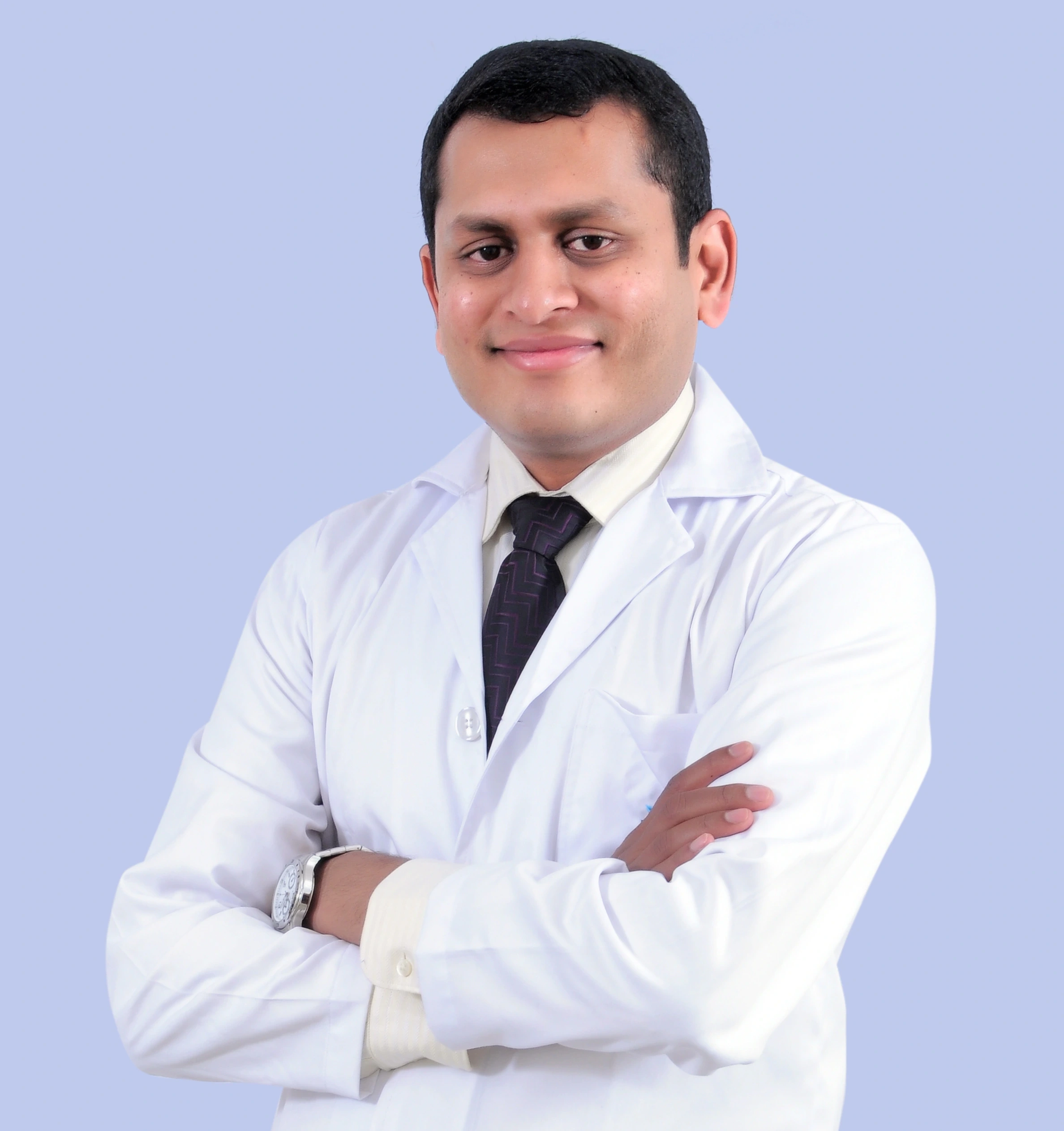
Uterine artery embolization treatment in Bangalore is now available at Vikash IR Clinic with Dr. Vikash Chennur, a fellowship-trained interventional radiologist. Uterine artery embolization (UAE) is a minimally invasive, image-guided procedure that shrinks fibroids by cutting off their blood supply, through a pinhole-sized entry point and without removing your uterus.
- AIIMS Gold Medalist
- Fellowship-trained interventional radiologist
- Practice across India, Canada and Australia
- Two decades of experience
What Is Uterine Artery Embolization (UAE)?
Uterine artery embolization, also called uterine fibroid embolization (UFE), is a non-surgical treatment for symptomatic uterine fibroids. It is performed by an interventional radiologist using live X-ray (fluoroscopic) guidance.
Fibroids depend on the uterine arteries for blood. In UAE, a thin, flexible catheter is guided to these arteries and tiny particles are released to block the vessels feeding the fibroids. Without blood supply, the fibroids gradually shrink and soften, and the symptoms they cause improve. The rest of the uterus continues to receive blood through other vessels and is preserved.
Because the procedure is done through a tiny puncture, usually in the wrist or the groin, there is no surgical cut, no stitches in the abdomen and no general anaesthesia in most cases.
Do You Need Uterine Fibroid Treatment? Symptoms to Watch For
Fibroids are very common, and many women live with small fibroids without any problem. Treatment is worth discussing when fibroids cause:
- Heavy, prolonged or painful periods, sometimes with clots
- Bleeding between periods
- Tiredness, breathlessness or weakness from anaemia
- Pelvic pain, heaviness or pressure
- A feeling of fullness or a visible lump in the lower abdomen
- Frequent urination or difficulty emptying the bladder
- Constipation or back pain
- Pain during intercourse
If these symptoms affect your work, sleep, relationships or confidence, you do not have to simply put up with them. A consultation for uterine fibroid treatment in Bangalore can show whether UAE or another option suits you.
How Uterine Fibroid Embolization Is Done: Step by Step
- Consultation and imaging
Dr. Vikash reviews your symptoms, medical history and scans. A pelvic MRI is usually advised, because it shows the number, size and type of fibroids and helps confirm that UAE is suitable.
- Preparation
You arrive at the hospital on the day of the procedure after the usual fasting instructions. A small area of the wrist or groin is cleaned and numbed. You receive mild sedation so you stay comfortable.
- Catheter access
A tiny puncture is made in the artery and a thin catheter is introduced. There is no surgical incision.
- Embolization
Under X-ray guidance, the catheter is steered into the uterine arteries. Embolic particles are released to block the vessels that feed the fibroids. Both sides are treated so that all fibroids are addressed in the same sitting.
- Recovery and monitoring
The catheter is removed and the puncture site is closed. You are monitored while any cramping is controlled with medication. Many women are discharged within about a day.
- Follow-up
Your bleeding, pain and pressure symptoms improve over the following weeks and months. A follow-up scan and clinic review track how the fibroids are responding.
Benefits of Uterine Artery Embolization
- Your uterus stays: no hysterectomy
- No large incision: a pinhole entry replaces an abdominal cut, so there is minimal scarring
- All fibroids treated at once: useful when you have multiple fibroids
- No general anaesthesia in most patients
- Short hospital stay: often one day
- Faster recovery: many women return to routine activities within about one to two weeks, which is usually quicker than after open surgery
- Lower blood loss than traditional fibroid surgery
- Effective symptom relief: studies report that a large majority of women, in the range of 85 to 90 percent, see meaningful improvement in heavy bleeding and bulk symptoms, though individual results vary
UAE vs Myomectomy vs Hysterectomy
| Uterine Artery Embolization | Myomectomy | Hysterectomy | |
|---|---|---|---|
| What it does | Blocks blood supply so fibroids shrink | Surgically removes fibroids | Removes the uterus |
| Incision | Pinhole puncture | Surgical cut or laparoscopic ports | Surgical cut or laparoscopic ports |
| Anaesthesia | Local + sedation | General | General |
| Uterus preserved | Yes | Yes | No |
| Hospital stay | Short, often one day | Moderate | Longest |
| Recovery | Usually fastest | Moderate | Slowest |
| Treats multiple fibroids together | Yes | Depends on number and size | Yes (uterus removed) |
The right choice depends on your fibroids, your age and your plans for the future. Dr. Vikash explains every option honestly, including when surgery may be the better route.
Who Is a Good Candidate for UAE?
UAE is commonly considered for women who:
- Have symptomatic fibroids confirmed on ultrasound or MRI
- Want to avoid hysterectomy and keep their uterus
- Prefer to avoid general anaesthesia and open surgery
- Have multiple fibroids
- Are not suitable for major surgery because of other health conditions
UAE may not be suitable if you are pregnant, have an active pelvic infection, have a suspected uterine cancer, or have certain fibroid types such as some pedunculated (stalk-like) fibroids. If you are planning a pregnancy, discuss it early: myomectomy is often preferred when fertility is the main goal, and your doctor will help you weigh both options.
Risks and Safety: What You Should Know
UAE is a well-established procedure used worldwide. Like any medical procedure, it carries some risks, which Dr. Vikash will discuss with you openly before treatment:
- Post-embolization syndrome: cramping, mild fever, nausea and tiredness in the first few days, which is common and controlled with medication
- Vaginal discharge as treated fibroid tissue is passed, occasionally for some weeks
- Infection, which is uncommon but needs prompt treatment
- Effect on periods or ovarian function, uncommon but more likely in women nearing menopause
- Rarely, incomplete response or the need for further treatment
The procedure is performed with careful technique, imaging guidance and a strong focus on patient safety.
Recovery After Uterine Artery Embolization
- First 24 to 48 hours: cramping and pelvic pain, managed with pain medication and anti-nausea tablets
- First week: fatigue and mild fever are common; rest and fluids help
- One to two weeks: most women return to desk work and light activity, with exact timing advised by the doctor
- Over the next cycles: bleeding becomes lighter, and pressure symptoms ease as fibroids shrink
- Follow-up: a scan after a few months checks the response
Contact the clinic if you have a high fever, severe worsening pain or foul-smelling discharge.
Uterine Artery Embolization Cost in Bangalore
Many women ask about uterine artery embolization cost in Bangalore. There is no single fixed price, because the total depends on factors such as:
- The hospital and the room category you choose
- The size, number and type of fibroids
- The embolic materials and equipment used
- Pre-procedure tests and MRI
- Length of stay and medicines
- Whether health insurance covers the procedure
After reviewing your reports, our team gives you a clear estimate so there are no surprises. Many patients find that, once the shorter hospital stay, faster return to work and avoided surgical recovery are considered, UAE compares well with traditional surgery. Please call or WhatsApp the clinic for a personal estimate.
How to Choose the Best Hospital for Uterine Fibroid Treatment in Bangalore
Searching for the best hospital for uterine fibroid treatment in Bangalore can feel overwhelming. The most important factor is not the building but the experienced interventional radiologist performing the procedure, supported by a hospital with the right facilities. Look for:
- A fellowship-trained interventional radiologist who performs fibroid embolization regularly
- A modern angiography (cath) suite with high-quality imaging
- MRI and ultrasound available for planning and follow-up
- Gynaecology and anaesthesia back-up in the same hospital
- Clear counselling about benefits, risks and alternatives
- Transparent costs and structured follow-up care
Why Choose Dr. Vikash Chennur for Fibroid Embolization in Bangalore?
- AIIMS Gold Medalist, recognised for academic excellence at India’s premier medical institute
- Fellowship training and clinical practice across India, Canada and Australia
- Two decades of experience in complex vascular, oncologic and pain interventions
- Patient-first approach: you are listened to, your options are explained in plain language, and treatment is recommended only when it is truly right for you
- Ethical, individualised decisions, including honest advice when UAE is not your best option
- Convenient clinic at Bannerghatta Road, J.P. Nagar, easily reached from South Bengaluru
What Our Patients Say
“I had fibroids which caused heavy bleeding and weakness for many months. I did not want open surgery. The procedure went well and I felt comfortable throughout. My bleeding has reduced and my health has improved a lot. Recovery was fast.”
Frequently Asked Questions
What is uterine artery embolization treatment?
It is a minimally invasive procedure in which a catheter is used to block the blood supply to uterine fibroids, causing them to shrink. It avoids open surgery and preserves the uterus.
Is uterine fibroid embolization the same as uterine artery embolization?
Yes. Both names describe the same treatment. UFE names the condition being treated (fibroids) and UAE names the artery being treated.
Is UAE painful?
You receive local anaesthesia and sedation, so you are comfortable during the procedure. Cramping afterwards is expected and is controlled with medication.
How long does the procedure take, and how long will I stay in hospital?
The procedure usually takes around one hour, and most women stay in hospital about a day.
When can I go back to work?
Many women return to light or desk work within one to two weeks. Your doctor will advise you according to your case.
Will fibroids come back after UAE?
UAE treats the blood supply to all the fibroids present at the time, so new growth is less common than after some other treatments, but it can still happen. Follow-up is important.
Can I get pregnant after uterine fibroid embolization?
Some women have gone on to have successful pregnancies after UAE, but if pregnancy is your main goal, you should discuss myomectomy and UAE carefully with your doctor before choosing.
Does insurance cover uterine artery embolization in Bangalore?
Coverage depends on your policy and insurer. Our team can help you with the documents needed to check your coverage.
How do I know if UAE is right for me?
The only reliable way is a consultation with your scans reviewed by an interventional radiologist.
Book Your Fibroid Consultation in Bangalore
You do not have to live with heavy periods and pelvic pain, and you do not have to accept surgery as your only choice. Speak with Dr. Vikash Chennur to find out whether uterine artery embolization treatment in Bangalore is right for you.
Vikash IR ClinicDocube, 1st Floor, 15, Bannerghatta Rd, 3rd Phase, J.P. Nagar, Bengaluru
Phone / WhatsApp: +91 96320 74646
Email: drvikashir@gmail.com Get directions to Vikash IR Clinic on Google Maps
Disclaimer: This page is for general information and does not replace a medical consultation. Outcomes vary between patients.