
Uterine Fibroid Embolization
- Home / Uterine Fibroid Embolization
What Are Uterine Fibroids?
Uterine fibroids are non-cancerous growths that develop from the muscle layer of the uterus. They are extremely common and can vary in size, number, and location. While some women may have fibroids without any symptoms, others experience significant discomfort that affects daily life.
If fibroids are affecting your health or quality of life, you deserve to know all your treatment options. Surgery is not always the first answer for fibroids.
Uterine Fibroid Embolization
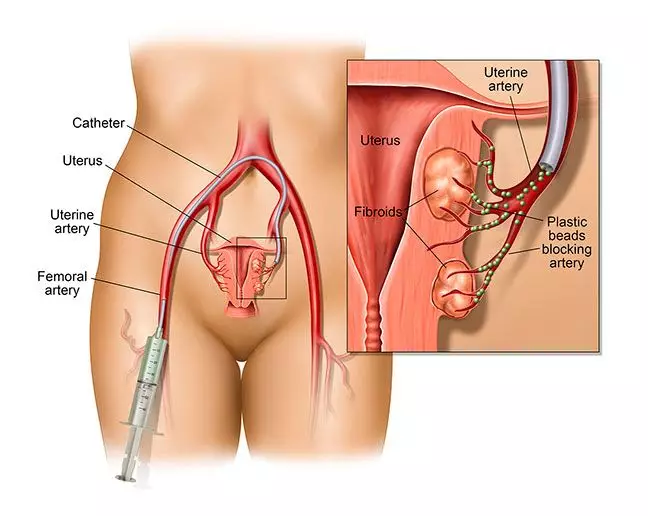
Uterine Fibroid Embolization (UFE) is a modern, minimally invasive, non-surgical treatment for uterine fibroids, performed by an Interventional Radiologist. UFE treats fibroids by targeting their blood supply rather than removing the uterus.
SYMPTOMS OF UTERINE FIBROIDS
- Heavy, prolonged bleeding during monthly periods
- Irregular periods
- Anemia related to heavy menstrual bleeding, leading to fatigue
- Dysmenorrhea (painful menstrual periods)
- Frequent need to urinate, constipation or bloating
- Difficulty conceiving or infertility in selected cases
- Enlarged belly, heaviness in the pelvis, backache, etc.
- Persistent or recurrent fibroids after myomectomy
- Adenomyosis of uterus
WHY PATIENTS PREFER UTERINE FIBROID EMBOLISATION
- Not a surgery – pinhole procedure
- No incision or large scars
- No removal of the uterus
- Local anesthesia instead of general anesthesia
- Faster recovery
- Quicker return to daily life
Why Choose UFE at Vikash IR Clinic
At Vikash IR Clinic, Bangalore, we offer Uterine Fibroid Embolization (UFE)—a modern, minimally invasive, non-surgical treatment for uterine fibroids that treats fibroids without removing the uterus and without a surgical incision.
Your treatment is performed by Dr. Vikash Chennur, a senior Interventional Radiologist in Bangalore and an AIIMS Gold Medalist, with advanced international training in uterine fibroid embolization. Your care is guided by expert real-time imaging, precision planning, and careful patient selection—not a one-size-fits-all approach.
We take time to listen. We discuss your symptoms, your concerns, and your fertility goals before recommending any treatment. If UFE is the right option, we proceed. If another fibroid treatment is more suitable, we guide you honestly.
At Vikash IR Clinic in Bangalore, the goal is simple: Effective uterine fibroid treatment with the least disruption to your body and your life.
Uterine fibroid/artery embolization – Procedure & Recovery
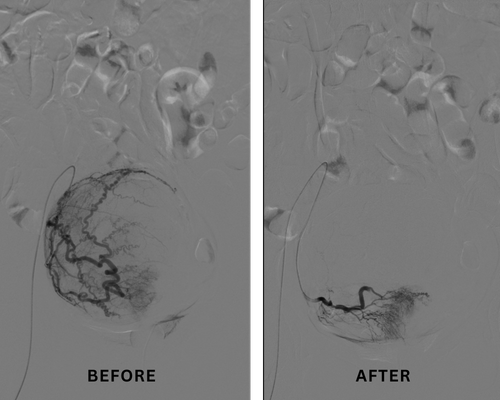
During this procedure, a small needle puncture is made—usually in the wrist or groin—and a thin, flexible catheter is guided under real-time imaging by an Interventional Radiologist to the blood vessels supplying the fibroids. Once the catheter is precisely positioned, tiny embolic particles are injected to block these blood vessels, reducing blood flow to the fibroids. As a result, the fibroids gradually shrink and symptoms improve.
Although fibroid shrinkage occurs over several months, many patients experience relief from symptoms such as heavy menstrual bleeding, pelvic pressure, and pain within days to weeks after UFE, with continued improvement over time.
Find out whether UFE is right for you
Frequently Asked Questions about Uterine Fibroid Embolization
MRI is recommended when you experience persistent pain, neurological symptoms, or unexplained changes in your body. It helps doctors identify the exact cause and plan accurate treatment with clear internal imaging.
1. Is Uterine Fibroid Embolization safe?
Yes. Uterine fibroid embolization is a well-established, minimally invasive treatment with a strong safety record when performed by an experienced interventional radiologist.
2. Is uterine fibroid embolization experimental?
Embolization has been used for over two decades to control hemorrhage (heavy bleeding) in different parts of the body, including the uterus. It is a well-established, evidence-based procedure and is not considered experimental. UFE is FDA-approved and is covered by most insurance plans.
3. Is there a right age for uterine fibroid embolization?
No. Uterine fibroids can affect women at any age. Embolization is considered based on symptoms and impact on quality of life, rather than age alone. The right time to consider treatment is when fibroids begin to cause problems.
4. Will UFE remove my fibroids completely?
UFE does not remove fibroids surgically. Instead, it reduces their blood supply, causing them to shrink over time and relieving symptoms.
5. How long does it take to see improvement after UFE?
Heavy bleeding often improves within the first few menstrual cycles. Fibroids continue to shrink gradually over several months.
6. Will I need general anesthesia for UFE?
No. UFE is usually performed under local anesthesia with mild sedation, allowing faster recovery and fewer anesthesia-related risks.
7. How long is the hospital stay after UFE?
Most patients stay in the hospital for one to two days for pain control and observation before returning home.
8. Can I get pregnant after UFE?
Pregnancy after UFE is very much possible. Fertility goals should be discussed in detail before the treatment to determine the best option.
9. Is UFE painful?
Cramping and pelvic pain are common for a few days after the procedure. These symptoms are expected and are effectively managed with medications.
10. How is UFE different from myomectomy or hysterectomy?
UFE is a minimally invasive procedure that treats fibroids without surgery and preserves the uterus. Myomectomy and hysterectomy are major surgeries removing fibroids and uterus respectively.