
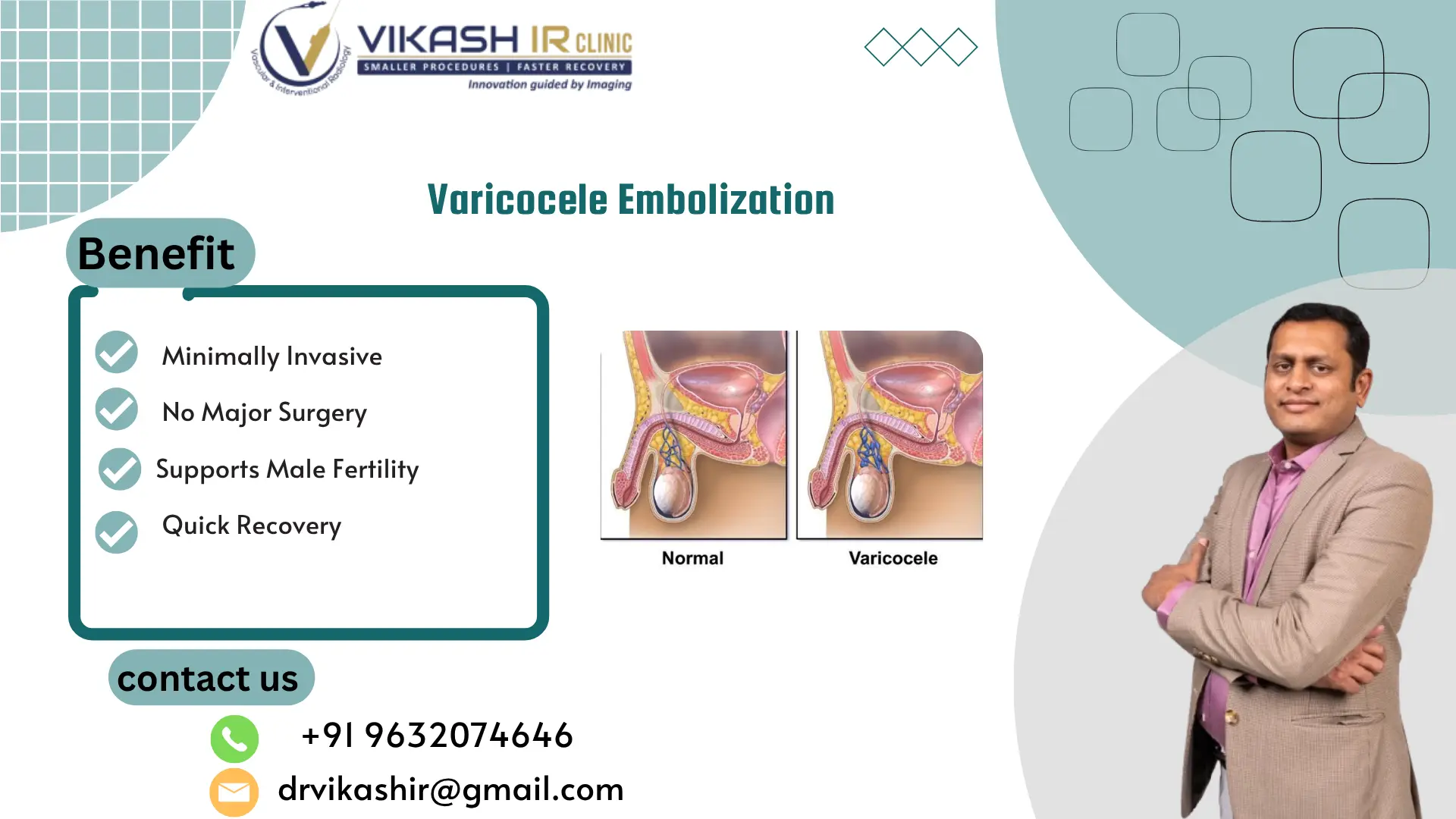
Varicocele Embolization is a minimally invasive treatment option for men experiencing discomfort, swelling, or other problems associated with a varicocele. One of the most common questions patients ask before treatment is, “How long will it take to recover, and when can I return to my normal routine?”
In most cases, recovery after Varicocele Embolization is relatively quick. Many patients return to light activities within 24–48 hours, while strenuous exercise and heavy lifting may need to be avoided for approximately one week or longer, depending on the treating specialist’s advice. Individual recovery varies according to the patient’s symptoms, general health, and the details of the procedure.
For men considering Varicocele Embolization in Bengaluru, understanding the recovery timeline can help them prepare for treatment and plan their return to work, exercise, and everyday activities.
Dr. Vikash Chennur, an endovascular interventional radiologist in Bengaluru, provides consultations for patients seeking information about minimally invasive vascular treatments. Patients should discuss their individual condition, treatment suitability, and recovery expectations during a medical consultation.
Understanding Varicocele: Symptoms, Causes, and Diagnosis
What Is a Varicocele?
A varicocele is an enlargement of the veins within the scrotum, the skin-covered sac that contains the testicles. It develops when blood does not flow efficiently through the veins responsible for draining blood from the testicles.
The condition is similar in principle to varicose veins in the legs. A varicocele may develop gradually and is more commonly found on the left side, although it can affect either side or both sides.
Some men have no noticeable symptoms, while others experience discomfort, a feeling of heaviness, or fertility-related concerns. Treatment is not necessary for every varicocele; the decision depends on symptoms, clinical findings, and individual circumstances.
Common Symptoms of Varicocele
The symptoms can vary from person to person. Common signs include:
- A dull ache or dragging sensation in the scrotum.
- Discomfort that becomes more noticeable after prolonged standing or physical activity.
- Scrotal swelling or enlarged veins that may feel like a bundle of cords.
- Symptoms that improve when lying down.
- Differences in testicular size in some patients.
- Fertility concerns or abnormal semen analysis results in selected cases.
Persistent pain, a new scrotal lump, or sudden swelling requires medical assessment. Sudden, severe testicular pain should be evaluated urgently rather than assumed to be caused by a varicocele.
What Causes a Varicocele?
A varicocele usually develops because the valves within the veins do not function effectively, allowing blood to flow backward and accumulate. This increases pressure within the affected veins.
Several anatomical factors influence its development, including differences in venous drainage and pressure within the veins that carry blood away from the testicles.
A varicocele is not generally caused by a lack of exercise, poor personal hygiene, or sexual activity. Patients should avoid relying on unverified home remedies when symptoms persist.
How Is Varicocele Diagnosed?
Diagnosis generally begins with a medical history and physical examination. A specialist may assess the scrotum while the patient is standing and, when appropriate, ask the patient to perform a Valsalva manoeuvre, which temporarily increases abdominal pressure.
Depending on the findings, investigations may include:
- Scrotal Doppler ultrasound: Evaluates the veins, blood flow, and possible reflux.
- Semen analysis: May be recommended when fertility is a concern.
- Additional clinical assessment: Helps determine whether symptoms are related to the varicocele and whether intervention is appropriate.
The results help the treating specialist determine whether observation, surgical treatment, or Varicocele Embolization is the most suitable option.
Varicocele Embolization: Procedure, Benefits, and Treatment Comparison
What Is Varicocele Embolization?
Varicocele Embolization is a minimally invasive, image-guided procedure used to block the abnormal veins responsible for the varicocele. It is performed by an appropriately trained interventional radiologist.
Unlike conventional surgery, the procedure generally does not require a surgical incision in the scrotum. Instead, a small access point is created, commonly in a vein in the groin or neck, depending on the operator’s technique and the patient’s anatomy.
Using X-ray guidance and contrast imaging, the specialist advances a thin catheter into the affected veins. Embolization materials, such as coils or a suitable embolic agent, are then used to close the targeted veins and redirect blood through healthier pathways.
The procedure is usually performed under local anaesthesia, sometimes with additional medication for comfort. The exact approach depends on the patient’s condition and the clinical team’s assessment.
What Are the Benefits of Varicocele Embolization?
For appropriately selected patients, potential benefits include:
- Minimally invasive treatment: Usually requires only a small access point rather than an open surgical incision.
- Short recovery period: Many patients can resume light activities relatively soon.
- No direct scrotal incision: The procedure accesses the venous system through a separate entry point.
- Outpatient treatment in many cases: Patients can often return home on the same day, depending on their clinical circumstances.
- Targeted treatment: Imaging helps the specialist identify and treat the abnormal veins.
- Alternative to surgery: May be appropriate for patients who prefer a minimally invasive option or have specific clinical reasons to consider it.
As with any medical procedure, there are potential risks, including access-site bleeding or bruising, vein injury, contrast-related reactions, radiation exposure, recurrence, and rare complications involving the embolization material. Not every patient is suitable for this treatment, and outcomes cannot be guaranteed.
Varicocele Embolization vs. Surgical Treatment
Both embolization and surgery aim to stop abnormal blood flow through the affected veins. However, they differ in how treatment is performed.
| Feature | Varicocele Embolization | Varicocele Surgery |
| Approach | Catheter-based, image-guided procedure | Surgical ligation of affected veins |
| Access | Small entry point in a vein | Surgical incision, depending on technique |
| Anaesthesia | Commonly local, sometimes with sedation | Depends on the surgical method |
| Recovery | Often rapid return to light activities | Varies by surgical technique |
| Main considerations | Venous anatomy, technical feasibility, radiation and contrast exposure | Surgical approach, anaesthesia, and postoperative recovery |
| Recurrence | Possible | Possible |
Neither treatment is universally better for every patient. The choice depends on symptoms, fertility goals, venous anatomy, previous treatment, local expertise, and the patient’s preferences after an informed discussion.
Varicocele Embolization Recovery Time: Timeline, Healing, and Aftercare
How Long Does It Take to Recover After Varicocele Embolization? What to Expect?
Most patients can resume light daily activities within 24–48 hours after an uncomplicated procedure. However, complete symptom improvement may take longer, and the recovery timeline differs between individuals.
Here is a general guide to what patients may experience.
First 24 Hours After the Procedure
Patients are monitored briefly after treatment to ensure they are stable and that there are no immediate complications. Many return home on the same day.
Mild tenderness, bruising, or discomfort near the catheter entry site may occur. Some patients also experience temporary scrotal discomfort.
During this period:
- Rest and follow the discharge instructions.
- Keep the access site clean and dry according to the care team’s guidance.
- Drink fluids as advised, particularly if contrast material was used and there are no medical restrictions.
- Avoid driving until the treating team confirms it is safe, especially if sedative medication was administered.
- Use prescribed or approved pain relief as directed.
Days 2–3: Returning to Light Activities
Many patients can return to desk-based work and gentle walking within one or two days if they feel comfortable. Those with physically demanding jobs may need additional time away from work.
Mild bruising or soreness can persist, but it should generally improve rather than progressively worsen.
Patients should avoid strenuous movements and follow the specialist’s instructions regarding bathing, dressing changes, and access-site care.
Days 4–7: Gradual Improvement
During the first week, many patients feel increasingly comfortable and can resume more of their usual routine.
However, heavy lifting, vigorous exercise, running, and intense gym sessions may need to be postponed for approximately one week or longer, depending on the procedure and the treating specialist’s advice.
Patients should not assume that the veins have completely healed or that all symptoms will have disappeared simply because they feel better.
After One to Two Weeks
Many patients have returned to their normal daily activities by this stage. Persistent tenderness may take longer to settle.
Pain associated with the varicocele may improve over several weeks. When treatment is undertaken for fertility-related concerns, semen parameters may take approximately three months or longer to show meaningful changes because sperm production occurs over time.
Follow-up appointments help the treating specialist assess symptom improvement and determine whether further examination or imaging is necessary.
Factors That Affect Recovery Time
Recovery after Varicocele Embolization depends on several individual factors:
- Severity of symptoms: Patients with longstanding discomfort may need more time to notice improvement.
- Treatment complexity: Venous anatomy and the technical details of the procedure can influence recovery.
- Overall health: Existing medical conditions and medications may affect healing and post-procedure care.
- Type of work: Desk-based work may be resumed sooner than jobs involving lifting or strenuous physical activity.
- Post-procedure complications: Unusual pain, bleeding, or other complications can extend recovery.
- Individual response: Symptom improvement and return to activity vary from person to person.
There is no single recovery schedule that applies to everyone. Your interventional radiologist should provide activity restrictions and follow-up recommendations based on your treatment.
Warning Signs to Watch For
Contact your treating medical team if you experience increasing pain, persistent bleeding, worsening swelling, fever, or redness around the access site.
Seek urgent medical attention for sudden severe testicular pain, rapidly increasing scrotal swelling, chest pain, or difficulty breathing.
Do not delay assessment when symptoms are severe or worsening.
Varicocele Embolization in Bengaluru: When Should You Seek Specialist Advice?
If you are experiencing scrotal discomfort, visible enlarged veins, or fertility concerns, a specialist consultation can help determine whether a varicocele is present and whether treatment is appropriate.
Patients searching for Varicocele Embolization near me in Bengaluru should consider the specialist’s relevant training, experience with image-guided venous procedures, available imaging facilities, and arrangements for follow-up care.
Dr. Vikash Chennur is an endovascular interventional radiologist based in Bengaluru. Patients can discuss their symptoms, diagnostic findings, suitability for embolization, expected recovery, and alternative treatment options during an appointment.
Consultation location:
1st Floor, 15, Bannerghatta Road, Sarakki Industrial Layout, 3rd Phase, J. P. Nagar, Bengaluru, Karnataka 560078.
Frequently Asked Questions About Varicocele Embolization Recovery
1. How Long Does It Take to Recover After Varicocele Embolization? What to Expect?
Most patients resume light activities within 24–48 hours and return to many normal activities within about a week. Strenuous exercise may require a longer break. Individual recovery depends on the procedure and the treating specialist’s instructions.
2. Is Varicocele Embolization a Painful Procedure?
The procedure is commonly performed under local anaesthesia, sometimes with sedation. Patients may feel pressure during catheter placement and mild discomfort afterwards. The degree of discomfort varies, and appropriate pain relief can be discussed with the treating team.
3. Can I Walk Immediately After Varicocele Embolization?
Gentle walking is generally encouraged once the medical team confirms that it is safe. Patients may need a short monitoring period immediately after treatment before standing or walking.
4. When Can I Return to Work After Varicocele Embolization?
Many patients with desk-based jobs return within one or two days. People whose jobs involve heavy lifting, prolonged physical activity, or manual labour may need additional recovery time.
5. When Can I Exercise After Varicocele Embolization?
Light walking can usually resume early. Running, heavy weightlifting, and strenuous workouts are commonly restricted for around one week or longer, depending on the treating specialist’s advice.
6. How Soon Will Varicocele Symptoms Improve?
Some patients notice improvement within days, while others need several weeks. Pain and heaviness do not always disappear immediately, and persistent symptoms should be reviewed by the treating specialist.
7. Can Varicocele Embolization Improve Fertility?
In selected men with a clinically significant varicocele and appropriate fertility-related indications, treatment may improve semen parameters. However, improvement is not guaranteed, and fertility outcomes depend on several factors involving both partners.
8. Can a Varicocele Return After Embolization?
Yes. Recurrence or persistence is possible if abnormal venous drainage remains or develops again. Follow-up assessment can help determine whether additional treatment is needed.
9. Is Varicocele Embolization Better Than Surgery?
Neither treatment is best for every patient. Embolization offers a minimally invasive, catheter-based approach, while surgery is another established option. The decision should consider anatomy, clinical findings, treatment goals, risks, and patient preference.
Conclusion: Plan Your Recovery With the Right Specialist
Varicocele Embolization offers a minimally invasive treatment option for appropriately selected men with symptomatic varicoceles. Many patients return to light activities within 24–48 hours, but recovery, symptom relief, and return to strenuous exercise depend on individual circumstances.
Understanding the procedure, following aftercare instructions, and attending follow-up appointments can help patients navigate recovery with greater confidence. Treatment decisions should be based on a proper clinical evaluation rather than symptoms or online information alone.
If you are considering Varicocele Embolization in Bengaluru, consult an appropriately qualified specialist to understand your diagnosis, available treatment options, expected recovery, and potential risks.
Book an appointment with Dr. Vikash Chennur, endovascular interventional radiologist, to discuss your condition and treatment suitability.
- Phone: +919632074646
- Location: 1st Floor, 15, Bannerghatta Road, Sarakki Industrial Layout, 3rd Phase, J. P. Nagar, Bengaluru, Karnataka 560078.