
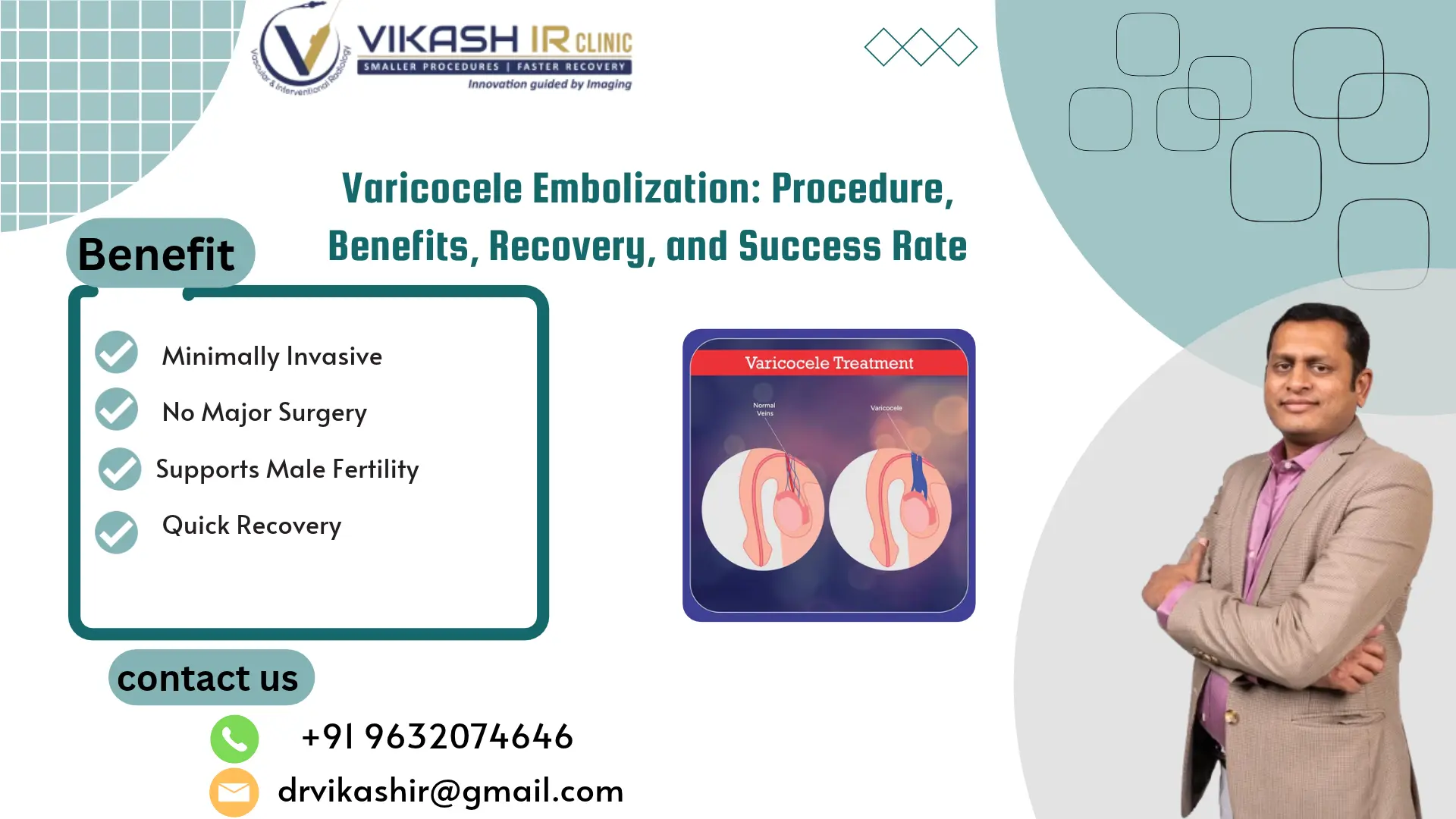
Varicocele is a common condition in men that occurs when veins inside the scrotum become enlarged due to abnormal blood flow. It may cause discomfort, a feeling of heaviness, visible swollen veins, and sometimes fertility-related concerns. While some cases do not require treatment, men experiencing persistent symptoms may benefit from medical evaluation and appropriate treatment options.
Varicocele embolization treatment is a minimally invasive procedure performed by an interventional radiologist. It uses image guidance, a thin catheter, and specialised embolic materials to block the abnormal veins responsible for the varicocele. Unlike conventional surgery, this procedure does not require a large surgical incision in the groin or scrotum.
For patients exploring varicocele embolization treatment in Bangalore, understanding the procedure, benefits, recovery period, and expected outcomes can help them make informed decisions.
Dr. Vikash Chennur, AIIMS Gold Medalist and Endovascular Interventional Radiologist, provides evaluation and image-guided treatment options for patients with vascular conditions, including varicocele.
This guide explains how the procedure works, who may need it, and what patients can expect before and after treatment.
Understanding Varicocele: Symptoms, Causes, and Diagnosis
What Is a Varicocele?
A varicocele is an enlargement of the veins within the scrotum, the skin pouch that holds the testicles. These veins form part of the pampiniform plexus, which helps regulate the temperature around the testicles.
Normally, small valves inside the veins prevent blood from flowing backwards. When these valves do not function properly, blood can collect in the veins, causing them to enlarge.
Varicoceles commonly develop on the left side, although they can affect both sides. They may be discovered during a routine examination or while investigating male infertility.
Common Symptoms of Varicocele
Not every man with a varicocele experiences symptoms. However, some individuals may notice:
- Dull or aching pain in the scrotum.
- A feeling of heaviness around the testicles.
- Enlarged or twisted veins that feel like a bag of worms.
- Discomfort that becomes worse after prolonged standing or physical activity.
- Improvement in discomfort when lying down.
- Differences in testicular size.
- Fertility concerns or abnormal semen analysis results.
Symptoms may vary depending on the severity of the condition. Persistent pain, sudden testicular discomfort, or noticeable swelling should be evaluated by a qualified doctor.
What Causes Varicocele?
The exact cause is not always clear, but varicoceles generally develop because of impaired blood drainage from the testicular veins.
Common contributing factors include:
- Dysfunction of venous valves.
- Backward flow of blood within the testicular veins.
- Increased pressure within the venous system.
- Anatomical differences in the drainage of the left and right testicular veins.
In uncommon cases, a newly developed varicocele, particularly on the right side or one that does not reduce when lying down, may require further investigation to exclude another underlying cause.
How Is Varicocele Diagnosed?
Accurate diagnosis is important before selecting varicocele embolization treatment or any alternative treatment.
A doctor may recommend:
- Physical examination: The scrotum is examined while standing and lying down to identify enlarged veins.
- Scrotal Doppler ultrasound: This imaging test evaluates vein enlargement and abnormal backward blood flow.
- Semen analysis: Recommended when fertility is a concern to assess sperm count, movement, and morphology.
- Medical history: The doctor reviews symptoms, previous treatments, fertility goals, and relevant medical conditions.
The results help determine whether treatment is necessary and whether embolization is an appropriate option.
Varicocele Embolization Treatment: Procedure and Benefits
What Is Varicocele Embolization?
Varicocele embolization is a minimally invasive, image-guided procedure that blocks the abnormal testicular veins responsible for the condition.
Instead of surgically removing or tying the veins through an incision, an interventional radiologist uses a thin catheter to reach the affected vein through the vascular system.
Small coils, a sclerosant, or other suitable embolic materials are used to close the abnormal vein. Blood is then redirected through healthy veins.
This approach is commonly considered for patients who require treatment for persistent discomfort, clinically significant varicocele, or selected fertility-related concerns.
How Is the Procedure Performed?
The varicocele embolization treatment procedure generally involves the following steps:
- Initial evaluation
The interventional radiologist reviews the patient’s medical history, Doppler ultrasound findings, symptoms, and other relevant investigations.
- Preparation and anaesthesia
The procedure is usually performed using local anaesthesia, often with sedation depending on the patient’s needs and the treatment centre’s protocol.
- Catheter insertion
A small entry point is made, commonly near the groin or neck. A thin catheter is inserted into a vein and carefully guided towards the affected testicular vein.
- Image-guided vein assessment
Fluoroscopy and contrast dye help the specialist identify the abnormal veins and understand the pattern of blood flow.
- Embolization
Specialised coils, sclerosant, or another appropriate embolic agent are placed inside the abnormal vein to block the backward flow of blood.
- Completion and observation
The catheter is removed, and pressure is applied to the entry site. The patient is monitored for a period before discharge, depending on recovery and clinical assessment.
The procedure commonly takes around 30–90 minutes, although the duration varies with individual anatomy and procedural complexity.
Key Benefits of Varicocele Embolization
Patients considering varicocele embolization treatment may benefit from several features of this minimally invasive approach:
- No major surgical incision: Only a small catheter entry point is required.
- Shorter recovery: Many patients return to routine activities sooner than after conventional surgery.
- No direct surgical dissection of the scrotum: The treatment is performed through the blood vessels.
- Local anaesthesia and sedation: General anaesthesia is often not necessary.
- Potential fertility benefits: Treatment may improve semen parameters in appropriately selected patients.
- Option after previous surgery: Embolization may be considered for recurrent or persistent varicocele following surgical treatment.
- Day-care approach: Many patients can return home on the same day.
However, benefits and outcomes depend on individual anatomy, the severity of the condition, and the patient’s overall health.
Who May Be Suitable for the Procedure?
A specialist may consider embolization for men who have:
- Persistent varicocele-related discomfort.
- A clinically significant varicocele requiring intervention.
- Selected fertility concerns associated with varicocele.
- Recurrent varicocele after previous surgery.
- A preference for a minimally invasive treatment approach.
Not every varicocele requires intervention. The decision should be based on clinical examination, imaging findings, symptoms, and fertility assessment where appropriate.
Recovery, Success Rate, and Comparison With Surgery
Recovery After Varicocele Embolization
Recovery after varicocele embolization treatment is generally shorter than recovery after conventional surgical procedures, although the experience differs between patients.
Most patients are monitored for a few hours after the procedure. Depending on their condition and the doctor’s assessment, they may be discharged on the same day.
Typical recovery expectations include:
- First 24 hours: Rest and avoid strenuous physical activity. Keep the catheter entry site clean and follow the dressing instructions.
- After 2–3 days: Many patients can gradually resume normal daily activities if they feel comfortable.
- After one week: Strenuous exercise and heavy lifting may be resumed according to the treating specialist’s advice.
- Following weeks: Follow-up appointments help assess symptoms and recovery.
- Following months: Ultrasound or other investigations may be recommended to evaluate treatment outcomes.
Some patients experience mild discomfort in the scrotum or lower back for a few days. This generally settles with appropriate care.
Patients should contact their doctor if they experience increasing pain, fever, significant swelling, redness around the catheter entry site, or other unusual symptoms.
What Is the Success Rate of Varicocele Embolization?
The success of varicocele embolization treatment depends on several factors, including the anatomy of the affected veins, the embolization technique, and the patient’s underlying condition.
According to RadiologyInfo, the procedure has an approximately 90% success rate. Recurrence is reported in around 5–10% of patients, although individual results and published estimates vary.
Radiologyinfo.org+1
It is important to understand that technical success and clinical improvement are not the same.
- Technical success: The abnormal vein is successfully accessed and blocked.
- Clinical success: Symptoms improve or the intended treatment outcome is achieved.
- Fertility outcomes: Some patients experience improvement in semen parameters, but pregnancy is not guaranteed.
Follow-up examinations help determine whether the treatment has achieved its intended result.
Possible Risks and Complications
Although varicocele embolization treatment is generally considered a safe minimally invasive procedure, it carries certain risks.
Possible complications include:
- Bruising or bleeding at the catheter entry site.
- Temporary scrotal or lower back discomfort.
- Inflammation of the treated vein.
- Allergic reaction to contrast dye.
- Infection, although uncommon.
- Rare migration of embolic material.
- Persistent or recurrent varicocele.
The interventional radiologist evaluates these risks before recommending the procedure and takes precautions to minimise complications.
Varicocele Embolization vs Varicocele Surgery
Both embolization and surgical varicocele repair aim to stop abnormal blood flow through enlarged veins. However, their treatment approaches differ.
| Feature | Embolization | Conventional surgery |
| Treatment method | Catheter-based vein blockage | Surgical ligation of veins |
| Incision | Small catheter entry point | Surgical incision |
| Anaesthesia | Usually local with sedation | Depends on surgical technique |
| Recovery | Generally shorter | May require longer recovery |
| Hospital stay | Often same-day discharge | Depends on the procedure |
| Recurrence | Possible | Possible |
| Fertility outcomes | May improve in selected patients | May improve in selected patients |
Microsurgical varicocelectomy is also an established treatment option and may be recommended depending on the patient’s clinical condition.
There is no single treatment that is best for every patient. A specialist should explain the advantages, limitations, and risks of each approach before a decision is made.
Factors That Influence Treatment Outcomes
The results of varicocele embolization treatment may depend on:
- The grade and severity of the varicocele.
- The anatomy and number of abnormal veins.
- Whether the patient has undergone previous treatment.
- The presence of other fertility-related conditions.
- The experience of the treating interventional radiologist.
- Appropriate post-procedure follow-up.
A personalized assessment is important because treating the enlarged veins does not automatically resolve every cause of testicular pain or male infertility.
Frequently Asked Questions About Varicocele Embolization
1. Is varicocele embolization a permanent treatment?
Embolization aims to permanently block the abnormal veins. However, new collateral veins or persistent abnormal blood flow can sometimes cause recurrence. Follow-up is important to assess the outcome.
2. Is varicocele embolization painful?
The procedure is generally performed using local anaesthesia, often with sedation. Patients may experience mild discomfort at the catheter entry site or temporary scrotal discomfort after treatment.
3. How long does varicocele embolization take?
The procedure generally takes around 30–90 minutes. The duration depends on the patient’s vein anatomy and the complexity of the treatment.
4. Can varicocele embolization improve male fertility?
It may improve sperm count, motility, or other semen parameters in selected men with clinically significant varicocele and fertility concerns. However, improvement in fertility or pregnancy cannot be guaranteed.
5. Is embolization better than varicocele surgery?
Both procedures have advantages and limitations. Embolization is minimally invasive and generally involves a shorter recovery, while microsurgical repair may be appropriate for other patients. The right choice depends on individual medical findings.
6. Can varicocele return after embolization?
Yes. Recurrence or persistent varicocele is possible in approximately 5–10% of cases according to some published patient information. Additional evaluation or repeat treatment may sometimes be required.
7. How soon can I return to work after embolization?
Many patients can resume light activities within 24–48 hours. The exact timeline depends on the patient’s recovery, work requirements, and medical advice.
8. Is varicocele embolization available in Bangalore?
Yes. Patients seeking varicocele embolization treatment in Bangalore can consult an experienced interventional radiologist for clinical evaluation, imaging assessment, and discussion of suitable treatment options.
9. Does every varicocele require treatment?
No. Many varicoceles do not cause symptoms or require intervention. Treatment is generally considered when there is persistent discomfort, testicular changes, or selected fertility-related concerns.
Conclusion
Varicocele can affect daily comfort and, in some men, reproductive health. Fortunately, minimally invasive treatment options are available for patients who require medical intervention.
Varicocele embolization treatment offers an alternative to conventional surgery by blocking abnormal testicular veins through a catheter-based, image-guided procedure. It generally involves a small entry point, shorter recovery, and the possibility of returning to routine activities sooner.
However, treatment suitability, expected benefits, and long-term outcomes differ from person to person. A proper clinical assessment is essential before choosing an appropriate treatment.
Consult Dr. Vikash Chennur for Varicocele Treatment in Bangalore
If you are experiencing scrotal discomfort, enlarged veins, or fertility-related concerns, consider consulting an experienced interventional radiologist.
Dr. Vikash Chennur | AIIMS Gold Medalist | Endovascular Interventional Radiologist provides specialised evaluation and minimally invasive treatment options, including varicocele embolization.
Book a Consultation
- Clinic: Vikash IR Clinic
- Address: 1st Floor, 15, Bannerghatta Road, Sarakki Industrial Layout, 3rd Phase, J. P. Nagar, Bengaluru, Karnataka – 560078
- Phone: +919632074646
Book your consultation today to understand whether embolization is suitable for your condition and discuss the available treatment options.