
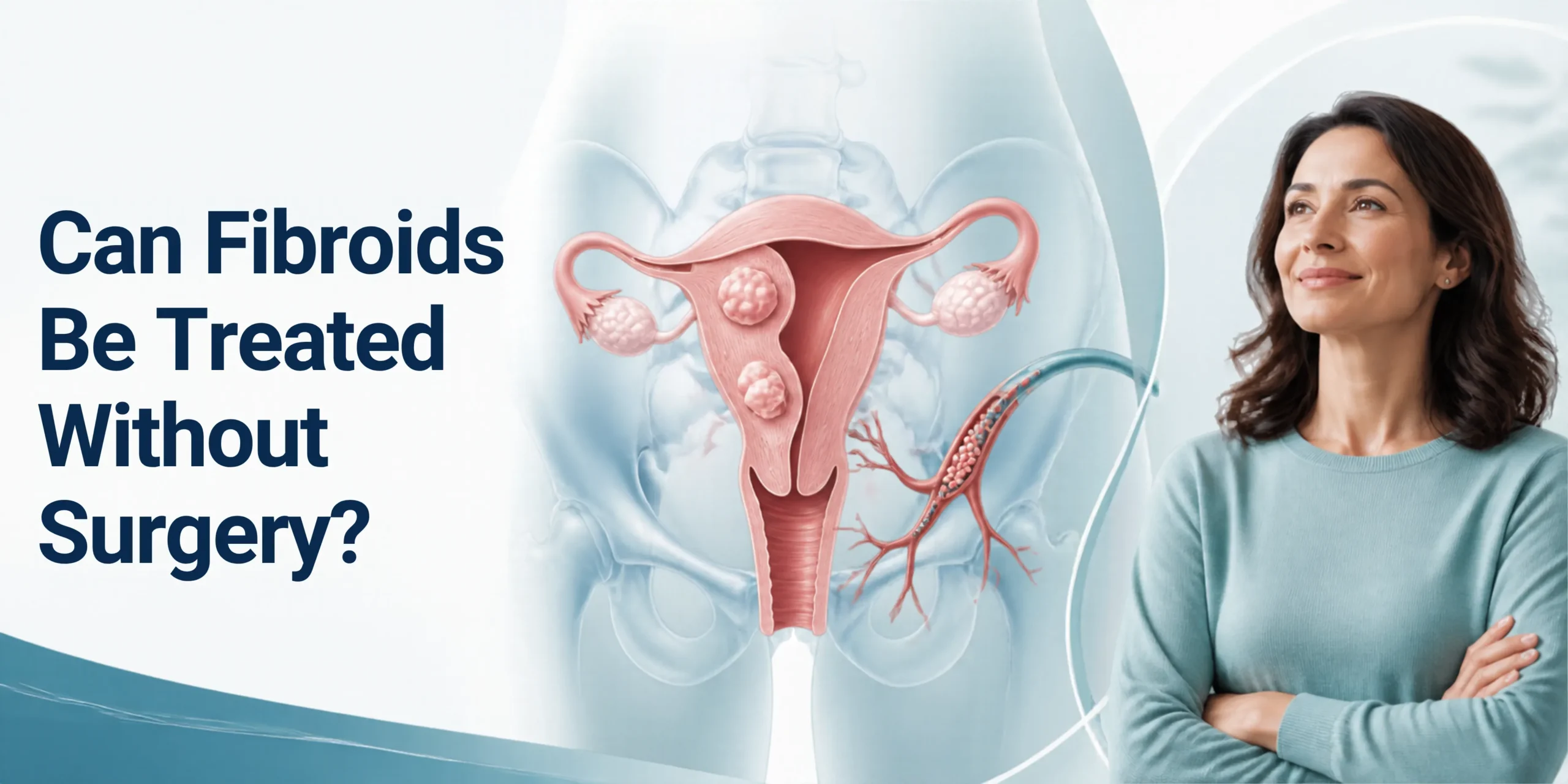
Yes, in many cases they can. If you have just been told you have uterine fibroids, the next thing you probably heard was “you may need an operation.” That is one of the most common fears women bring to our clinic. The reality is more reassuring: fibroid treatment without surgery is possible for many women, and it ranges from simple monitoring and medicines to a minimally invasive procedure called uterine artery embolization.
This guide explains what fibroids are, when they need treatment at all, every non-surgical option available, how well each one works, and how to decide. It is written by the team at Vikash IR Clinic, where Dr. Vikash Chennur, an interventional radiologist, offers uterine artery embolization treatment in Bangalore.
What Are Uterine Fibroids?
Uterine fibroids (also called leiomyomas or myomas) are non-cancerous growths that develop in the muscular wall of the uterus. They are extremely common, especially between the ages of 30 and 50, and many women have them without ever knowing.
Fibroids vary a lot. Some are the size of a pea, others as large as a melon. They can grow inside the uterine wall, bulge outward from it, or protrude into the uterine cavity. Where a fibroid sits matters as much as how big it is, and it strongly influences which treatment will work.
Fibroids are not cancer, and they very rarely turn into cancer. But when they cause symptoms, they can seriously affect your quality of life.
Common Fibroid Symptoms
Many fibroids cause no symptoms. When they do, women commonly report:
- Heavy or prolonged periods, sometimes with clots or flooding
- Bleeding between periods
- Tiredness, dizziness or breathlessness from anaemia
- Pelvic pain, heaviness or pressure
- A swollen lower abdomen or constant bloating
- Frequent urination, or difficulty emptying the bladder
- Constipation or lower back pain
- Pain during intercourse
If you have symptoms like these, a proper evaluation is worthwhile.
Do All Fibroids Need Treatment?
No. If your fibroids are small and cause no problems, the usual approach is “watchful waiting”: a periodic ultrasound and a check-up. Fibroids often stay stable, and they typically shrink after menopause.
Treatment becomes appropriate when fibroids:
- Cause heavy bleeding or anaemia
- Cause pain, pressure or urinary or bowel symptoms
- Grow quickly on follow-up scans
- Interfere with fertility or pregnancy
- Affect your daily life, work or relationships
Non-Surgical Fibroid Treatment Options
Here is a clear look at what “without surgery” can mean.
1. Monitoring (Watchful Waiting)
For small, symptom-free fibroids, regular follow-up is often all that is needed. There is no benefit in treating a fibroid that is not troubling you.
2. Medicines to Control Symptoms
Medicines can reduce bleeding and pain, but they generally do not remove fibroids permanently:
- Tranexamic acid reduces heavy menstrual bleeding
- Anti-inflammatory painkillers ease period pain
- Hormonal treatments, including certain pills and hormone-releasing intrauterine devices, can lighten bleeding in some women
- Iron supplements treat anaemia caused by blood loss
- GnRH-type medicines can shrink fibroids temporarily and are usually used for a limited time, for example before a procedure
Medicines are a good first step for many women. The limitation is that symptoms often return when treatment stops, and some hormonal options are not suitable for long-term use.
3. Uterine Artery Embolization (UAE)
Uterine artery embolization, also called uterine fibroid embolization (UFE), is the main non-surgical procedure for fibroids, and it treats the cause of the problem rather than only the symptoms.
Here is how it works. Under local anaesthesia and mild sedation, an interventional radiologist makes a pinhole-sized puncture in the wrist or groin and guides a thin catheter to the uterine arteries using live X-ray imaging. Tiny particles are then released to block the vessels that feed the fibroids. Deprived of blood, the fibroids gradually shrink and soften, and symptoms improve over the following weeks to months. The healthy uterus is preserved.
Key features of UAE:
- No surgical incision, only a needle-sized puncture
- The uterus is kept
- All fibroids can be treated in one sitting, which helps when there are several
- No general anaesthesia in most patients
- A short hospital stay, often about a day
- A quicker return to routine activities than after major surgery
You can read the full step-by-step on our page for uterine fibroid embolization in Bangalore.
4. Other Non-Invasive and Image-Guided Treatments
Some centres also offer other image-guided options, such as MRI-guided focused ultrasound or radiofrequency-based fibroid ablation. These are suitable only for selected fibroid types and are less widely available in India than UAE. Ask your specialist whether any of these apply to your case.
How Well Does Fibroid Embolization Work? An Honest Look
Good information should include the limitations, so here is what research shows.
- Symptom relief: most women who undergo UAE report meaningful improvement in heavy bleeding and bulk-related symptoms.
- Recovery: compared with surgery, UAE is associated with a shorter procedure, a shorter hospital stay and a faster return to normal activities.
- Need for further treatment: studies show that a proportion of women, roughly in the range of one in five over several years, need another procedure after UAE. Reintervention rates after UAE have been reported as higher than after myomectomy (surgical removal of fibroids), which is why careful patient selection matters.
- Quality of life: a large UK randomised trial that compared UAE with myomectomy in women who wished to keep their uterus found slightly greater quality-of-life improvement after myomectomy, although complication rates were similar and UAE patients recovered faster.
The takeaway: UAE is a well-established, effective alternative for the right patient, particularly if you want to avoid hysterectomy, avoid general anaesthesia and open surgery, or have multiple fibroids. It is not automatically the best choice for everyone, and an honest specialist will tell you when something else suits you better.
Who Is a Good Candidate for Non-Surgical Fibroid Treatment?
UAE may be a good option if you:
- Have symptomatic fibroids confirmed on ultrasound or MRI
- Want to avoid hysterectomy and keep your uterus
- Prefer to avoid open surgery and general anaesthesia
- Have several fibroids rather than just one
- Have other medical conditions that make surgery riskier
UAE may be less suitable if you are pregnant, have an active pelvic infection, have a suspected uterine cancer, or have certain fibroid types such as some stalk-like (pedunculated) fibroids. If you are hoping to become pregnant soon, discuss this at the very start. Pregnancies have occurred after UAE, but myomectomy is often preferred when fertility is the main goal.
Possible Risks of Fibroid Embolization
Every procedure has risks, and you should hear them before you decide. With UAE they include:
- Post-embolization syndrome: cramping, mild fever, nausea and fatigue for a few days, which is common and managed with medication
- Vaginal discharge as treated fibroid tissue passes, sometimes for a few weeks
- Infection, which is uncommon but needs prompt treatment
- Changes in periods or ovarian function, uncommon, and more likely in women close to menopause
- Incomplete response or need for further treatment in a minority of women
Choosing an experienced interventional radiologist and being properly assessed with an MRI beforehand reduces these risks.
Recovery After Non-Surgical Fibroid Treatment
After UAE, most women experience cramping in the first 24 to 48 hours, controlled with medicines. Many go home within about a day. Light activity is possible within days, and many women return to desk work within one to two weeks. Over the following menstrual cycles, bleeding usually becomes lighter and pressure symptoms ease as the fibroids shrink. A follow-up scan a few months later checks your response.
What Does Non-Surgical Fibroid Treatment Cost?
Cost depends on the treatment, the hospital, your room category, the number and size of your fibroids and whether insurance applies. Medicines cost the least but may need to continue for a long time. For procedures, there is no single fixed price, so it is best to get a clear estimate after your scans are reviewed. You can read more on uterine artery embolization cost in Bangalore.
When Is Surgery Still the Better Option?
Surgery, either myomectomy or hysterectomy, can still be the right choice in some situations, for example:
- A very large fibroid, or fibroids in a position that embolization is unlikely to treat well
- Strong wish for pregnancy in the near future
- Suspicion of cancer, or other conditions in the uterus that need to be treated at the same time
- Failure of previous non-surgical treatment
A good doctor will compare all of these options with you rather than pushing one.
How to Decide: Questions to Ask Your Doctor
- What type, size and position are my fibroids, and what do my scans show?
- Do I need an MRI before choosing a treatment?
- Am I a suitable candidate for uterine artery embolization?
- How will each option affect my chances of pregnancy?
- What are the risks, and what is the chance I will need more treatment?
- How many fibroid embolizations do you perform, and what follow-up will I get?
If you are comparing the three main treatments in detail, read our guide to uterine artery embolization vs hysterectomy vs myomectomy.
When to See a Doctor Urgently
See a doctor promptly if you have very heavy bleeding that soaks through protection every hour, sudden severe pelvic pain, bleeding after menopause, fainting or severe breathlessness, or a fibroid that is growing rapidly.
Frequently Asked Questions
Can fibroids go away without treatment? Fibroids often stay the same size, and many shrink after menopause. They rarely disappear on their own during the reproductive years, so fibroids that cause symptoms usually need treatment.
Can fibroids be treated without surgery permanently? UAE treats the blood supply to all the fibroids present at the time, and many women have lasting relief. However, new fibroids can develop and some women need further treatment, so follow-up is important.
Is uterine artery embolization painful? You are comfortable during the procedure with local anaesthesia and sedation. Cramping afterwards is expected and is controlled with medication.
Will fibroid embolization affect my periods or fertility? Periods usually become lighter. Pregnancy after UAE is possible, but if having a child soon is your main goal, discuss myomectomy and UAE carefully with your specialist.
How soon will I feel better after UAE? Cramping settles in a few days, and many women resume routine activities in one to two weeks. Bleeding and pressure improve gradually over the following months.
Is there a medicine that permanently dissolves fibroids? No. Medicines can control bleeding and pain, and some can shrink fibroids temporarily, but symptoms often return when treatment stops.
Talk to a Specialist in Bangalore
If fibroids are affecting your life, you deserve to know all your options before agreeing to surgery. Dr. Vikash Chennur offers uterine artery embolization treatment in Bangalore at Vikash IR Clinic, J.P. Nagar. Bring your ultrasound or MRI reports for a personal assessment.
Vikash IR Clinic Docube, 1st Floor, 15, Bannerghatta Rd, 3rd Phase, J.P. Nagar, Bengaluru
Phone / WhatsApp: +91 96320 74646
Disclaimer: This article is for general information and does not replace medical advice. Please consult a qualified doctor about your own situation.
References
- Gupta JK et al. Uterine artery embolization for symptomatic uterine fibroids. Cochrane Database of Systematic Reviews, 2014.
- Manyonda I et al. Uterine artery embolisation versus myomectomy for premenopausal women with uterine fibroids wishing to avoid hysterectomy: the FEMME randomised controlled trial. NIHR Health Technology Assessment, 2022 (PMC9082260).
- Davis MR et al. Reintervention rates after myomectomy, endometrial ablation and uterine artery embolization for patients with uterine fibroids. Journal of Women’s Health, 2018.
- Deipolyi AR et al. Hysterectomy and myomectomy versus uterine artery embolization for symptomatic fibroids and adenomyosis: national and regional trends and adverse events. Journal of Vascular and Interventional Radiology, 2025.