Dr Vikash Chennur : Best Interventional Radiologist in Bangalore

Author name: drvikash

Blog

Thyroid Nodule Ablation: A Modern, Non-Surgical Treatment Option

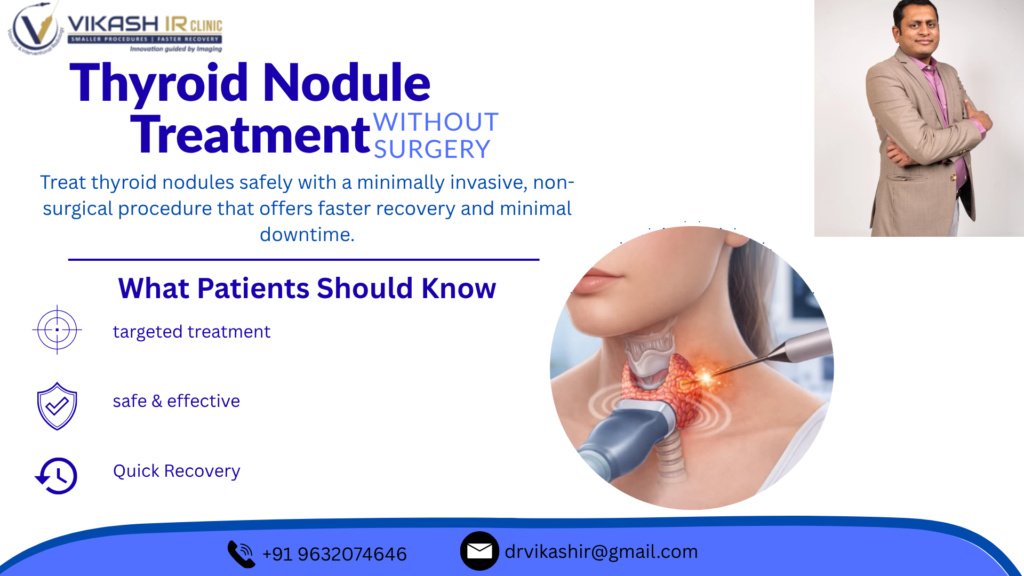
Thyroid Nodule Ablation: A Modern, Non-Surgical Treatment Option Thyroid nodules are extremely common. Many people discover them incidentally during a health check-up or imaging done for another reason. While most thyroid nodules are benign and harmless, some can grow large enough to cause symptoms like neck swelling, difficulty swallowing, voice changes, or cosmetic concerns. Traditionally, surgery was the main treatment option for symptomatic thyroid nodules. Today, thyroid nodule ablation offers a minimally invasive, non-surgical alternative for selected patients—providing effective results without scars, hospital stays, or removal of the thyroid gland. What Is Thyroid Nodule Ablation? Thyroid nodule ablation is a minimally invasive, image-guided procedure used to shrink benign thyroid nodules without surgery. Instead of removing the nodule, heat or other energy is applied directly to destroy abnormal tissue, which is then gradually absorbed by the body over time. The most commonly used ablation techniques include: Radiofrequency Ablation (RFA) Microwave Ablation (MWA) Ethanol Ablation (mainly for cystic nodules) Laser Ablation These procedures are performed under ultrasound guidance, ensuring precision and safety. Who Is a Candidate for Thyroid Nodule Ablation? Thyroid nodule ablation is typically recommended for patients who have: Benign thyroid nodules confirmed by biopsy Nodules causing pressure symptoms like difficulty swallowing or breathing Visible neck swelling or cosmetic concerns Nodules that continue to grow over time Normal or near-normal thyroid hormone levels A preference to avoid surgery or lifelong thyroid medication It is important to note that thyroid nodule ablation is not used for most thyroid cancers. Proper evaluation and diagnosis are essential before considering this treatment. How Thyroid Nodule Ablation Is Performed The procedure is usually done as a day-care treatment and does not require general anesthesia. Here’s how it typically works: The patient lies comfortably while the neck area is cleaned and numbed with local anesthesia. Using real-time ultrasound guidance, a thin probe is inserted directly into the thyroid nodule. Controlled energy (radiofrequency, microwave, or laser) is delivered to heat and destroy the nodule. The probe is repositioned carefully to treat the entire nodule while protecting nearby structures such as nerves and blood vessels. The probe is removed, and the patient is observed for a short period before going home. The entire procedue usually takes 30 to 60 minutes. How Interventional Radiology Procedures Are Performed Most interventional radiology procedures follow a similar process: Imaging guidance is used to precisely locate the problem. A tiny skin puncture is made, usually in the arm, groin, or directly over the target area. Catheters or needles are guided through blood vessels or tissues using live imaging. The condition is treated—by opening a blockage, stopping bleeding, destroying abnormal tissue, or delivering targeted therapy. The puncture site is closed, often without stitches. Because the trauma to the body is minimal, patients usually experience less pain and fewer complications. What Happens After Ablation? After thyroid nodule ablation: Most patients go home the same day Mild neck discomfort or swelling may occur but usually resolves quickly Normal activities can often be resumed within 24–48 hours The treated nodule gradually shrinks over weeks to months Studies show that nodules typically reduce in size by 50–80% or more over time, leading to significant improvement in symptoms and appearance. Benefits of Thyroid Nodule Ablation Compared to surgery, thyroid nodule ablation offers several advantages: No surgical incision or visible scar No removal of the thyroid gland Minimal pain and faster recovery Very low risk of complications No need for lifelong thyroid hormone replacement in most patients Can be repeated if needed For many patients, ablation provides symptom relief while preserving normal thyroid function. Thyroid Nodule Ablation vs Surgery Surgery may still be necessary in certain situations, especially when cancer is suspected or confirmed. However, thyroid nodule ablation is often preferred when: The nodule is benign Symptoms are mild to moderate The patient wants to avoid surgery There is a concern about surgical scars or anesthesia risks Unlike surgery, ablation does not remove the entire nodule at once. Instead, it shrinks the nodule gradually, which is usually sufficient to relieve symptoms. Is Thyroid Nodule Ablation Safe? When performed by experienced specialists, thyroid nodule ablation is considered safe and effective. Complications are uncommon but may include: Temporary voice changes Mild pain or bruising Rare injury to nearby nerves Careful patient selection, ultrasound guidance, and operator expertise are key to minimizing risks. Is Thyroid Nodule Ablation Right for You? If you have been diagnosed with a benign thyroid nodule and are experiencing symptoms—or are concerned about surgery—it is worth discussing minimally invasive options with your doctor. A detailed evaluation including ultrasound, biopsy, and thyroid function tests helps determine whether ablation is suitable. About the Author Dr Vikash Chennur is the Founder and Medical Director of Vikash IR Clinic, Bangalore. He completed his MD Radiology at the prestigious All India Institute of Medical Sciences, New Delhi, where he was awarded the Gold Medal by Manmohan Singh in 2009 for being the best radiology postgraduate resident. Dr Chennur has completed fellowships in Vascular and Interventional Radiology from the University of Ottawa and Body (Abdominal) Imaging from the University of Calgary. He also holds FRANZCR and EBIR qualifications, reflecting extensive international expertise in interventional radiology.

Blog

Interventional Radiology Explained: Modern Treatment Without Major Surgery

Interventional Radiology Explained: Modern Treatment Without Major Surgery Medicine has changed dramatically over the last few decades. Treatments that once required large surgical cuts, long hospital stays, and weeks of recovery can now be done through a tiny skin puncture. One of the biggest drivers of this shift is Interventional Radiology (IR). Interventional radiology combines advanced medical imaging with minimally invasive procedures to diagnose and treat a wide range of conditions—often without the need for open surgery. For patients, this means less pain, faster recovery, and safer outcomes. What Is Interventional Radiology? Interventional radiology is a medical specialty where doctors use real-time imaging—such as X-ray, ultrasound, CT scan, or MRI—to guide thin instruments like needles, wires, and catheters inside the body to treat disease. Instead of making large incisions, interventional radiologists work through a small pin-hole entry, usually just a few millimeters wide. These procedures are highly precise and target the affected area directly, while sparing surrounding healthy tissue. Simply put, interventional radiology turns imaging into treatment, not just diagnosis. Who Is an Interventional Radiologist? An interventional radiologist is a specially trained doctor who combines deep knowledge of imaging with hands-on procedural expertise. They are involved in planning, performing, and managing minimally invasive treatments across multiple organ systems. Unlike traditional surgery, most interventional radiology procedures are performed under local anesthesia +/- mild sedation, making them safer for elderly patients and those with other medical conditions. Common Conditions Treated With Interventional Radiology in India Interventional radiology is increasingly used in India to treat a wide range of conditions without major surgery. Some important and commonly performed interventional radiology procedures include: Uterine Fibroid Embolization (UFE)A non-surgical treatment for uterine fibroids that blocks the blood supply to the fibroids, causing them to shrink. UFE is an effective alternative to hysterectomy for many women who wish to preserve their uterus. Thyroid AblationImage-guided ablation is used to treat benign thyroid nodules without open surgery. It helps reduce nodule size and symptoms while preserving normal thyroid tissue. Thyroid Artery EmbolizationA minimally invasive procedure used in selected patients with symptomatic goitre and other thyroid conditions to reduce blood flow to the thyroid gland, leading to reduction in goitre size and improvement in symptoms. This option may be considered even in patients who are at high risk for conventional surgery Varicocele Embolization A non-surgical treatment for varicocele, commonly performed in men with infertility or testicular pain. The abnormal veins are blocked using catheters, improving symptoms with minimal downtime. Varicose Vein Treatment Interventional radiology offers minimally invasive treatments for varicose veins using image guidance, helping relieve pain, swelling, and skin changes without open surgery. Prostate Artery Embolization (PAE) A non-surgical treatment option for benign prostatic enlargement (BPH). PAE reduces prostate size by decreasing blood supply, improving urinary symptoms without prostate surgery. Genicular Artery Embolization (GAE) A minimally invasive option for patients with knee osteoarthritis-related pain. By reducing abnormal blood flow and inflammation, GAE helps decrease chronic knee pain without joint replacement surgery. Musculoskeletal (MSK) Embolization Used to treat chronic musculoskeletal pain conditions such as tendonitis and joint inflammation by targeting abnormal blood vessels responsible for pain. Liver Cancer Treatment Interventional radiology plays a major role in liver cancer care through procedures like tumor ablation and transarterial embolization therapies that directly target cancer while sparing healthy liver tissue. These treatments allow patients to avoid major surgery, reduce hospital stay, and recover faster, making interventional radiology an important part of modern healthcare in India. How Interventional Radiology Procedures Are Performed Most interventional radiology procedures follow a similar process: Imaging guidance is used to precisely locate the problem. A tiny skin puncture is made, usually in the arm, groin, or directly over the target area. Catheters or needles are guided through blood vessels or tissues using live imaging. The condition is treated—by opening a blockage, stopping bleeding, destroying abnormal tissue, or delivering targeted therapy. The puncture site is closed, often without stitches. Because the trauma to the body is minimal, patients usually experience less pain and fewer complications. Benefits of Interventional Radiology The biggest advantage of interventional radiology is that it achieves results similar to surgery—without the surgical burden. Key benefits include: Smaller incisions or no incisions at all Lower risk of infection and complications Shorter hospital stay, often same-day discharge Faster recovery and return to normal activities Reduced pain and scarring Safer option for high-risk or elderly patients For many patients, interventional radiology offers a better balance between effectiveness and safety. Interventional Radiology vs Traditional Surgery While surgery is still essential in many situations, interventional radiology is often preferred when: The condition can be accessed through blood vessels or image guidance Faster recovery is a priority Precision treatment is required with minimal tissue damage The patient is unfit for major surgery In many modern hospitals, interventional radiologists work closely with surgeons and physicians, choosing the best approach for each patient rather than replacing surgery entirely. Why Interventional Radiology Is Growing Rapidly in India With increasing access to advanced imaging, trained specialists, and modern cath labs, interventional radiology is growing rapidly across India. Today, IR plays a key role in emergency care, cancer treatment, vascular diseases, and chronic pain management. As awareness improves, more patients are benefiting from safer, minimally invasive treatments. When Should You Consider Interventional Radiology? If you or a loved one has been advised surgery, it is often worth asking: Is there a minimally invasive interventional radiology option? In many cases, interventional radiology can either replace surgery or significantly reduce its complexity. About the Author Dr Vikash Chennur is the Founder and Medical Director of Vikash IR Clinic, Bangalore. He completed his MD Radiology at the prestigious All India Institute of Medical Sciences, New Delhi, where he was awarded the Gold Medal by Manmohan Singh in 2009 for being the best radiology postgraduate resident. Dr Chennur has completed fellowships in Vascular and Interventional Radiology from the University of Ottawa and Body (Abdominal) Imaging from the University of Calgary. He also holds FRANZCR and EBIR qualifications, reflecting extensive international

Blog

Thyroid Ablation vs Thyroid Embolization: Which Is Right for You?

Thyroid Ablation vs Thyroid Embolization: Which Is Right for You? Being diagnosed with a thyroid nodule can be worrying. Many patients are immediately told that surgery is the only solution, which often raises concerns about neck scars, hospital stay, lifelong thyroid medication, and possible complications. What many people do not realise is that most thyroid nodules are benign and do not always need surgery. Today, modern minimally invasive treatments can reduce thyroid nodules without removing the thyroid gland—depending on the size of the nodule, its blood supply, and the symptoms it causes. Two such treatments are thyroid ablation and thyroid embolization. While both aim to reduce thyroid nodules without surgery, they work in different ways and are suited to different patients. Understanding these options helps patients make informed decisions and avoid unnecessary surgery when possible. What Is a Thyroid Nodule? The thyroid is a small gland located at the front of the neck. A thyroid nodule is a lump that forms within this gland. Many people have thyroid nodules without any symptoms and may never realise they have one. Some nodules remain small and harmless, while others may grow and cause: A visible swelling in the neck A feeling of pressure or tightness Difficulty swallowing Cosmetic concerns Changes in energy levels in some individuals Importantly, most thyroid nodules are not cancerous. What Is Thyroid Ablation? Thyroid ablation is a non-surgical treatment used to reduce the size of a benign thyroid nodule. Under ultrasound guidance, a thin needle is inserted directly into the nodule. Controlled heat is then applied from within the nodule to treat it. There is no surgical cut, and the thyroid gland itself is preserved. Over time, the treated nodule gradually shrinks, relieving symptoms such as swelling, pressure, or discomfort. Recovery is usually quick, with minimal pain. Benefits of Thyroid Ablation Thyroid ablation offers several advantages for suitable patients: No surgery and no neck scar Day-care procedure with short hospital stay Preserves normal thyroid tissue Very low risk of hypothyroidism Quick recovery and early return to daily activities Effective reduction in nodule size and symptoms Improvement in cosmetic appearance and pressure symptoms For many patients, thyroid ablation helps avoid lifelong thyroid hormone medication. Limitations and Possible Side Effects of Thyroid Ablation Although safe and effective, thyroid ablation may not be suitable for everyone: Very large nodules may not shrink sufficiently with ablation alone Nodules with very high blood supply may respond less effectively Mild pain, tenderness, or swelling may occur for a few days after the procedure Thyroid ablation is not recommended if cancer is suspected Who Is Thyroid Ablation Best Suited For? Thyroid ablation is usually considered when: The nodule is benign (confirmed by biopsy) The nodule is solid or predominantly solid There are pressure symptoms (difficulty swallowing, neck discomfort) There is visible neck swelling causing cosmetic concern Thyroid hormone levels are normal The patient wishes to avoid surgery It is an excellent option for patients seeking thyroid nodule treatment without surgery. What Is Thyroid Embolization? Thyroid embolization, also called Thyroid Artery Embolization (TAE), is another minimally invasive treatment. Instead of treating the nodule directly, this procedure works by reducing the blood supply to the thyroid nodule or gland. When blood flow is reduced, the nodule gradually shrinks over time. This technique is particularly useful for large nodules or enlarged thyroid glands (goiter). Benefits of Thyroid Embolization Thyroid embolization may be preferred because: It can reduce large thyroid swellings It avoids surgery and neck scars It is useful for highly vascular nodules It can help control symptoms related to hormone overactivity Limitations and Possible Side Effects of Thyroid Embolization Possible risks include: Short-term neck pain or discomfort Temporary changes in thyroid hormone levels Slightly higher chance of needing thyroid medication later compared to ablation Rare risks such as bleeding, infection, nerve injury, or stroke (uncommon) Most patients recover well without serious complications. Thyroid Ablation vs Thyroid Embolization: Key Differences Feature Thyroid Ablation Thyroid Embolization How it works Heat destroys the nodule Blood supply to nodule/gland is blocked Target Individual thyroid nodule Nodule or larger thyroid area Best suited for Small–medium benign solid nodules Large or highly vascular nodules / goiter Precision Very high Moderate Effect on hormones Minimal Hormone levels may fluctuate Risk of hypothyroidism Very low Slightly higher Role in hyperthyroidism Limited Very useful Neck scar None None Recovery time 1–2 days 2–3 days Preferred when Cosmetic or pressure symptoms Large size, vascularity, or high surgical risk How Is the Right Treatment Chosen? There is no single treatment that suits everyone. The best option is decided after careful evaluation of: Size of the thyroid nodule Growth over time Symptoms such as pressure, swallowing difficulty, or cosmetic concerns Blood supply to the nodule Thyroid hormone levels Age, overall health, and patient preference Radiofrequency ablation (RFA) is usually ideal for patients with a single, benign thyroid nodule.Thyroid embolization is better suited for patients with multiple nodules, very large nodules, or goiter. The goal is always to relieve symptoms while preserving normal thyroid function. When Is Surgery Still Needed? Despite advanced non-surgical options, surgery remains necessary when: Thyroid cancer is suspected or confirmed Very large goiters cause airway compression Multiple nodules cause severe symptoms The patient prefers surgery after counselling What Should You Do Next? If you have a benign thyroid nodule or thyroid enlargement, it is important to know that surgery is not the only option. Thyroid ablation and thyroid embolization have helped many patients manage these without removing the thyroid gland. The next step is to consult a specialist who can review your scans, biopsy reports, and symptoms and guide you toward the most appropriate treatment for your condition. About the Author Dr Vikash Chennur is the Founder and Medical Director of Vikash IR Clinic, Bangalore. He completed his MD Radiology at the prestigious All India Institute of Medical Sciences, New Delhi, where he was awarded the Gold Medal by Manmohan Singh in 2009 for being the best radiology postgraduate resident. Dr Chennur has completed fellowships

Blog

Leg Pain and Swelling: Is It Varicose Veins?

Leg Pain and Swelling: Is It Varicose Veins? Symptoms, Causes, Diagnosis, and Treatment Options Leg pain and swelling are common complaints and are often dismissed as normal tiredness after long hours of standing, sitting, or physical activity. While this is sometimes true, persistent or recurring leg discomfort may indicate an underlying vein problem such as varicose veins. Understanding the difference between simple leg fatigue and vein-related disease is important. This guide explains what varicose veins are, who is at risk, how they are diagnosed, and whether surgery is always required. What Are Varicose Veins? Varicose veins are enlarged, swollen, and twisted veins, most commonly seen in the legs. Veins carry blood from the legs back to the heart, working against gravity with the help of one-way valves. When these valves weaken or fail: Blood pools in the veins Pressure builds up Veins stretch, enlarge, and become visible These lead to the development of varicose veins. Is Leg Pain and Swelling Always Due to Varicose Veins? No. Leg pain and swelling can occur due to: Muscle strain or joint problems Fluid retention Other circulation or lymphatic conditions Varicose veins are more likely when pain and swelling are accompanied by visible vein changes and symptoms that follow a typical pattern. Common Symptoms of Varicose Veins People with varicose veins may experience: Visible bulging or twisted veins A feeling of heaviness or tiredness in the legs Aching, throbbing, or burning pain Swelling around the ankles or lower legs Symptoms that worsen after prolonged standing or sitting Relief with leg elevation or rest Skin itching, discoloration, or dryness in advanced stages Some individuals notice visible veins first, while others experience symptoms before veins become obvious. Do Varicose Veins Affect Only Older People? No. Varicose veins can develop at any age, including in young adults. Risk factors in younger people include: Desk jobs or prolonged standing Lack of regular exercise Weight gain Hormonal changes Family history of vein disease Early symptoms are often mild and overlooked, allowing the condition to progress gradually. How Do Varicose Veins Develop? Varicose veins develop due to increased pressure within leg veins, caused by: Prolonged standing or sitting Reduced physical movement Increased body weight Weak vein valves Genetic predisposition Hormonal influences Over time, veins lose their ability to efficiently return blood to the heart, leading to vein enlargement and swelling. Who Is at Higher Risk? Varicose veins are more common in: People with a family history of vein disease Women, especially during and after pregnancy Individuals who are overweight Those whose jobs involve long hours of standing Older adults Having risk factors increases the likelihood but does not guarantee disease. How Are Varicose Veins Diagnosed? Diagnosis begins with a clinical examination and symptom assessment. A Doppler ultrasound is usually recommended. This is a painless test which: Evaluates blood flow Checks valve function Maps abnormal veins Rules out blood clots Ultrasound is essential for accurate diagnosis and treatment planning. Which Doctor Should You Consult? Patients with persistent leg pain, swelling, or visible varicose veins should consult an Interventional Radiologist. Interventional radiologists specialise in ultrasound-guided, minimally invasive treatments such as laser ablation, radiofrequency ablation, glue closure, and sclerotherapy—often avoiding the need for surgery and enabling faster recovery. Is Surgery the Only Treatment for Varicose Veins? No. Most patients do not need major surgery. When diagnosed early, varicose veins are commonly treated using minimally invasive, day-care procedures with quick recovery and excellent results. Treatment Options for Varicose Veins Treatment depends on symptom severity, vein anatomy, and patient preference. Conservative Management (Symptom Control) Recommended for mild or early disease: Regular walking and leg exercises Leg elevation Compression stockings Weight management Avoiding prolonged standing or sitting These measures help control symptoms but do not permanently treat faulty veins. Minimally Invasive Procedures (Preferred Treatment) Performed under ultrasound guidance with minimal discomfort: Endovenous Laser Ablation (EVLT) Laser energy seals the diseased vein from inside. Blood reroutes to healthy veins, and the closed vein is gradually absorbed. Patients return to normal activity quickly. Radiofrequency Ablation (RFA) or Microwave ablation (MWA) Similar to EVLT but uses radiofrequency or microwave energy. Often associated with less post-procedure discomfort and rapid recovery. VenaSeal (Medical Adhesive Closure) A specialised medical glue seals the faulty vein. No heat, fewer injections, and usually no compression stockings required. Sclerotherapy Injection treatment for smaller varicose or spider veins. The vein collapses and fades over time. Multiple sessions may be needed. Microphlebectomy Visible bulging veins are removed through tiny punctures. Scarring is minimal and cosmetic results are excellent. Can Varicose Veins Be Prevented? Varicose veins cannot always be prevented, especially when genetics are involved. However, staying active, maintaining a healthy weight, and avoiding prolonged immobility can reduce symptoms and slow progression. When Should You Seek Medical Advice? Consult a doctor if: Leg pain or swelling keeps returning Symptoms worsen over time Visible veins appear Skin changes or itching develop Daily activities become uncomfortable Leg pain and swelling should not be ignored. Key Takeaway Leg pain and swelling do not always mean varicose veins, but they may signal an underlying vein problem. Varicose veins can affect people of all ages, and early symptoms are often subtle. When diagnosed early, treatment is simpler, safer, and highly effective. Modern minimally invasive treatments can relieve symptoms, prevent complications, and significantly improve quality of life—often without surgery. About the Author Dr Vikash Chennur is the Founder and Medical Director of Vikash IR Clinic, Bangalore. He completed his MD Radiology at the prestigious All India Institute of Medical Sciences, New Delhi, where he was awarded the Gold Medal by Manmohan Singh in 2009 for being the best radiology postgraduate resident. Dr Chennur has completed fellowships in Vascular and Interventional Radiology from the University of Ottawa and Body (Abdominal) Imaging from the University of Calgary. He also holds FRANZCR and EBIR qualifications, reflecting extensive international expertise in interventional radiology.

Blog

Do Thyroid Nodules Always Need Surgery?

Do Thyroid Nodules Always Need Surgery? When to Observe, Ablate, or Treat Thyroid nodules are a very common finding, especially as people grow older. Many are discovered incidentally during an ultrasound or CT scan done for another reason. While the word “nodule” can sound alarming, the reality is reassuring—most thyroid nodules are benign and do not require surgery. Understanding what thyroid nodules are, why they develop, and when treatment is truly necessary can help patients make informed decisions and avoid unnecessary procedures. What Is a Thyroid Nodule? A thyroid nodule is a lump that forms within the thyroid gland, located at the front of the neck. Nodules may be solid, fluid-filled, or mixed. Some people develop a single nodule, while others have multiple nodules. In many cases, thyroid nodules: Do not affect thyroid hormone levels Cause no symptoms Remain stable in size for years Why Do Thyroid Nodules Develop? The exact cause is not always clear. Factors that may contribute include: Genetic predisposition Hormonal influences Iodine imbalance Long-term stimulation of thyroid tissue Thyroid nodules are more common in women and tend to increase in frequency with age. Some nodules grow slowly, while many remain unchanged over long periods. Are Thyroid Nodules Cancerous? The majority of thyroid nodules are benign. When a nodule is detected, ultrasound imaging is used to assess its size, structure, and risk features.If needed, a fine needle aspiration biopsy (FNAB) may be performed to evaluate for cancer cells. While biopsy is a valuable diagnostic tool, its accuracy can be lower in larger nodules or nodules with mixed solid and cystic components. Do All Thyroid Nodules Need Treatment? No. Most thyroid nodules do not need immediate treatment or removal. Management depends on: Nodule size Growth over time Ultrasound characteristics Biopsy results Presence of symptoms Patient preference Many benign nodules can be safely monitored with regular clinical review and ultrasound follow-up. When Does Nodule Size Matter? Size is an important consideration, but size alone does not automatically mean surgery. Nodules larger than 4 cm are often considered for removal, particularly if: Biopsy results are indeterminate The nodule is growing Symptoms are present Larger nodules may carry a slightly higher risk of malignancy, and biopsy results in these nodules can have a higher false-negative rate. For these reasons, intervention may sometimes be advised. Symptoms That May Require Treatment Even benign nodules may need treatment if they cause symptoms such as: Difficulty swallowing Breathing discomfort or pressure Hoarseness or voice changes Visible neck swelling or cosmetic concern In these situations, treatment aims to relieve symptoms and improve quality of life. Cancer Risk and Thyroid Nodules Nodules that are confirmed or strongly suspected to be cancerous usually require surgical removal. When detected early, thyroid cancer has excellent treatment outcomes. If cancer risk is uncertain, careful monitoring over time may be recommended to avoid unnecessary surgery. Treatment Options for Thyroid Nodules Treatment is not the same for every patient. The approach depends on individual clinical factors and patient preference. Importantly, surgery is no longer the only effective option for many benign thyroid nodules. Observation and Regular Follow-Up Small, benign, and asymptomatic nodules often require no immediate treatment. Regular ultrasound scans and clinical review are sufficient. Many nodules remain stable for years without causing problems. Medication Management Medications may be prescribed if thyroid hormone levels are abnormal. These medicines help regulate hormone levels but usually do not shrink the nodule itself, making them a limited long-term solution for nodule size reduction. Fine Needle Aspiration Biopsy This minimally invasive test uses a thin needle to collect cells from the nodule for analysis. It helps determine whether a nodule is benign or malignant and guides further management. It is a diagnostic tool, not a treatment. Thyroid Nodule Ablation—A Non-Surgical Option Thyroid nodule ablation is a minimally invasive, non-surgical treatment for benign thyroid nodules that cause symptoms such as neck discomfort, swallowing difficulty, or visible swelling. Performed under ultrasound guidance A specialised needle delivers controlled heat into the nodule The nodule gradually shrinks while preserving healthy thyroid tissue Over time, symptoms improve significantly. Most patients experience relief without surgery, stitches, or scars, making ablation an attractive option for those wishing to avoid major surgery and prolonged recovery. Thyroid Nodule Embolisation Thyroid nodule embolisation is another non-surgical treatment that works by reducing the blood supply to the nodule. As blood flow decreases, the nodule gradually shrinks. This approach is particularly useful for: Large benign nodules Nodules with increased blood flow As the nodule reduces in size, symptoms such as pressure, discomfort, and visible swelling often improve. Embolisation preserves the thyroid gland and involves minimal downtime, making it suitable for patients who are not ideal surgical candidates or prefer less invasive treatment. Key Takeaway Most thyroid nodules are harmless and do not need to be removed. Treatment is recommended only when a nodule is: Large or growing Causing symptoms Showing concern for cancer Today, many patients can avoid surgery. Minimally invasive treatments such as thyroid nodule ablation and thyroid nodule embolisation can effectively shrink benign nodules, relieve symptoms, and preserve normal thyroid function. With proper evaluation and the right treatment choice, thyroid nodules can be managed safely and comfortably often without major surgery. About the Author Dr Vikash Chennur is the Founder and Medical Director of Vikash IR Clinic, Bangalore. He completed his MD Radiology at the prestigious All India Institute of Medical Sciences, New Delhi, where he was awarded the Gold Medal by Manmohan Singh in 2009 for being the best radiology postgraduate resident. Dr Chennur has completed fellowships in Vascular and Interventional Radiology from the University of Ottawa and Body (Abdominal) Imaging from the University of Calgary. He also holds FRANZCR and EBIR qualifications, reflecting extensive international expertise in interventional radiology.

Blog

How Are Treatment Decisions Made in Modern Medicine?

How Are Treatment Decisions Made in Modern Medicine? Treatment decisions in modern medicine follow a structured, thoughtful process rather than relying on a single test, scan, or opinion. The goal is to choose the safest and most effective treatment, while avoiding unnecessary interventions. This approach ensures that care is evidence-based, appropriate, and tailored to each individual patient. Understanding Symptoms and Their Impact The decision-making process begins with understanding a patient’s symptoms and how they affect daily life, comfort, and function. Symptoms often provide the most meaningful insight into the severity of a condition. In some cases, imaging may show a significant abnormality that causes little or no discomfort. In other situations, even a small finding can lead to considerable pain or limitation. This is why symptoms play a central role in guiding treatment decisions, not imaging alone. A patient’s medical history is equally important. Conditions such as diabetes, heart disease, or hormonal disorders can influence which treatments are safe and appropriate. Information about previous surgeries, medications, and family history helps minimise risks and avoid complications. The Role of Imaging in Modern Medicine Imaging studies such as ultrasound, CT scans, and MRI are essential tools in modern healthcare. They provide detailed visual information that helps doctors assess: Size and location of a condition Solid versus fluid-filled nature Stability or growth over time Impact on nearby organs or tissues However, imaging findings are never interpreted in isolation. An abnormality seen on a scan does not automatically mean treatment is required. Imaging must always be correlated with symptoms, clinical findings, and other test results. Laboratory Tests and Biopsy Results Laboratory tests offer insight into how the body is functioning and may reveal infection, inflammation, or hormonal imbalance. In selected cases, a biopsy is recommended to examine tissue more closely. Biopsy results help determine whether a condition is: Benign or malignant Slow-growing or aggressive Stable or progressing Together with imaging and clinical assessment, these results guide decisions between observation, medical management, minimally invasive procedures, or surgery. Monitoring, Observation, and Minimally Invasive Treatment Modern medicine recognises that not every condition requires immediate treatment. Many benign or mildly symptomatic conditions can be safely monitored with regular follow-up and imaging. Monitoring does not mean neglect. If symptoms worsen, interfere with daily activities, or if imaging shows progression, minimally invasive, image-guided procedures are often the preferred first-line treatment. These treatments allow early, precise intervention, often preventing progression to a stage where open surgery becomes necessary. Patients benefit from: Effective symptom relief Lower risk Minimal pain Faster recovery When Surgery Is Necessary Despite major advances in minimally invasive medicine, surgery remains essential in certain situations. Surgical treatment may be required when a condition is: Cancerous Rapidly growing Causing severe or progressive symptoms Unsuitable for minimally invasive approaches The decision to proceed with surgery is made only after careful evaluation of all available options, with the aim of achieving the best and safest outcome. Individualised, Patient-Centred Decision-Making Treatment decisions today are personalised, not one-size-fits-all. Factors such as age, overall health, lifestyle, work demands, and long-term goals are carefully considered. Even when two patients share the same diagnosis, the most appropriate treatment may differ based on how the condition affects their quality of life. Whenever appropriate, minimally invasive options are prioritised because they treat the problem effectively while preserving normal organ function and reducing recovery time. In many cases, these approaches provide outcomes comparable to surgery—without the physical and emotional burden of major operations. Key Takeaway Treatment decisions in modern medicine are guided by a careful combination of: Symptoms Medical history Imaging findings Laboratory and biopsy results Individual patient needs By prioritising accuracy, safety, and minimally invasive options whenever appropriate, modern medical care aims to achieve effective outcomes while preserving quality of life. About the Author Dr Vikash Chennur is the Founder and Medical Director of Vikash IR Clinic, Bangalore. He completed his MD Radiology at the prestigious All India Institute of Medical Sciences, New Delhi, where he was awarded the Gold Medal by Manmohan Singh in 2009 for being the best radiology postgraduate resident. Dr Chennur has completed fellowships in Vascular and Interventional Radiology from the University of Ottawa and Body (Abdominal) Imaging from the University of Calgary. He also holds FRANZCR and EBIR qualifications, reflecting extensive international expertise in interventional radiology.

Scroll to Top