
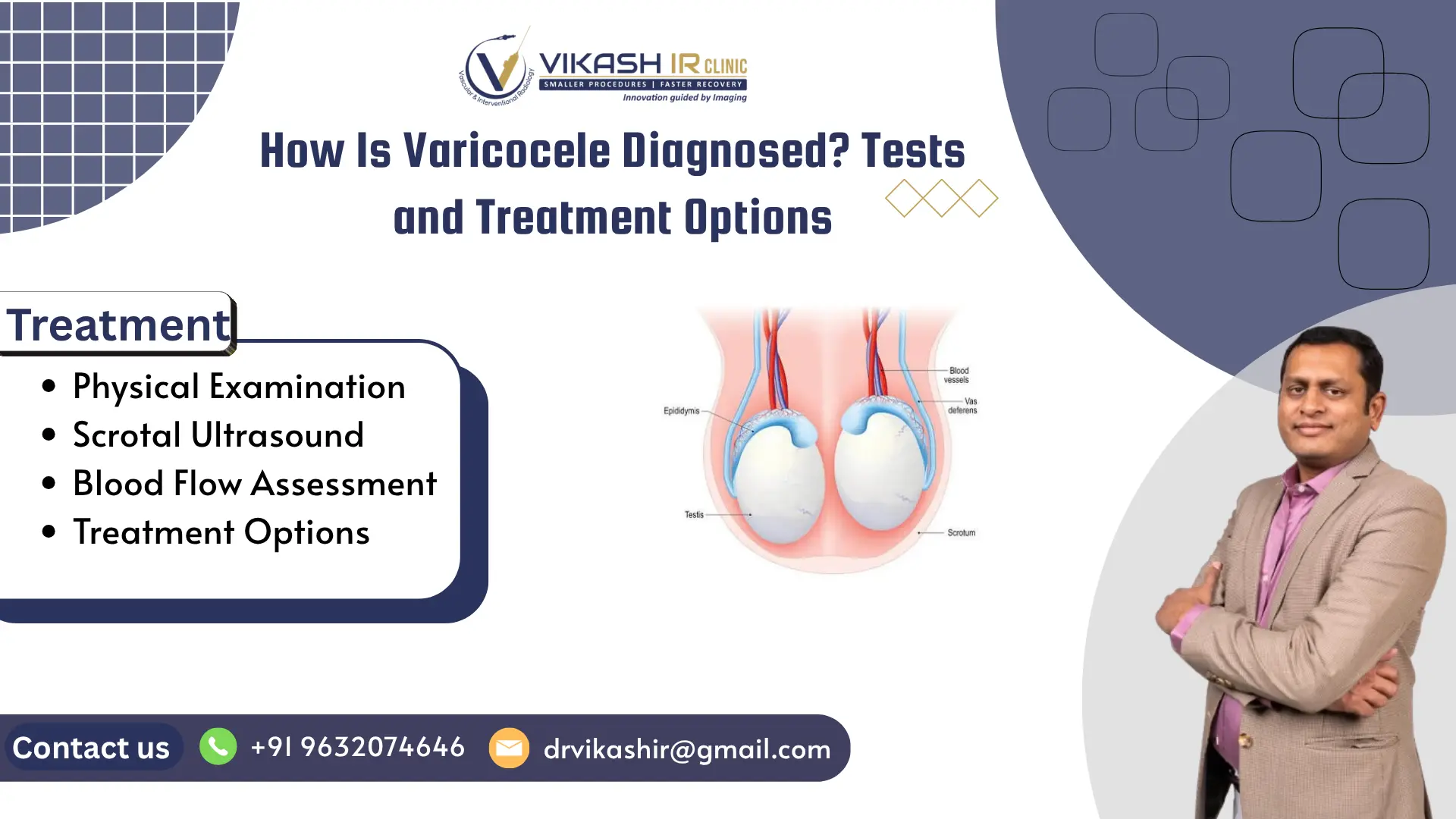
Varicocele is an enlargement of the veins within the scrotum that drain blood from the testicles. It is relatively common and may occur without causing noticeable symptoms. However, some men experience scrotal discomfort, testicular changes, or fertility problems. Because symptoms can overlap with other conditions, proper medical evaluation is important.
Varicocele treatment depends on the severity of the condition, symptoms, testicular health, fertility concerns, and findings from clinical examinations and imaging. In selected patients, minimally invasive procedures such as varicocele embolization may provide an alternative to conventional surgery.
Understanding how varicocele is diagnosed can help patients know what to expect during evaluation. Diagnosis generally begins with a medical history and physical examination and may include a Doppler ultrasound and semen analysis when fertility is a concern.
For patients looking for varicocele treatment without surgery, consultation with an experienced endovascular interventional radiologist can help determine whether a minimally invasive approach is appropriate.
What Is Varicocele and What Symptoms Can It Cause?
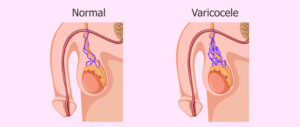
A varicocele develops when veins around the testicle become enlarged because blood does not drain normally. It is similar in principle to varicose veins in the legs. Varicoceles are more frequently found on the left side, although they can occur on either side or both sides.
Common Symptoms of Varicocele
Some men have no symptoms and discover a varicocele during an examination or fertility evaluation. When symptoms occur, they may include:
- A dull or aching discomfort in the scrotum
- Heaviness or dragging sensation in the scrotum
- Discomfort that becomes more noticeable after prolonged standing or physical activity
- Visible or enlarged veins in the scrotum
- A difference in testicular size
- Testicular discomfort that improves when lying down
- Fertility difficulties in some men
A varicocele does not automatically mean that a man will experience infertility. However, in some patients, it can be associated with impaired sperm production or sperm quality.
How Is Varicocele Diagnosed? Tests and Evaluation
How Is Varicocele Diagnosed? Tests and Treatment Options begins with a detailed assessment by a qualified doctor. The goal is not only to identify enlarged veins but also to determine their severity and whether they are affecting testicular function or fertility.
Medical History and Physical Examination
The doctor may ask about scrotal pain, fertility concerns, previous treatments, changes in testicular size, and when symptoms occur.
During the physical examination, the doctor may examine the scrotum while the patient is standing and lying down. The patient may also be asked to perform a Valsalva manoeuvre, which involves briefly bearing down. This can make enlarged veins more noticeable.
Doppler Ultrasound
Scrotal Doppler ultrasound is an important imaging test when the diagnosis is uncertain or additional information is required. It can help evaluate the testicles, surrounding veins, blood flow, and venous reflux.
Ultrasound may also help identify other causes of scrotal symptoms and provide information that can assist treatment planning.
Semen Analysis
If fertility is a concern, a semen analysis may be recommended. It evaluates parameters such as:
- Sperm concentration
- Sperm motility
- Sperm morphology
- Semen volume
A semen analysis does not diagnose varicocele itself. Instead, it helps assess whether there may be an associated effect on reproductive function.
Blood Tests and Additional Evaluation
Blood tests are not routinely required simply to diagnose a varicocele. Additional tests may be recommended when the doctor suspects hormonal or other reproductive problems.
Therefore, how varicocele is diagnosed depends on the patient’s symptoms, physical findings, fertility goals, and clinical circumstances.
Varicocele Treatment Options and Recovery
How Is Varicocele Diagnosed? Tests and Treatment Options also involve understanding when treatment is actually necessary. Not every varicocele requires an intervention.
When Is Treatment Considered?
Treatment may be considered when a patient has:
- Persistent or significant scrotal discomfort
- Evidence of testicular growth or development problems
- A clinically significant varicocele associated with fertility concerns
- Abnormal semen parameters in an appropriate clinical setting
- Other findings that indicate intervention may be beneficial
The treatment decision should be individualized rather than based solely on the presence of enlarged veins.
Varicocele Treatment Without Surgery
Varicocele treatment without surgery commonly refers to varicocele embolization, a minimally invasive procedure performed by an interventional radiologist.
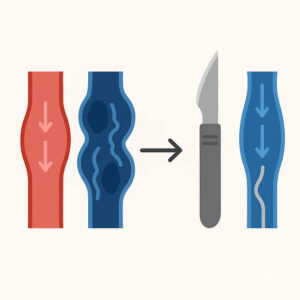
During embolization, the doctor uses image guidance to access the affected vein, usually through a small catheter inserted into a blood vessel. The abnormal vein is then blocked using embolic materials so that blood is redirected through healthier veins.
The procedure generally avoids a surgical incision in the groin or scrotum. The exact technique and access route depend on the patient’s anatomy and the treating specialist’s approach.
Surgical Varicocelectomy
Surgical varicocelectomy is another established treatment option. During surgery, the affected veins are identified and ligated while preserving important structures such as the testicular artery and lymphatic vessels.
The choice between surgery and embolization depends on factors including anatomy, previous treatment, symptoms, fertility considerations, available expertise, and patient preference.
Benefits of Minimally Invasive Embolization
For appropriately selected patients, varicocele embolization may offer benefits such as:
- Minimally invasive access
- No scrotal surgical incision
- Usually performed as an outpatient procedure
- Short recovery compared with many surgical approaches
- Ability to treat certain recurrent varicoceles after previous surgery
However, embolization is not suitable for every patient, and outcomes can vary. A specialist evaluation is necessary before choosing this approach.
After surgical treatment, recovery may take longer depending on the surgical technique and individual healing.
Patients should attend follow-up appointments as recommended. When fertility is the treatment goal, improvement in semen parameters may take several months because sperm production follows a biological cycle.
Varicocele Treatment: Embolization vs Surgery
How Is Varicocele Diagnosed? Tests and Treatment Options should be considered in the context of the patient’s complete clinical picture rather than focusing on one procedure.
| Feature | Varicocele Embolization | Surgical Varicocelectomy |
| Approach | Minimally invasive catheter procedure | Surgical procedure |
| Scrotal incision | Generally not required | Usually required depending on technique |
| Specialist | Interventional radiologist | Surgeon/urologist |
| Anaesthesia | Depends on technique and centre | Depends on surgical technique |
| Recovery | Often relatively short | Depends on surgical approach |
| Recurrent varicocele | May be useful in selected cases | May also be considered |
| Suitability | Depends on venous anatomy and clinical factors | Depends on clinical and surgical factors |
Neither option is universally appropriate. A specialist should review the diagnosis, symptoms, fertility goals, imaging findings, and overall health before recommending treatment.
About Dr. Vikash Chennur
Dr. Vikash Chennur is an AIIMS Gold Medalist and Endovascular Interventional Radiologist who provides minimally invasive image-guided procedures. His clinical expertise includes vascular and endovascular interventions, including procedures such as varicocele embolization.

For patients exploring varicocele treatment without surgery, Dr. Vikash Chennur can assess the condition using clinical evaluation and appropriate imaging and discuss whether embolization is a suitable option.
Frequently Asked Questions
1. How Is Varicocele Diagnosed? Tests and Treatment Options that may be used?
Diagnosis usually involves a physical examination and, when necessary, a scrotal Doppler ultrasound. A semen analysis may also be recommended when fertility is a concern.
2. Can a varicocele be diagnosed without an ultrasound?
Yes. Some clinically significant varicoceles can be diagnosed through physical examination. Ultrasound is useful when the examination is uncertain or additional information is needed.
3. Does every varicocele require treatment?
No. Many varicoceles do not require treatment. Intervention may be considered when there are symptoms, testicular changes, or appropriate fertility-related indications.
4. Can varicocele affect male fertility?
A varicocele can be associated with impaired sperm production or quality in some men. However, the presence of a varicocele does not automatically mean infertility.
5. What is varicocele embolization?
Varicocele embolization is a minimally invasive procedure in which an interventional radiologist blocks the abnormal vein responsible for the varicocele using image guidance.
6. Is varicocele treatment without surgery possible?
Yes. Varicocele treatment without surgery may be possible through embolization for appropriately selected patients.
7. Is varicocele embolization painful?
Patients may experience some discomfort during or after the procedure, but pain levels vary. The medical team uses appropriate measures to maintain patient comfort.
8. How long does recovery take after varicocele embolization?
Recovery varies between individuals. Many patients can resume normal activities relatively quickly, while strenuous exercise may need to be restricted temporarily.
9. Can varicocele return after treatment?
Recurrence or persistence is possible after both embolization and surgery. The risk depends on factors such as venous anatomy, treatment technique, and individual circumstances.
Conclusion
How Is Varicocele Diagnosed? Tests and Treatment Options is an important topic for men experiencing scrotal discomfort or fertility concerns. A proper diagnosis typically combines clinical examination with Doppler ultrasound when appropriate, while semen analysis can help evaluate reproductive function.
Varicocele treatment is not necessary for every patient. When treatment is indicated, options can include surgical varicocelectomy and minimally invasive embolization. For selected patients seeking varicocele treatment without surgery, embolization may provide a suitable alternative.
If you have been diagnosed with a varicocele or are concerned about fertility, consult Dr. Vikash Chennur, AIIMS Gold Medalist and Endovascular Interventional Radiologist, for an individualized evaluation and discussion of appropriate minimally invasive treatment options.
Book an appointment with Dr. Vikash Chennur to discuss your varicocele, diagnostic findings, fertility concerns, and available treatment options.