
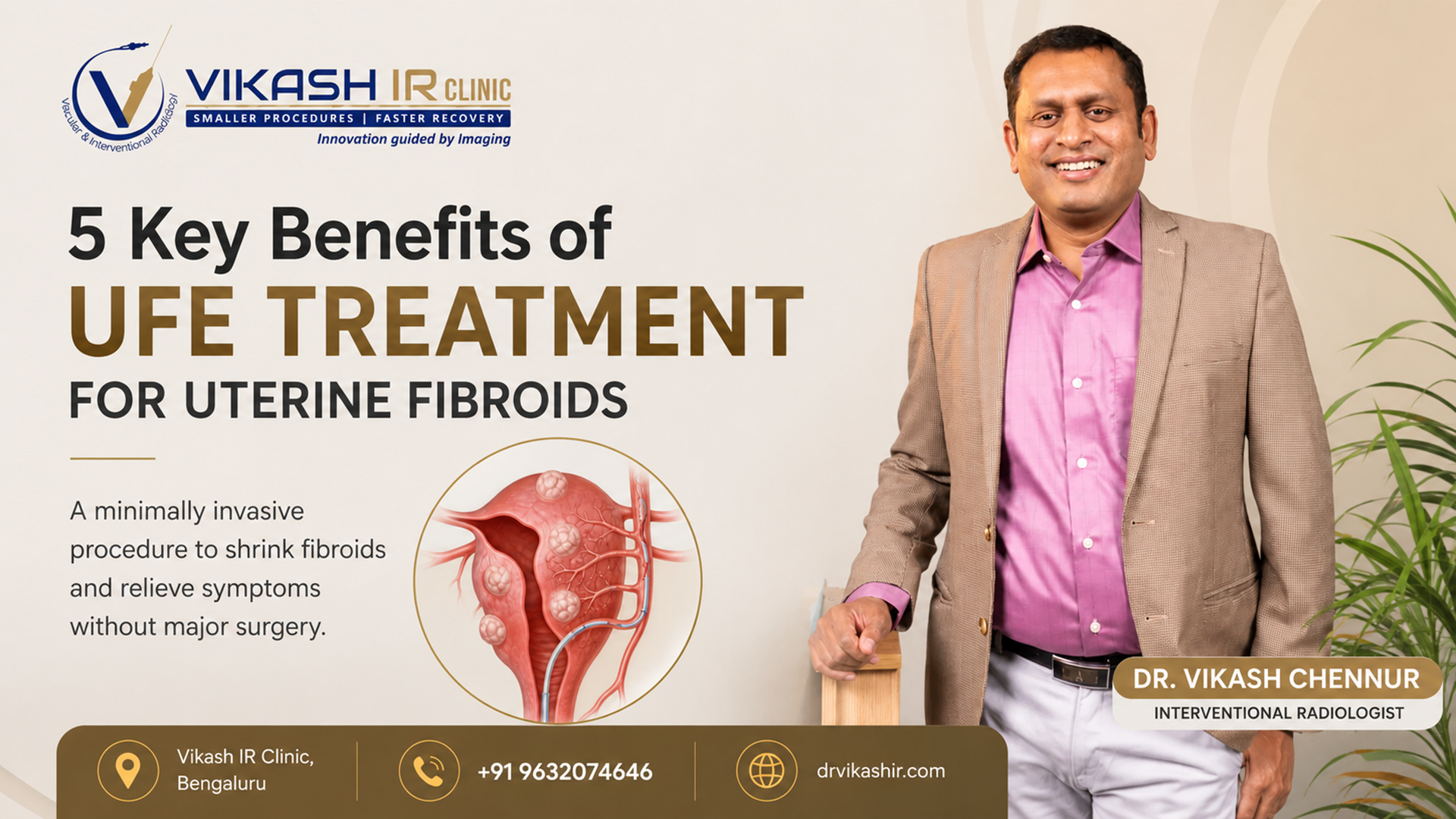
UFE Treatment for Uterine Fibroids
UFE Treatment for Uterine Fibroids (Uterine Fibroid Embolization) is a modern, minimally invasive procedure designed to treat uterine fibroids without the need for open surgery or hysterectomy. It is performed by interventional radiologists using advanced imaging guidance to block the blood supply to fibroids, causing them to shrink gradually and relieve symptoms effectively.
Uterine fibroids are non-cancerous growths that develop in or around the uterus and can cause heavy menstrual bleeding, pelvic pain, pressure in the abdomen, frequent urination, and sometimes fertility-related issues. Many women struggle with these symptoms for years before finding an effective solution. UFE Treatment for Uterine Fibroids provides a safe, uterus-preserving alternative to traditional surgery with faster recovery and fewer complications.
Understanding Uterine Fibroids
Uterine fibroids are muscular tumors that grow within the uterine wall or cavity. They can vary in size from very small nodules to large masses that distort the shape of the uterus.
Common symptoms include:
- Heavy or prolonged menstrual bleeding
- Severe menstrual cramps
- Pelvic pressure or pain
- Frequent urination
- Constipation
- Abdominal swelling or bloating
- Pain during intercourse
Not all fibroids cause symptoms, but when they do, treatment becomes necessary to improve quality of life.
What is UFE Treatment for Uterine Fibroids?
UFE Treatment for Uterine Fibroids is a catheter-based procedure in which small particles are injected into the uterine arteries to block blood flow to fibroids.
Once the blood supply is cut off:
- Fibroids shrink gradually
- Symptoms reduce over time
- Uterus is preserved
- No large surgical incision is needed
This makes UFE one of the most effective non-surgical treatments for fibroids.
How UFE Treatment is Performed
The procedure is done in an interventional radiology suite and typically includes the following steps:
- Local anesthesia is given in the groin or wrist area
- A thin catheter is inserted into the artery
- The catheter is guided to the uterine arteries using imaging
- Tiny embolic particles are released
- Blood flow to fibroids is blocked
- Fibroids begin to shrink over time
The entire procedure usually takes 1–2 hours and most patients go home the same day or after a short stay.
5 Key Benefits of UFE Treatment for Uterine Fibroids
1. No Open Surgery Required
UFE eliminates the need for hysterectomy or myomectomy. It is performed through a tiny puncture without stitches or large incisions, making it a truly non-surgical option.
2. Faster Recovery
Compared to traditional surgery, recovery after UFE Treatment for Uterine Fibroids is much quicker. Most women return to normal activities within a few days instead of weeks.
3. Uterus Preservation
One of the biggest advantages of UFE is that it preserves the uterus. This is important for women who want to maintain their reproductive organs or avoid major surgery.
4. Effective Symptom Relief
UFE significantly reduces symptoms such as heavy bleeding, pelvic pain, pressure, and bloating. Many patients notice improvement within a few weeks.
5. Minimal Pain and Short Hospital Stay
Since it is minimally invasive, patients experience less pain compared to surgery and usually require only a short hospital stay or same-day discharge.
Who Can Benefit from UFE Treatment?
UFE Treatment for Uterine Fibroids is suitable for women who experience:
- Heavy menstrual bleeding
- Pelvic pain or pressure
- Enlarged fibroids
- Multiple fibroids
- Fibroid-related infertility issues (selected cases)
- Desire to avoid hysterectomy
A proper evaluation is required to determine suitability.
Advantages Over Traditional Surgery
Compared to hysterectomy or open fibroid removal surgery, UFE offers:
- No large cuts or stitches
- Less blood loss
- Lower risk of complications
- Faster return to normal life
- Uterus preservation
- Outpatient or short-stay procedure
Recovery After UFE Treatment
Recovery is generally smooth and includes:
- Mild cramps for 1–3 days
- Fatigue for a short period
- Return to normal routine within a week
- Gradual shrinkage of fibroids over weeks/months
- Follow-up imaging for progress
Pain medication may be prescribed for comfort during early recovery.
Risks and Safety
UFE is considered safe, but like any medical procedure, it may include some risks:
- Mild pelvic pain or cramps
- Temporary fever
- Fatigue
- Rare infection
- Rare complications affecting ovaries or uterus
When performed by experienced interventional radiologists, complication rates are very low.
Why Choose UFE Treatment for Uterine Fibroids?
Women prefer UFE Treatment for Uterine Fibroids because it offers:
- Minimally invasive approach
- No major surgery
- Faster recovery
- Effective long-term relief
- Uterus preservation
- High success rate
- Improved quality of life
It is one of the most advanced treatments available for fibroid management today.
Importance of Early Treatment
Early diagnosis and treatment of fibroids can prevent complications such as severe anemia, infertility issues, and worsening pain. Women experiencing symptoms should consult a specialist early to explore non-surgical options like UFE.
Future of Fibroid Treatment
The future of UFE Treatment for Uterine Fibroids is promising, with continuous improvements in imaging technology and embolization materials. These advancements are making the procedure even safer, more precise, and more effective.
Frequently Asked Questions (FAQs)
1. What is UFE Treatment for Uterine Fibroids?
It is a minimally invasive procedure that blocks blood supply to fibroids, causing them to shrink naturally without surgery.
2. Is UFE better than hysterectomy?
For many women, yes. UFE avoids surgery, preserves the uterus, and offers faster recovery with fewer complications.
3. How long does recovery take?
Most patients recover within a few days and return to normal life within a week.
4. Is UFE painful?
Mild to moderate cramping may occur after the procedure, but it is temporary and manageable with medication.
5. Can fibroids come back after UFE?
Treated fibroids usually shrink permanently, but new fibroids may develop over time in some cases.
6. Does UFE affect fertility?
UFE may affect fertility in some women, so it should be discussed with a specialist if pregnancy is planned.
7. How long does the procedure take?
The procedure usually takes about 1 to 2 hours depending on the complexity.
Conclusion
UFE Treatment for Uterine Fibroids is a safe, effective, and uterus-preserving alternative to surgery. It provides long-term relief from fibroid symptoms using a minimally invasive, image-guided approach. With faster recovery, minimal pain, and excellent outcomes, UFE has become one of the most preferred treatments for women seeking non-surgical fibroid care.