
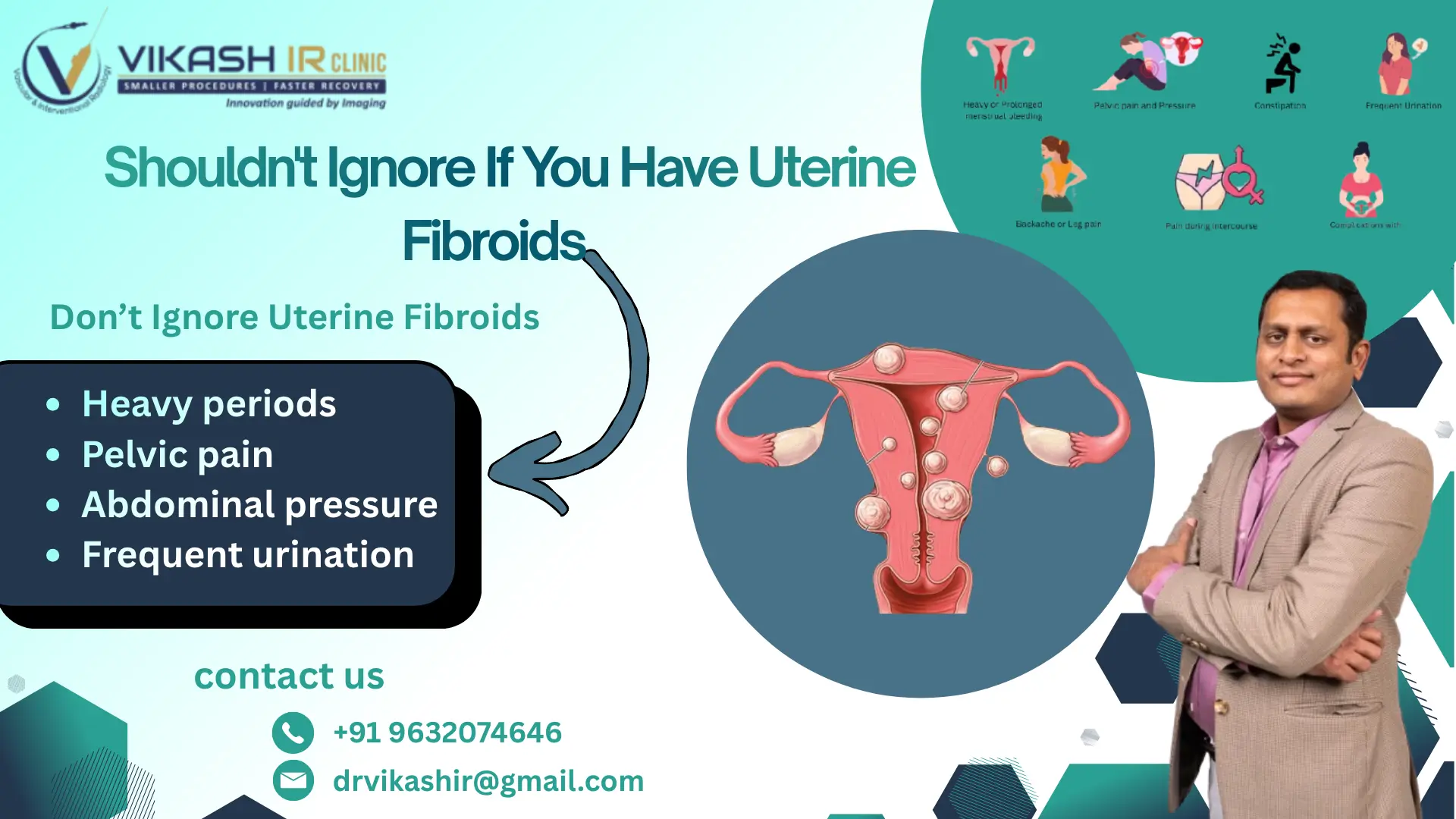
Uterine fibroids are common, non-cancerous growths that develop in or around the muscular wall of the uterus. Some women have fibroids without experiencing any symptoms, while others may develop heavy menstrual bleeding, pelvic pressure, pain, urinary problems, or fertility concerns. The size, number, and location of the fibroids can significantly influence how symptoms appear.
Knowing the warning signs is important because symptoms can gradually become part of everyday life. A woman may start considering heavy periods, abdominal heaviness, or fatigue “normal” until these problems begin affecting work, sleep, exercise, relationships, or overall quality of life.
Shouldn’t Ignore If You Have Uterine Fibroids is particularly important when symptoms are persistent, worsening, or interfering with normal activities. Early medical evaluation can help determine whether monitoring, medication, minimally invasive treatment, or surgery is appropriate.
What Are Uterine Fibroids?
Uterine fibroids, also called leiomyomas or myomas, are benign growths arising from uterine muscle tissue. They can occur within the uterine wall, project into the uterine cavity, or grow toward the outer surface of the uterus. Some remain small, while others can become considerably larger.
Not every fibroid needs treatment. If a fibroid is small and causes no symptoms, a doctor may recommend observation and periodic imaging. However, significant or progressive symptoms should not be ignored.
Shouldn’t Ignore If You Have Uterine Fibroids becomes especially relevant when symptoms are affecting your daily routine or causing anemia, persistent pain, or pressure-related problems.
Uterine Fibroid Symptoms, Causes and Diagnosis
Symptoms You Shouldn’t Ignore
The following symptoms deserve medical attention, particularly when they are persistent or becoming worse.
1. Very Heavy or Prolonged Menstrual Bleeding
Heavy periods are among the most common symptoms associated with fibroids. Bleeding may last longer than usual or require frequent changing of sanitary products. Passing large blood clots may also occur.
Persistent heavy bleeding can result in iron-deficiency anemia, which may cause tiredness, weakness, dizziness, headaches, or shortness of breath.
2. Pelvic Pain or Pressure
A feeling of heaviness, fullness, or pressure in the lower abdomen can occur when fibroids become larger. Some women describe persistent pelvic discomfort rather than sharp pain.
If pelvic pain is severe, new, or progressively worsening, it should be evaluated rather than automatically attributed to fibroids.
3. Lower Back Pain
Larger fibroids may put pressure on surrounding structures and contribute to lower back discomfort. Persistent back pain, particularly when associated with other pelvic symptoms, deserves assessment.
4. Frequent Urination
A fibroid positioned near the bladder may create pressure and make you feel the need to urinate more frequently. Some women may also experience difficulty completely emptying the bladder.
5. Constipation or Bowel Pressure
Fibroids growing toward the back of the pelvis may press against the bowel. This can contribute to constipation, rectal pressure, abdominal discomfort, or difficulty with bowel movements.
6. Pain During Sexual Intercourse
Pain during intercourse can sometimes occur because of the position or size of a fibroid. Persistent or unexplained pain should be discussed with a gynecologist.
7. Abdominal Enlargement or Persistent Bloating
A large fibroid or multiple fibroids may make the abdomen appear enlarged. Some women notice increasing abdominal fullness or a sensation that their clothes are becoming tighter.
8. Fertility or Pregnancy Concerns
Fibroids do not automatically cause infertility, but certain fibroids—depending on their location and size—can affect fertility or pregnancy. If you are having difficulty conceiving, a proper evaluation is important rather than assuming fibroids are the only cause.
9. Symptoms That Suddenly Become Severe
Sudden severe pelvic pain, fever, fainting, very heavy bleeding, or significant weakness requires prompt medical evaluation. These symptoms should not simply be assumed to be “normal fibroid pain.”
Shouldn’t Ignore If You Have Uterine Fibroids is not about assuming every symptom is dangerous. It is about recognizing when a symptom needs professional assessment.
What Causes Uterine Fibroids?
The exact cause of fibroids is not completely understood. Research indicates that genetic and hormonal factors are involved. Estrogen and progesterone appear to influence fibroid growth, while family history may also play a role.
Fibroids commonly occur during the reproductive years and may shrink after menopause as hormone levels decline. However, individual experiences vary.
How Are Fibroids Diagnosed?
Diagnosis generally begins with a medical history and pelvic examination. Ultrasound is commonly used to identify fibroids and assess their size and location. Depending on the clinical situation, additional imaging such as MRI may be recommended for detailed treatment planning. Other tests may be appropriate when symptoms such as heavy bleeding need further investigation.
The objective is not simply to identify a fibroid but to understand:
- How many fibroids are present
- Their size and location
- Whether they are changing
- Whether they explain the symptoms
- Whether anemia or another condition is present
- Which treatment options may be suitable
Uterine Fibroid Treatment, Procedure, Benefits and Recovery
When Is Treatment Recommended?
Not every woman with fibroids needs immediate treatment. Observation may be appropriate when fibroids are small and symptoms are absent or minimal.
Treatment may be considered when there is heavy or painful menstrual bleeding, anemia, pelvic pain, pressure symptoms, rapid growth, fertility concerns, or significant interference with daily activities.
Shouldn’t Ignore If You Have Uterine Fibroids should therefore be viewed as a reminder to discuss troublesome symptoms with a qualified healthcare professional.
Uterine Fibroid Treatment Options
Treatment depends on your age, symptoms, fibroid characteristics, reproductive plans, overall health, and personal preferences.
Medication
Medicines may help control heavy bleeding and menstrual pain. Some hormonal treatments can reduce symptoms, although they may not permanently eliminate fibroids. Treatment should be selected by a healthcare professional based on your individual circumstances.
Myomectomy
A myomectomy removes fibroids while preserving the uterus . It may be performed through different surgical approaches depending on the fibroid’s size and location.
Hysterectomy
Hysterectomy involves removal of the uterus and permanently eliminates the possibility of pregnancy. It may be considered for women with severe symptoms when other approaches are unsuitable or unsuccessful.
Uterine Fibroid Embolization
Uterine artery embolization (UAE), also known as uterine fibroid embolization in clinical practice, is a minimally invasive treatment performed by an interventional radiologist.
During the procedure, a catheter is guided into the arteries supplying the uterus. Tiny particles are then delivered to reduce blood flow to the fibroids, causing them to shrink over time. ACOG notes that UAE can generally be performed as an outpatient procedure in many cases.
This can be an important Fibroid Treatment Without Surgery option for appropriately selected patients. However, it is not suitable for everyone, and decisions should be individualized.
Benefits of Minimally Invasive Fibroid Treatment
For appropriately selected patients, uterine artery embolization may offer several advantages:
- No large abdominal incision
- Uterus preservation
- Targeted treatment of fibroid blood supply
- Shorter recovery compared with major abdominal surgery in many cases
- Reduced disruption to daily activities
- Treatment of multiple fibroids during one procedure
The exact benefits and risks vary from patient to patient. Fertility and future pregnancy plans should be discussed carefully before choosing UAE because the effect of UAE on future pregnancy is not fully established.
Recovery After Uterine Fibroid Embolization
Recovery varies according to the patient and the procedure. Cramping, pelvic discomfort, fatigue, nausea, or low-grade fever can occur temporarily after embolization. Your treating team will provide medication and instructions to manage these symptoms.
Follow-up imaging may be recommended to assess fibroid shrinkage and treatment response. Recovery should always be discussed with your treating specialist because individual timelines differ.
Uterine Fibroid Treatment Cost
The Uterine Fibroid treatment cost can vary substantially. Factors may include the number and size of fibroids, imaging requirements, procedure type, hospital or facility charges, medications, anesthesia or sedation, specialist fees, and follow-up care.
Therefore, an online price should not be treated as a final estimate. A consultation and review of imaging are usually necessary before providing a meaningful treatment plan and cost estimate.
Shouldn’t Ignore If You Have Uterine Fibroids also means not delaying consultation simply because you are concerned about treatment cost. Early evaluation can clarify whether you need treatment at all and which options may be appropriate.
Comparison: Fibroid Treatment Without Surgery vs Surgery
| Factor | Minimally Invasive Treatment | Surgical Treatment |
| Large incision | Usually not required | May be required depending on procedure |
| Uterus preservation | Possible with selected treatments | Possible with myomectomy |
| Recovery | Often shorter | Depends on surgical approach |
| Multiple fibroids | Can be treated in selected cases | May require removal individually |
| Pregnancy considerations | Requires individualized discussion | Depends on procedure |
| Suitability | Depends on fibroid characteristics | Depends on symptoms and anatomy |
No single treatment is best for every patient. A gynecologist and interventional radiologist can help determine the most appropriate approach.
Frequently Asked Questions
1. Are uterine fibroids cancerous?
Most uterine fibroids are benign, meaning they are not cancer. However, unusual or rapidly changing symptoms should always be evaluated by a qualified healthcare professional.
2. Can fibroids cause heavy periods?
Yes. Heavy, prolonged, or more frequent menstrual bleeding is a common symptom of fibroids and may sometimes lead to anemia.
3. Can uterine fibroids be treated without surgery?
Yes. Depending on the location, size, number of fibroids, symptoms, and individual circumstances, options such as uterine artery embolization may provide a minimally invasive alternative to traditional surgery.
4. Is uterine artery embolization suitable for every woman?
No. UAE is not appropriate for every patient. A detailed assessment of symptoms, imaging, reproductive goals, overall health, and fibroid characteristics is required.
5. Can fibroids affect fertility?
Some fibroids may affect fertility, but many women with fibroids can conceive. Other causes of infertility should also be investigated before concluding that fibroids are responsible.
6. How are fibroids diagnosed?
Pelvic examination and ultrasound are commonly used. MRI or other investigations may be recommended when more detailed information is required for diagnosis or treatment planning.
7. Do all fibroids require treatment?
No. Fibroids without significant symptoms may sometimes be monitored. Treatment is generally considered when symptoms or complications justify intervention.
8. What is the recovery time after fibroid embolization?
Recovery differs between individuals. Many patients can resume routine activities relatively quickly, but the exact timeline depends on the procedure, symptoms, and individual health.
9. How much does uterine fibroid treatment cost?
The Uterine Fibroid treatment cost depends on the selected treatment, hospital or facility, investigations, fibroid characteristics, medications, and follow-up. A personalized estimate requires medical evaluation.
About Dr. Vikash Chennur
Dr. Vikash Chennur is a senior Interventional Radiologist and the founder of Vikash IR Clinic in Bengaluru. His professional profile lists MD Radiology, EBIR, FRANZCR and FVIR qualifications, with training at AIIMS and clinical experience across India, Canada, and Australia. His clinic describes him as an AIIMS Gold Medalist with extensive experience in image-guided minimally invasive procedures.
His clinical services include:
- Uterine Fibroid Embolization
- Thyroid Nodule Ablation
- Thyroid Artery Embolization
- Varicocele Embolization
- Prostate Artery Embolization
- Varicose Vein Treatment
- Fibroadenoma Treatment
- Interventional Pain Management
- Image-guided Tumor Ablation
- Liver Cancer Ablation
- Transarterial Chemoembolization (TACE)
- Hepatobiliary and portal hypertension interventions
- Genicular Artery Embolization
- Musculoskeletal embolization and other interventional radiology procedures
His clinic emphasizes individualized treatment decisions, minimally invasive image-guided procedures, and a patient-first approach.
Book an Appointment
If heavy bleeding, pelvic pressure, persistent pain, frequent urination, abdominal enlargement, or other symptoms are affecting your quality of life, do not continue to ignore them.
Shouldn’t Ignore If You Have Uterine Fibroids is ultimately a message about timely evaluation—not assuming that every fibroid requires surgery, and not waiting until symptoms become difficult to manage.
If you are looking for an evaluation for Uterine Fibroids, including minimally invasive options such as uterine fibroid embolization, you can consult Dr. Vikash Chennur, AIIMS Gold Medalist and Endovascular Interventional Radiologist, for an individualized assessment.
Vikash IR Clinic
Docube, 1st Floor, 15, Bannerghatta Road, 3rd Phase, J. P. Nagar, Bengaluru, Karnataka.
Book your consultation to understand your fibroid size, location, symptoms, treatment options, expected recovery, and estimated treatment cost before making a decision.
Shouldn’t Ignore If You Have Uterine Fibroids—getting the right diagnosis and discussing all suitable treatment choices can help you make a more informed decision about your health.