
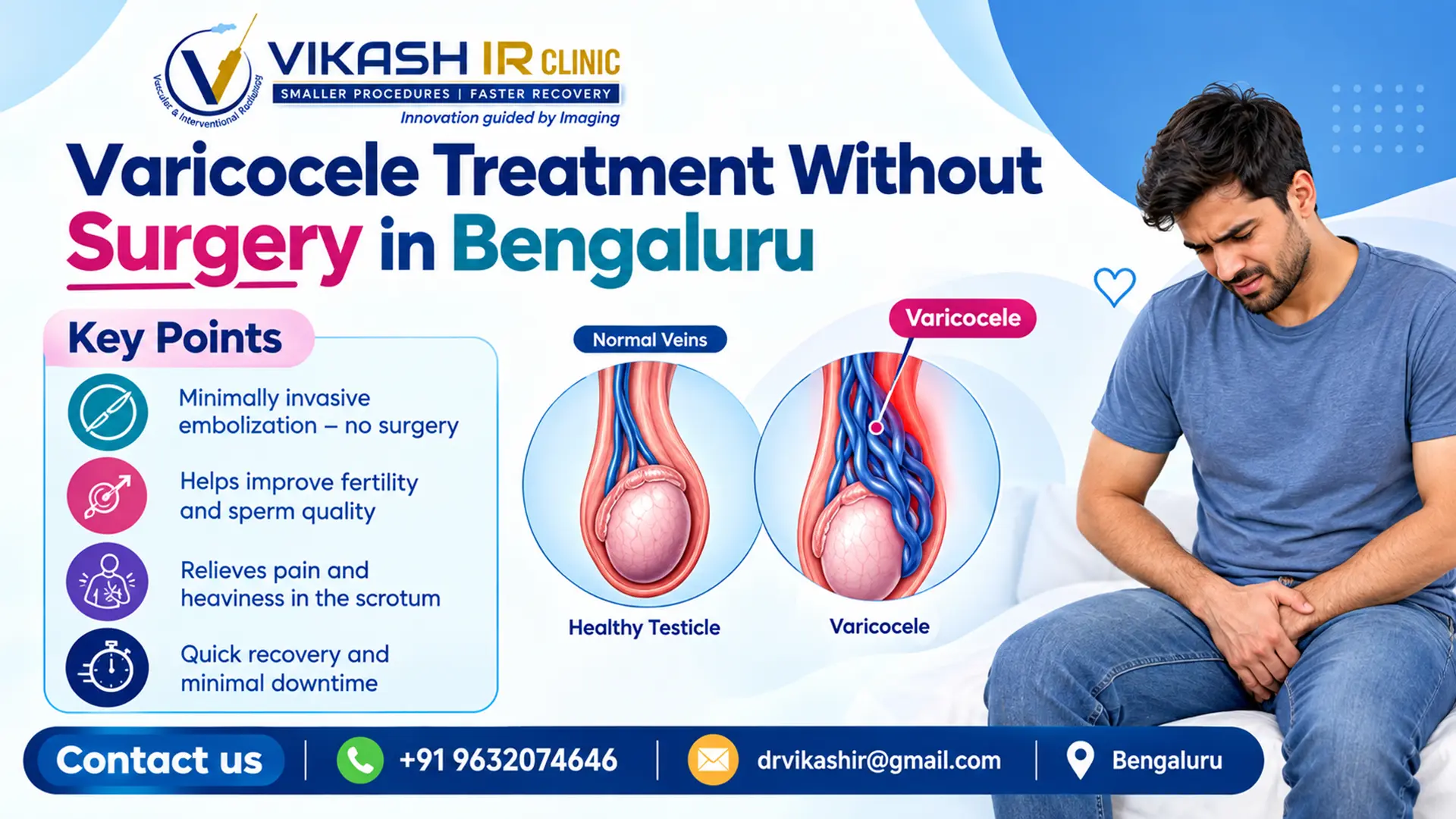
Varicocele Treatment Without Surgery in Bengaluru is increasingly discussed by men looking for minimally invasive options for a varicocele, particularly when symptoms such as scrotal discomfort, swelling, or fertility concerns are present. One such option is varicocele embolization, an image-guided procedure performed by an interventional radiologist.
A varicocele is an enlargement of veins in the scrotum caused by abnormal blood flow. Not every varicocele requires treatment. It totally depends on symptoms, clinical findings, fertility goals, semen analysis, testicular health, and other individual factors.
For suitable patients, Varicocele Treatment Without Surgery in Bengaluru may involve catheter-based embolization rather than an open surgical incision. This article explains symptoms, causes, diagnosis, the embolization procedure, potential benefits, recovery, and how it compares with surgical treatment.
What Is Varicocele and When Does It Need Treatment?
A varicocele is similar to enlarged or dilated veins, but it occurs around the testicle. It most commonly affects the left side because of differences in venous anatomy. Some men have no symptoms, while others may experience discomfort or fertility-related concerns.
Symptoms of Varicocele
Common symptoms can include:
- Dull or aching scrotal pain
- A feeling of heaviness in the scrotum
- Swelling or enlarged veins
- Symptoms that become more noticeable after prolonged standing or physical activity
- Testicular size differences in some patients
- Abnormal semen parameters in men being evaluated for infertility
Varicoceles are also associated with male subfertility, although having a varicocele does not automatically mean that a man will have fertility problems.
Causes and Risk Factors
A varicocele generally develops when blood does not flow normally through the veins that drain the testicle. Venous reflux can cause blood to pool in the veins, resulting in their enlargement.
The condition may be associated with increased scrotal temperature, impaired testicular function, and abnormal semen parameters in some men.
Treatment is not automatically required for every varicocele. A specialist may consider treatment when there is a clinically significant varicocele together with symptoms, abnormal semen parameters, testicular growth concerns, or another appropriate clinical indication. Current European guidance specifically recommends against treating men with a subclinical varicocele or infertile men with a clinical varicocele and normal semen analysis solely for infertility.
Diagnosis
Diagnosis generally begins with a physical examination. The doctor may examine the scrotum while the patient is standing and may ask him to perform a Valsalva manoeuvre.
A scrotal Doppler ultrasound can provide additional information about the veins and blood reflux, particularly when the physical examination is inconclusive or when persistent or recurrent varicocele is suspected.
For men being evaluated for infertility, a semen analysis may also be recommended to assess sperm concentration, motility, and morphology. The complete evaluation should consider both partners and other potential causes of infertility where appropriate.
Varicocele Treatment Without Surgery in Bengaluru: How Embolization Works
One of the minimally invasive approaches is varicocele embolization. Unlike conventional surgery, embolization uses a catheter introduced through a blood vessel to reach and treat the abnormal veins.
What Is Varicocele Embolization?
Varicocele embolization is an image-guided procedure performed by an interventional radiologist. A small catheter is introduced through a vein, commonly through the groin or neck, and guided toward the veins responsible for the varicocele. Contrast material may be used to identify the abnormal venous drainage. Tiny coils and/or an embolic material can then be placed to block the abnormal blood flow and redirect circulation through healthier veins.
The procedure is minimally invasive and does not require a conventional surgical incision over the scrotum. RadiologyInfo notes that it is commonly performed as an outpatient procedure and typically takes about an hour, although individual circumstances can vary.
Who May Be Considered for Embolization?
Suitability depends on the individual diagnosis and treatment goals. A specialist may consider embolization for a clinically significant varicocele associated with symptoms or selected fertility-related concerns.
Men considering treatment for infertility should have an appropriate fertility evaluation rather than assuming that the varicocele is the only cause. Current guidelines indicate that treatment may be appropriate in infertile men with a clinical varicocele, abnormal semen parameters, and otherwise unexplained infertility in appropriate circumstances.
Therefore, Varicocele Treatment Without Surgery in Bengaluru should be considered after clinical assessment rather than as a universal alternative for every patient.
What Happens During the Procedure?
The general process may include:
- The patient is positioned in the interventional radiology suite.
- Monitoring equipment is connected to check vital signs.
- Local anaesthesia is used at the catheter-entry site, with sedation provided when appropriate.
- A small catheter is introduced into a suitable vein.
- Imaging and contrast help the interventional radiologist identify the abnormal venous drainage.
- Coils or another embolic material are placed to block the targeted vein.
- The catheter is removed and pressure is applied at the access site.
- The patient is monitored during recovery before discharge when appropriate.
The exact technique and embolic material can vary depending on the patient’s anatomy and the treating specialist’s approach.
Benefits, Recovery and Comparison With Surgery
For appropriately selected patients, Varicocele Treatment Without Surgery in Bengaluru through embolization may offer several practical advantages.
Potential Benefits
Potential benefits of embolization include:
- No conventional surgical incision over the scrotum
- Minimally invasive catheter-based treatment
- Usually a shorter recovery period than conventional surgery
- Often performed on an outpatient basis
- No visible surgical stitches at the scrotal treatment site
- Potential relief of varicocele-related pain or swelling
- Potential improvement in semen quality in appropriately selected infertile men
RadiologyInfo reports that normal activities can often be resumed within approximately 24 hours, although recovery differs between patients. Mild local scrotal discomfort can occur for several days after treatment.
Importantly, the goal is not simply to close a vein but to correct abnormal venous drainage while maintaining normal blood flow through healthy pathways.
Recovery After Embolization
Recovery is generally relatively short, but patients should follow their individual discharge instructions.
Some patients may experience temporary:
- Groin or neck access-site discomfort
- Mild scrotal pain or heaviness
- Bruising at the catheter-entry site
- Local inflammation
RadiologyInfo states that localized scrotal discomfort may persist for up to about a week in some patients.
Patients should contact their treating doctor if they develop severe or worsening pain, significant swelling, fever, bleeding, or other unexpected symptoms.
Embolization vs Surgical Varicocelectomy
Both embolization and surgical varicocele repair are established treatment approaches, but they differ in technique.
| Feature | Varicocele Embolization | Surgical Varicocelectomy |
| Approach | Catheter-based | Surgical |
| Scrotal incision | Usually no | Usually required |
| Anaesthesia | Local anaesthesia with sedation in many cases | Depends on surgical technique |
| Recovery | Generally short | Varies by surgical approach |
| Specialist | Interventional radiologist | Surgeon/urologist |
| Recurrence | Can occur | Can also occur |
| Suitability | Depends on venous anatomy and clinical factors | Depends on clinical and surgical factors |
Current EAU guidance describes radiological techniques such as embolization and sclerotherapy as minimally invasive options. It also notes that microsurgical repair may have lower recurrence and complication rates than some other techniques, while evidence comparing radiological and surgical approaches remains complex.
This means there is no single procedure that is appropriate for every patient. The choice should be based on the patient’s anatomy, symptoms, fertility objectives, previous treatment, and discussion with an appropriately qualified specialist.
Varicocele Treatment Without Surgery in Bengaluru: Choosing the Right Specialist
When considering Varicocele Treatment Without Surgery in Bengaluru, patients should look for an interventional radiologist experienced in image-guided vascular procedures. The consultation should include discussion of the diagnosis, treatment alternatives, expected benefits, potential risks, recovery, and whether further fertility evaluation is required.
Dr. Vikash Chennur | AIIMS Gold Medalist | Endovascular Interventional Radiologist provides minimally invasive interventional radiology care, including catheter-based treatment approaches such as varicocele embolization. His practice focuses on image-guided vascular and endovascular interventions.
A consultation can help determine whether embolization is appropriate or whether another treatment strategy would be more suitable.
Frequently Asked Questions
1. Is Varicocele Embolization a surgery?
No. Varicocele embolization is a minimally invasive, catheter-based procedure rather than conventional open surgery. A catheter is guided through a blood vessel to treat the abnormal veins.
2. Is Varicocele Treatment Without Surgery in Bengaluru suitable for everyone?
No. Treatment is individualized. Some varicoceles do not require treatment, while others may require intervention based on symptoms, fertility concerns, semen analysis, testicular health, or other clinical findings.
3. Can varicocele embolization improve fertility?
Varicocele treatment may improve semen parameters in appropriately selected men, but fertility outcomes depend on multiple factors. Current guidelines support treatment in selected infertile men with a clinical varicocele and abnormal semen parameters when other causes of infertility have not explained the problem.
4. How long does varicocele embolization take?
RadiologyInfo states that the procedure is usually completed within about one hour, although the total time at the medical facility can be longer because of preparation and recovery.
5. How quickly can I return to normal activities?
Many patients can resume normal activities within about 24 hours, but the treating doctor may recommend restrictions depending on the procedure and individual recovery.
6. Can a varicocele return after embolization?
Yes. Recurrence or persistence is possible. RadiologyInfo reports recurrence in approximately 5–10% of patients after embolization, while the EAU guideline reports variable recurrence/persistence rates depending on the radiological technique.
7. Does embolization require an incision?
It requires a very small access point for the catheter, but it does not require the conventional surgical incision used for open treatment. No visible stitches are typically required at the access site.
8. Is varicocele embolization painful?
Local anaesthesia and, when appropriate, sedation are used to make the procedure comfortable. Some patients may experience temporary discomfort afterward.
9. Should I have a semen analysis before treatment?
If fertility is a concern, semen analysis is commonly an important part of the evaluation. Your specialist may recommend additional tests based on your medical history and examination.
10. What should I do before choosing treatment?
Discuss your symptoms, fertility goals, examination findings, Doppler ultrasound results, semen analysis, and available treatment options with a qualified specialist. This helps determine whether embolization, surgery, monitoring, or another approach is appropriate.
Conclusion
Varicocele Treatment Without Surgery in Bengaluru can include varicocele embolization, a minimally invasive image-guided procedure that treats abnormal venous blood flow using a catheter and embolic materials. It may be an option for appropriately selected patients with symptomatic or clinically significant varicocele, including some men being evaluated for infertility.
The decision to treat should be individualized rather than based solely on the presence of a varicocele. A proper clinical examination, Doppler assessment, and fertility evaluation when indicated can help guide treatment planning.
If you are considering Varicocele Treatment Without Surgery in Bengaluru, consult Dr. Vikash Chennur | AIIMS Gold Medalist | Endovascular Interventional Radiologist to discuss whether varicocele embolization is appropriate for your condition and treatment goals. Book an appointment for a personalized evaluation and understand your minimally invasive treatment options.