
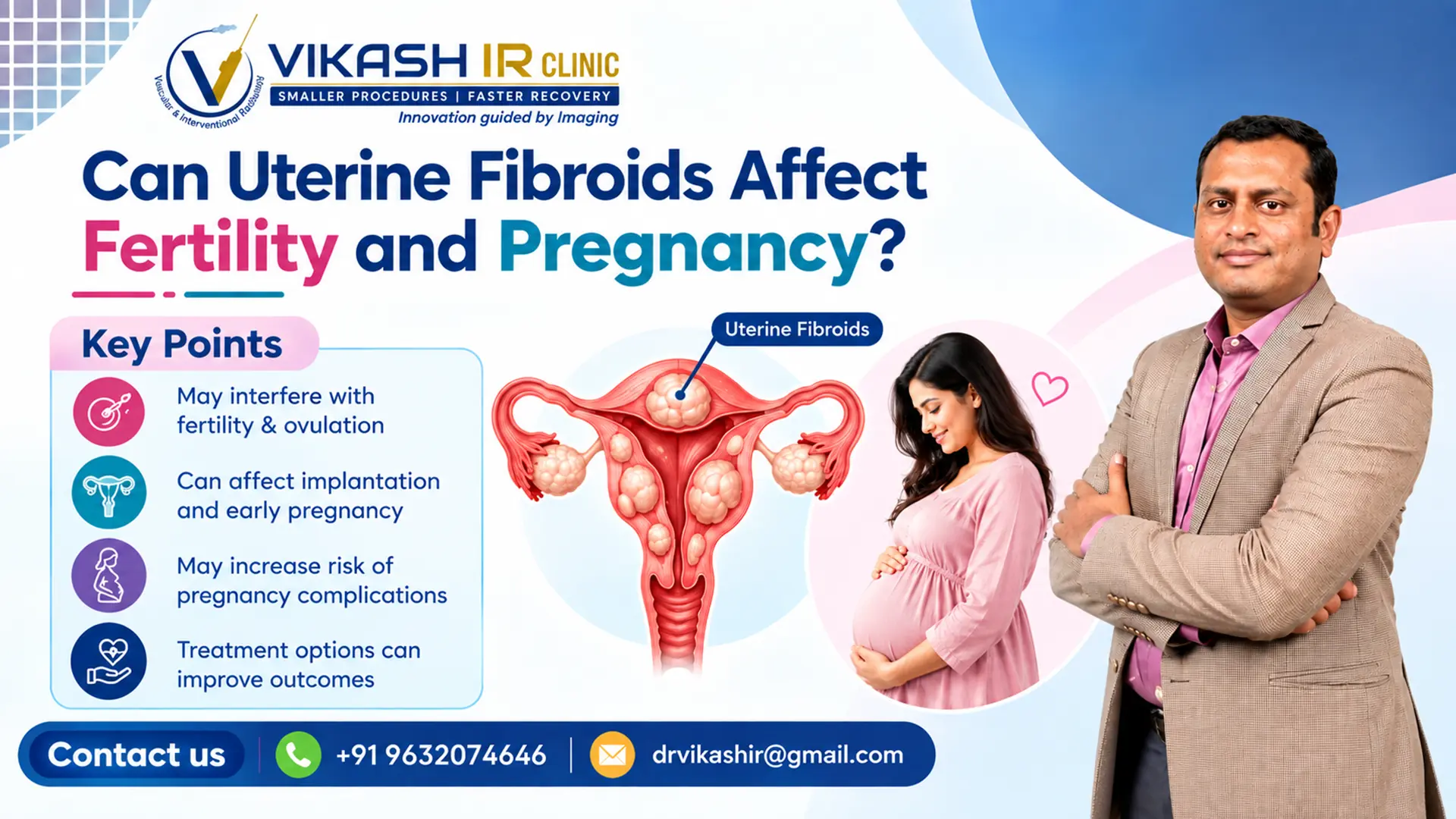
Uterine fibroids are common, non-cancerous growths that develop in or around the uterus. Many women have fibroids without experiencing significant symptoms, while others may develop heavy menstrual bleeding, pelvic discomfort, pressure, or reproductive difficulties. A common concern is whether Uterine Fibroids and Fertility are connected and whether fibroids can make it harder to become pregnant or affect pregnancy.
The answer depends on several factors, including the size, number, and location of the fibroids. Fibroids that distort the uterine cavity may have a greater impact on fertility than fibroids located elsewhere in the uterus. However, having fibroids does not automatically mean that pregnancy is impossible.
Understanding Can Uterine Fibroids Affect Fertility and Pregnancy is important for women who are planning a family. Appropriate evaluation can help determine whether a fibroid is likely to affect conception, implantation, pregnancy, or delivery.
Symptoms, Causes and Diagnosis of Uterine Fibroids
Common Symptoms
Some women with fibroids have no symptoms at all. When symptoms occur, they may include:
- Heavy or prolonged menstrual bleeding
- Pelvic pressure or discomfort
- Lower abdominal pain
- Pain during sexual intercourse
- Frequent urination caused by pressure on the bladder
- Constipation or bowel pressure
- Abdominal enlargement
- Difficulty conceiving in some cases
- Pregnancy-related complications in selected cases
The relationship between Uterine Fibroids and Fertility is particularly important when a woman has been trying to conceive without success.
Causes and Risk Factors
The exact reason why fibroids develop is not completely understood. Their growth appears to be influenced by hormones such as estrogen and progesterone, along with genetic and other biological factors.
Risk factors may include:
- Family history of fibroids
- Reproductive age
- Hormonal influences
- Certain genetic factors
- Obesity and metabolic factors
Diagnosis
A doctor may evaluate suspected fibroids through a medical history, pelvic examination, and imaging. Ultrasound is commonly used to identify fibroids and assess their size and location. In selected situations, additional imaging such as MRI may provide more detailed information.
For women planning pregnancy, the doctor may pay particular attention to whether a fibroid distorts the uterine cavity, because this can be more relevant to implantation and fertility.
Can Uterine Fibroids Affect Fertility and Pregnancy?
How Fibroids May Affect Fertility
Not every fibroid affects fertility. Their potential effect depends largely on where they are located.
Submucosal fibroids, which grow toward or into the uterine cavity, are more likely to interfere with implantation. Certain larger intramural fibroids may also affect fertility, particularly when they significantly alter the shape of the uterus.
Possible ways fibroids may influence conception include:
- Altering the shape of the uterine cavity
- Interfering with embryo implantation
- Affecting the normal movement of sperm or embryos
- Causing changes in the uterine environment
- Occasionally affecting blood flow around the uterus
Therefore, Uterine Fibroids and Fertility should be evaluated on an individual basis rather than assuming that every fibroid requires treatment.
Fibroids During Pregnancy
Many women with fibroids have healthy pregnancies. However, depending on their size and location, fibroids may sometimes be associated with pregnancy complications.
Potential concerns can include:
- Pelvic pain during pregnancy
- Increased risk of certain pregnancy complications
- Placental problems in selected cases
- Malpresentation of the baby
- Preterm delivery in some circumstances
- Increased likelihood of caesarean delivery
This does not mean that women with fibroids cannot have a normal pregnancy. Regular obstetric monitoring can help identify problems early.
When Should You Seek Evaluation?
Women may benefit from evaluation if they have known fibroids and are planning pregnancy, have been trying to conceive without success, experience significant menstrual bleeding, or have recurrent pregnancy losses.
A fertility evaluation should consider both partners and multiple potential causes of infertility, rather than automatically attributing fertility problems to fibroids.
Treatment, Procedures, Benefits and Recovery
When Is Treatment Necessary?
Treatment is not always required. Small fibroids that do not cause symptoms or affect the uterine cavity may simply be monitored.
Treatment decisions depend on:
- Fibroid size
- Number and location
- Symptoms
- Age and reproductive plans
- Previous pregnancy history
- Fertility goals
- Overall health
For women who want to preserve fertility, the treatment strategy should be carefully individualized.
Fibroid Treatment Without Surgery
Fibroid Treatment Without Surgery may be considered for selected women, particularly when symptomatic fibroids require treatment but avoiding open surgery is desirable.
One minimally invasive option is uterine fibroid embolization (UFE). During UFE, an interventional radiologist uses image guidance to access the blood vessels supplying the fibroid and places tiny embolic particles to reduce its blood supply. Over time, the treated fibroid generally shrinks.
UFE can provide several potential benefits:
- Minimally invasive approach
- No large abdominal incision
- Treatment of multiple fibroids during one procedure
- Reduced blood supply to targeted fibroids
- Shorter recovery than many traditional surgical procedures
However, UFE is not automatically the best treatment for every woman who wants to become pregnant. Fertility goals should be discussed carefully with an experienced gynecologist and interventional radiologist before choosing treatment. The evidence regarding fertility and pregnancy after UFE is complex, and alternative fertility-preserving treatments may be more appropriate for some patients.
Comparison With Surgical Treatment
For selected patients, surgical procedures such as myomectomy may be recommended, particularly when fibroids are significantly affecting the uterine cavity or fertility.
| Treatment | Approach | Potential Advantage | Fertility Consideration |
| Myomectomy | Surgical removal of fibroids | Removes targeted fibroids | Often considered when fertility preservation is a major goal |
| UFE | Minimally invasive embolization | Treats fibroid blood supply without removing the fibroid | Requires individualized fertility counselling |
| Observation | No immediate procedure | Avoids treatment when symptoms are mild | Appropriate when fibroids are not affecting reproductive goals |
The best option depends on the individual patient’s anatomy, symptoms, reproductive plans, and medical evaluation.
Benefits and Recovery
One of the major advantages of minimally invasive treatment is that recovery can be shorter than recovery from major abdominal surgery. After UFE, patients may experience cramping, fatigue, nausea, or pelvic discomfort for several days. Recovery varies from person to person.
Patients should follow their treating doctor’s instructions regarding physical activity, medications, follow-up visits, and plans for attempting pregnancy.
FAQs About Can Uterine Fibroids Affect Fertility and Pregnancy
1. Can uterine fibroids make it difficult to get pregnant?
Yes, certain fibroids can affect fertility, particularly those that distort the uterine cavity. However, many women with fibroids conceive naturally.
2. Can I get pregnant if I have uterine fibroids?
Yes. Having fibroids does not automatically prevent pregnancy. The impact depends on factors such as size, location, number, and whether the fibroid changes the uterine cavity.
3. Which fibroids are most likely to affect fertility?
Fibroids that grow into or significantly distort the uterine cavity are generally more concerning for implantation and fertility. Individual assessment is necessary.
4. Do fibroids increase pregnancy risks?
Some fibroids may be associated with complications during pregnancy, but many women with fibroids have uncomplicated pregnancies. Monitoring by an obstetrician is important.
5. Is Fibroid Treatment Without Surgery possible?
Yes. Uterine fibroid embolization is one minimally invasive treatment option for selected patients. Whether it is appropriate depends on symptoms, fibroid characteristics, and reproductive goals.
6. Is UFE suitable for women who want to become pregnant?
UFE may not be the first choice for every woman actively seeking pregnancy. Fertility considerations should be discussed with both a gynecologist and an experienced interventional radiologist before treatment.
7. Do all fibroids require treatment before pregnancy?
No. Treatment is not necessarily required for every fibroid. The decision depends on symptoms, location, size, fertility history, and other clinical factors.
8. Can fibroids grow during pregnancy?
Fibroid behavior during pregnancy varies. Some may increase in size, particularly during early pregnancy, while others may remain stable. Regular monitoring can help manage potential complications.
9. Can fibroids cause miscarriage?
Some fibroids, particularly those that distort the uterine cavity, may be associated with an increased risk of miscarriage. However, recurrent pregnancy loss has many possible causes and requires comprehensive evaluation.
10. How are fibroids diagnosed?
Ultrasound is commonly used to identify fibroids. MRI or other investigations may be recommended when more detailed information is needed for treatment planning.
Conclusion
So, Can Uterine Fibroids Affect Fertility and Pregnancy? Yes, they can in some women, but the impact varies considerably. Fibroid location, size, number, symptoms, and reproductive goals all play an important role in determining whether treatment is necessary.
Understanding Uterine Fibroids and Fertility can help women make informed decisions about pregnancy planning and treatment. For selected patients, Fibroid Treatment Without Surgery, including uterine fibroid embolization, may provide a minimally invasive option. However, treatment should always be personalized, particularly when future pregnancy is an important goal.
If you have symptomatic fibroids, difficulty conceiving, or concerns about how fibroids may affect pregnancy, a specialist evaluation can help identify the most appropriate approach.
Book an Appointment With Dr Vikash Chennur
Dr Vikash Chennur | AIIMS Gold Medalist | Best Endovascular Interventional Radiologist provides minimally invasive, image-guided interventional radiology services, including uterine fibroid embolization and other vascular and endovascular interventions.
If you are looking for expert guidance regarding Uterine Fibroids and Fertility, pregnancy planning, or minimally invasive treatment options, book a consultation with Dr Vikash Chennur to discuss your condition and available treatment approaches.