
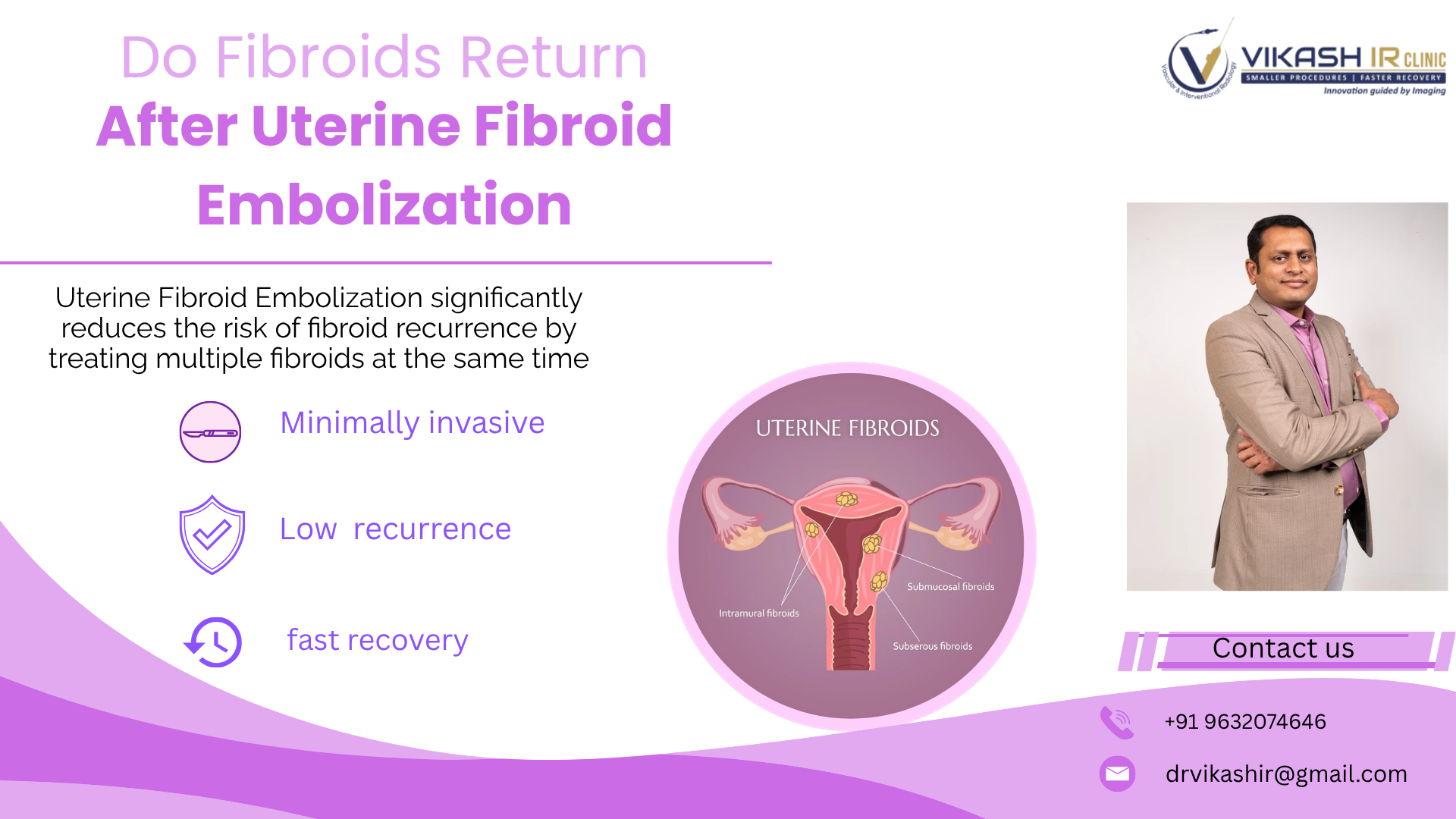
Uterine fibroids are one of the most common gynecological conditions affecting women during their reproductive years. These non-cancerous growths develop in the uterus and can cause symptoms such as heavy menstrual bleeding, pelvic pain, pressure in the lower abdomen, frequent urination, and fertility concerns.
Many women today are looking for alternatives to surgery and prefer minimally invasive treatments that offer faster recovery and preserve the uterus. Uterine Fibroid Embolization (UFE) has emerged as one of the most effective treatment options for women suffering from symptomatic fibroids.
However, one of the biggest concerns among patients is, “Do Fibroids Return After Uterine Fibroid Embolization (UFE)?“ The answer is reassuring. The fibroids treated during Uterine Fibroid Embolization (UFE) generally do not grow back because their blood supply is permanently blocked. However, some women may develop new fibroids in the future, especially if they are younger and have many reproductive years ahead.
This article explains everything you need to know about fibroid recurrence after UFE, the long-term success of the procedure, and whether new fibroids can develop after treatment.
What Are Uterine Fibroids?
Uterine fibroids are benign tumors that grow from the muscular wall of the uterus. They can vary in size, number, and location. Some women have no symptoms, while others experience severe discomfort that affects their daily lives.
Common symptoms of fibroids include:
- Heavy menstrual bleeding
- Prolonged periods
- Pelvic pain and pressure
- Frequent urination
- Lower back pain
- Constipation
- Pain during intercourse
- Difficulty becoming pregnant in some cases
When these symptoms become severe, treatment may be necessary.
What is Uterine Fibroid Embolization (UFE)?
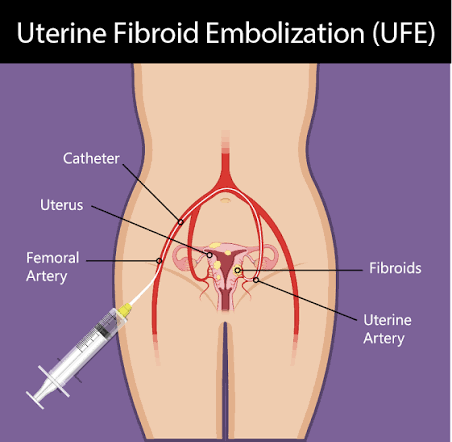
Uterine Fibroid Embolization (UFE) is a minimally invasive procedure performed by an Interventional Radiologist to treat uterine fibroids without surgery.
During this Uterine Fibroid Embolization treatment, a small catheter is inserted through the wrist or groin and guided to the uterine arteries. Tiny particles are then injected into these arteries to block the blood supply to the fibroids.
Without blood flow, the fibroids gradually shrink and die over time.
Because there are no large incisions and the uterus is preserved, UFE for uterine fibroids has become a preferred option for many women seeking effective and long-lasting relief.
Do Fibroids Return After Uterine Fibroid Embolization (UFE)?
The simple answer is No, treated fibroids usually do not return.
The embolization procedure permanently blocks the blood vessels supplying the fibroids. Once the blood supply is cut off, the fibroids shrink and cannot regrow.
However, some women may develop entirely new fibroids in the future. This is why many patients ask, “Can fibroids grow back after embolization?”
It is important to understand the difference between:
Regrowth of Treated Fibroids
This is extremely rare.
Development of New Fibroids
This is possible, especially in younger women.
Therefore, most cases of fibroid recurrence after UFE are actually due to new fibroids and not because the original treated fibroids have returned.
Why Can New Fibroids Develop?
Fibroids are influenced by hormones, particularly estrogen and progesterone.
Women who undergo Uterine Fibroid Embolization (UFE) at a younger age may still have many years before menopause, allowing new fibroids to develop naturally.
Risk factors include:
- Family history of fibroids
- Obesity
- Hormonal imbalance
- Early age at diagnosis
- Multiple fibroids before treatment
Although these factors may increase the risk of future fibroids, most women continue to experience long-term symptom relief after treatment.
Fibroid Embolization Success Rate
The fibroid embolization success rate is excellent.
Research studies have shown that:
- Approximately 85% to 90% of women experience significant symptom improvement.
- Most women report reduced bleeding and pelvic pain.
- Many patients avoid hysterectomy.
- Long-term satisfaction rates are very high.
Because of these outcomes, non-surgical fibroid treatment with UFE has become increasingly popular worldwide.
Benefits of Uterine Fibroid Embolization Treatment
1. Minimally Invasive Procedure
No major surgery or large incisions are required.
2. Faster Recovery
Most women return to normal activities within a few days.
3. Preserves the Uterus
The uterus remains intact after treatment.
4. Minimal Scarring
Only a tiny puncture is required.
5. Treats Multiple Fibroids
Several fibroids can be treated during one procedure.
6. Long-Term Relief
Most women experience significant improvement in symptoms for many years.
Who Has a Higher Risk of Fibroid Recurrence After UFE?
Although fibroid recurrence after UFE is uncommon, certain women have a slightly higher chance of developing new fibroids.
Younger Women
Women under 40 have more reproductive years remaining.
Women with Multiple Fibroids
Numerous small fibroids may grow later.
Family History
Genetics can play a role in future fibroid formation.
Hormonal Factors
Higher estrogen levels may contribute to new fibroid growth.
Symptoms That May Suggest New Fibroids
Women should consult a doctor if symptoms return after treatment.
Symptoms may include:
- Heavy menstrual bleeding
- Pelvic pain
- Lower abdominal pressure
- Frequent urination
- Bloating
- Lower back pain
Experiencing these symptoms does not necessarily mean the original fibroids have returned, but further evaluation is recommended.
Can Repeat UFE Be Performed?
Yes. If new fibroids develop, repeat Uterine Fibroid Embolization treatment may be considered.
Depending on your condition, your doctor may recommend:
- Repeat UFE
- Medication
- Hormonal treatment
- Myomectomy
- Other minimally invasive procedures
Treatment decisions depend on symptoms, age, and future pregnancy plans.
How to Reduce the Risk of Future Fibroids
Although there is no guaranteed way to prevent fibroids, certain lifestyle changes may help.
Maintain a Healthy Weight
Excess body fat can increase estrogen levels.
Eat a Balanced Diet
Include fruits, vegetables, and whole grains.
Exercise Regularly
Physical activity supports hormonal balance.
Manage Stress
Stress can affect overall hormonal health.
Schedule Regular Check-Ups
Regular monitoring can help detect problems early.
When Should You See a Specialist?
You should seek medical advice if you experience:
- Heavy or prolonged periods
- Severe pelvic pain
- Pressure symptoms
- Frequent urination
- Recurrence of previous symptoms
- Abdominal swelling
Early diagnosis and treatment can help prevent complications and improve quality of life.
Conclusion
So, Do Fibroids Return After Uterine Fibroid Embolization (UFE)?
The answer is that the fibroids treated during Uterine Fibroid Embolization (UFE) usually do not grow back because their blood supply has been permanently blocked. However, some women may develop entirely new fibroids in the future, particularly younger women who have not yet reached menopause.
The excellent fibroid embolization success rate, shorter recovery time, uterus preservation, and long-term symptom relief make UFE for uterine fibroids one of the most effective non-surgical fibroid treatment options available today.
If you are wondering, “Can fibroids grow back after embolization?”, remember that recurrence is uncommon, and the majority of women enjoy lasting symptom relief after Uterine Fibroid Embolization treatment.
Frequently Asked Questions (FAQs)
1. Do fibroids come back after UFE?
The treated fibroids generally do not return, but new fibroids may occasionally develop.
2. Can fibroids grow back after embolization?
The original treated fibroids rarely regrow because their blood supply has been permanently blocked.
3. What is the fibroid embolization success rate?
Around 85–90% of women experience significant improvement in symptoms after treatment.
4. Is UFE a permanent treatment?
For many women, especially those nearing menopause, UFE provides long-lasting or permanent relief.
5. Is UFE better than surgery?
UFE is a minimally invasive alternative that offers faster recovery and preserves the uterus.
6. Can repeat UFE be performed?
Yes, repeat embolization may be considered if new fibroids develop in the future.