
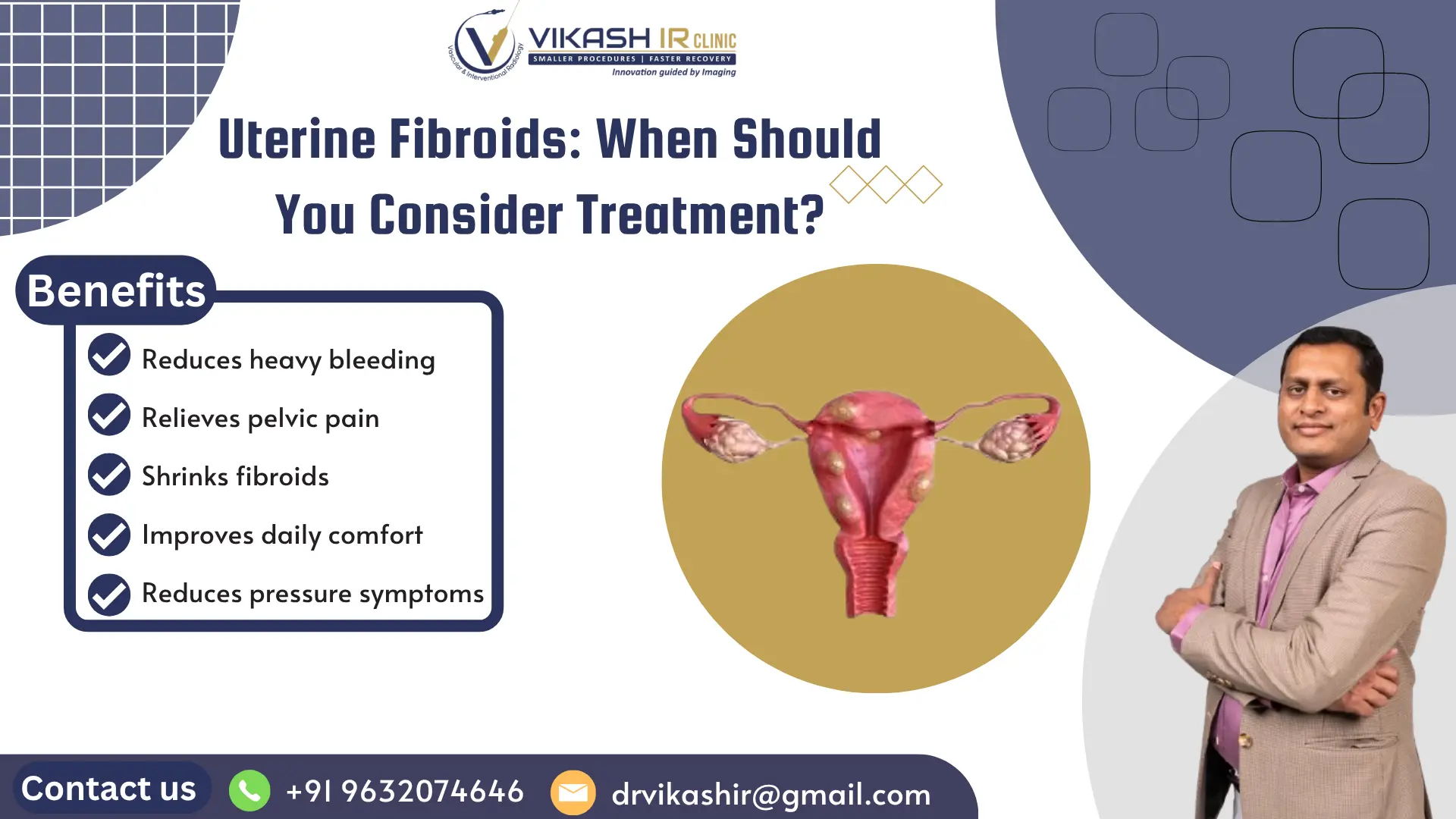
Uterine fibroids are common, non-cancerous growths that develop in or around the uterus. Some women have fibroids without any symptoms and may only discover them during a routine pelvic examination or ultrasound. Others may experience heavy menstrual bleeding, pelvic pressure, abdominal discomfort, frequent urination, painful periods, or fertility-related concerns.
The important question is not simply whether you have a fibroid, but when treatment is actually necessary. A small, symptom-free fibroid may only require monitoring, while fibroids that cause significant bleeding, pain, pressure, anemia, rapid growth, or reproductive concerns may require active management.
This is where When to Consider Uterine Fibroid Treatment becomes an important consideration. Treatment should be based on the size, number, and location of the fibroids, your symptoms, age, overall health, and future pregnancy plans. A detailed evaluation by an experienced specialist can help you understand whether observation, medication, minimally invasive treatment, or surgery is appropriate.
Symptoms, Causes and When Treatment May Be Needed
Symptoms of uterine fibroids
Not every woman with fibroids needs treatment. However, symptoms that interfere with everyday life may indicate that it is time to discuss When to Consider Uterine Fibroid Treatment with a qualified specialist.
Common symptoms include:
- Heavy or prolonged menstrual bleeding
- Bleeding between periods
- Painful menstrual cramps
- Pelvic pain or pressure
- Lower abdominal heaviness
- Lower back pain
- Pain during sexual intercourse
- Frequent urination
- Constipation or difficulty passing stools
- Abdominal enlargement or bloating
- Fatigue or weakness associated with anemia
- Difficulty conceiving in selected cases
Heavy menstrual bleeding can sometimes cause iron-deficiency anemia, leaving women tired, weak, or short of breath. Fibroids can also create pressure on the bladder or bowel depending on their size and location.
What causes uterine fibroids?
The exact cause of fibroids is not completely understood. However, hormones such as estrogen and progesterone appear to influence their growth. Genetic and familial factors may also play a role. Fibroids are particularly common during the reproductive years and may shrink after menopause as hormone levels decline.
Having a fibroid does not automatically mean that treatment is necessary. Doctors generally consider treatment when symptoms become troublesome, complications develop, or the fibroids create specific health concerns.
When should you consider treatment?
You may need to discuss When to Consider Uterine Fibroid Treatment if:
- Your periods are extremely heavy or prolonged.
- Bleeding is causing anemia.
- Pelvic pain or pressure is affecting your quality of life.
- You have significant bladder or bowel pressure.
- Symptoms continue despite medication.
- Fibroids are growing or are unusually large.
- Fibroids are suspected to contribute to fertility problems.
- Your doctor is uncertain about the nature of a uterine mass.
- You want to explore a minimally invasive alternative to major surgery.
On the other hand, women with small, asymptomatic fibroids may not need immediate intervention. Monitoring may be appropriate, particularly when symptoms are minimal and there are no concerning findings.
Diagnosis and Choosing the Right Treatment
How are fibroids diagnosed?
The first step in understanding When to Consider Uterine Fibroid Treatment is obtaining an accurate diagnosis.
A doctor may begin with a medical history and pelvic examination. Imaging is then commonly used to determine the size, number, and location of fibroids. Ultrasound is frequently used, while MRI may provide more detailed information when treatment planning requires it. Depending on the symptoms, additional investigations such as hysteroscopy or other tests may be considered.
Blood tests may also be recommended when heavy bleeding is present, particularly to check for anemia.
Why size and location matter
Fibroids can develop within the muscular wall of the uterus, project into the uterine cavity, or grow toward the outer surface. Their location can influence the symptoms they produce and which treatment options are appropriate.
For example, a relatively small fibroid projecting into the uterine cavity may cause substantial bleeding, while a larger fibroid in another location may cause pressure symptoms. Therefore, treatment decisions should never be based on size alone.
Treatment options
There is no single treatment that is best for every woman. When to Consider Uterine Fibroid Treatment should be discussed in the context of your individual symptoms and goals.
Depending on the situation, options can include:
Observation: Appropriate for some women who have small or asymptomatic fibroids.
Medication: Certain medications may help control heavy bleeding or painful periods. However, medications may manage symptoms without permanently eliminating the fibroid.
Myomectomy: A surgical procedure that removes fibroids while preserving the uterus. It may be considered for selected women, particularly when fertility goals are important.
Hysterectomy: Removal of the uterus. This permanently eliminates uterine fibroids but also eliminates the possibility of future pregnancy.
Uterine Fibroid Embolization (UFE): A minimally invasive treatment performed by an interventional radiologist. Tiny particles are delivered through the arteries supplying the fibroids, reducing their blood supply and causing them to gradually shrink.
Uterine Fibroid Embolization procedure
For appropriately selected patients, UFE can be an important part of When to Consider Uterine Fibroid Treatment, especially for women looking for a minimally invasive option.
During UFE, an interventional radiologist uses imaging guidance to place a thin catheter into the blood vessels supplying the uterus. Tiny embolic particles are then released to reduce blood flow to the fibroids. The fibroids subsequently shrink over time.
The procedure does not involve removing the uterus. However, UFE is not suitable for every patient, and pregnancy-related outcomes after UFE require individualized discussion. Treatment should therefore be selected only after appropriate imaging and specialist evaluation.
Benefits of minimally invasive fibroid treatment
For suitable patients, UFE may offer several advantages:
- No large abdominal incision
- Uterus preservation
- Treatment of multiple fibroids during one procedure
- Reduced surgical trauma
- Shorter recovery compared with many open surgical procedures
- Minimal scarring
- Reduced disruption to daily activities
ACOG notes that UFE can generally be performed as an outpatient procedure and that fibroids may continue shrinking for a year or longer following treatment.
UFE compared with surgery
| UFE | Traditional surgery |
| Minimally invasive | May require larger incisions |
| Fibroids are treated by reducing their blood supply | Fibroids may be physically removed with myomectomy |
| Uterus is preserved | Myomectomy preserves the uterus; hysterectomy does not |
| Usually shorter recovery | Recovery depends on the surgical approach |
| Can treat multiple fibroids | Surgical approach depends on number, size and location |
| Performed by an interventional radiologist | Usually performed by a gynecologic surgeon |
Neither option is automatically better for every woman. The right choice depends on the individual clinical situation, fertility plans, fibroid characteristics, and personal preferences.
Recovery after treatment
Recovery depends on the treatment selected. Following UFE, pelvic cramping, tiredness, and mild discomfort can occur during the early recovery period. Your specialist will provide individualized medication, activity, and follow-up instructions.
Fibroids generally shrink gradually rather than disappearing immediately. Symptoms such as heavy bleeding and pressure may improve over time, while imaging follow-up can help assess the response to treatment.
After any procedure, patients should follow their doctor’s instructions carefully and report unusual or severe symptoms promptly.
Choosing a Uterine Fibroid Doctor
Selecting the right Uterine Fibroid Doctor is an important part of treatment planning. Ideally, the specialist should have experience with the specific procedure being considered and should explain both minimally invasive and surgical alternatives where appropriate.
Dr Vikash Chennur is an AIIMS Gold Medalist and interventional radiologist providing minimally invasive image-guided treatments. His clinic lists Uterine Fibroid Embolization among its services, alongside thyroid nodule ablation, varicocele embolization, prostate artery embolization, varicose vein treatment, fibroadenoma treatment, liver cancer ablation, TACE, genicular artery embolization, and other interventional radiology procedures.
His practice emphasizes individualized treatment decisions and minimally invasive care.
FAQs, Conclusion and Appointment
Frequently Asked Questions
1. Do all uterine fibroids require treatment?
No. Many fibroids do not cause symptoms and may only require observation. Treatment is generally considered when fibroids cause significant bleeding, pain, pressure, anemia, fertility concerns, rapid growth, or other clinically important problems.
2. When should I see a Uterine Fibroid Doctor?
You should consider consultation if you have persistent heavy periods, pelvic pain, pressure symptoms, anemia, unexplained abdominal enlargement, or known fibroids that appear to be growing.
3. Can uterine fibroids be treated without surgery?
Yes. Depending on the fibroid’s characteristics and your overall health, minimally invasive options such as UFE may be appropriate. Other non-surgical or minimally invasive treatments may also be considered in selected cases.
4. What is Uterine Fibroid Embolization?
UFE is a minimally invasive procedure in which tiny particles are delivered through blood vessels supplying the fibroids. This reduces their blood supply and causes them to shrink gradually.
5. Does UFE remove the fibroid?
No. UFE blocks blood flow to the fibroid, causing it to shrink over time rather than surgically removing it.
6. Can fibroids affect fertility?
Fibroids can be associated with infertility or pregnancy problems in some women, but other causes of infertility are more common. A complete fertility evaluation is important before concluding that fibroids are responsible.
7. Is hysterectomy the only permanent treatment?
Hysterectomy removes the uterus and therefore eliminates uterine fibroids, but it is not the only treatment option. Myomectomy, UFE, medication, and other approaches may be appropriate depending on individual circumstances.
8. How quickly do fibroids shrink after UFE?
Fibroid shrinkage occurs gradually. ACOG notes that fibroids can continue to shrink for a year or more after UFE, while symptom improvement may occur earlier.
9. Is UFE suitable for every woman?
No. Suitability depends on factors such as fibroid size and location, symptoms, medical history, imaging findings, and reproductive goals. A specialist evaluation is necessary before deciding on treatment.
Conclusion
Understanding When to Consider Uterine Fibroid Treatment can help women avoid both unnecessary treatment and unnecessary delays. A fibroid that causes no symptoms may simply require monitoring, while persistent heavy bleeding, anemia, pelvic pressure, pain, or other significant symptoms may justify active treatment.
Modern options such as Uterine Fibroid Embolization provide selected women with a minimally invasive alternative to traditional surgery. However, treatment should always be personalized after appropriate imaging and clinical evaluation.
If you have been diagnosed with fibroids or are struggling with heavy periods, pelvic pressure, pain, or other symptoms, speaking with an experienced Uterine Fibroid Doctor can help you understand your options and decide whether treatment is appropriate.
Book Your Consultation With Dr Vikash Chennur
If you are looking for expert guidance on When to Consider Uterine Fibroid Treatment, consider a consultation with Dr Vikash Chennur | AIIMS Gold Medalist | Endovascular Interventional Radiologist.
Dr. Vikash Chennur specializes in minimally invasive interventional radiology and offers Uterine Fibroid Embolization, along with advanced treatments for thyroid nodules, varicose veins, varicocele, prostate conditions, liver tumors, fibroadenomas, and other vascular and interventional conditions.
Book an appointment to discuss your symptoms, imaging findings, treatment goals, and whether a minimally invasive fibroid treatment option may be suitable for you.