
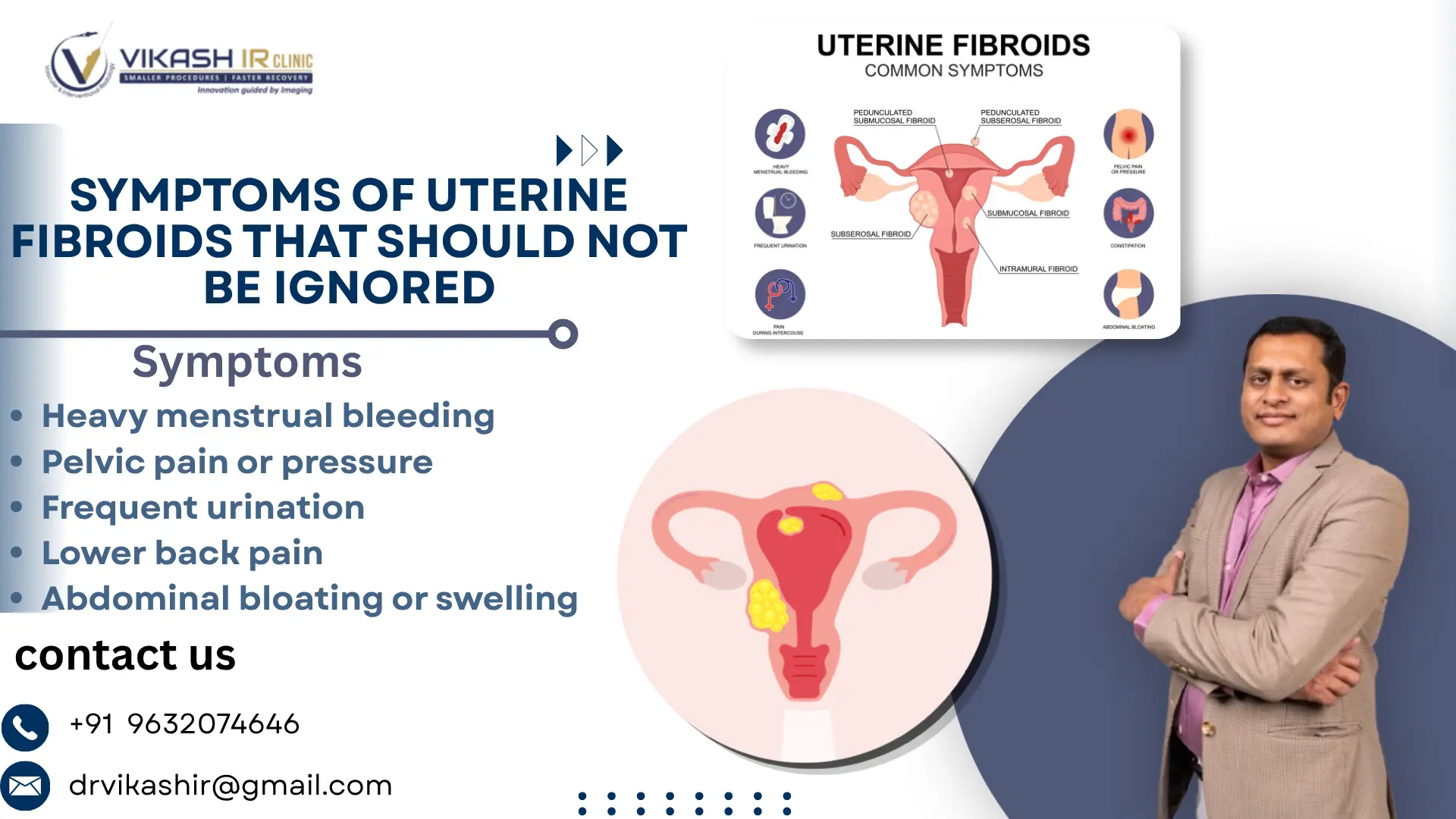
Uterine fibroids are one of the most common non-cancerous growths that develop in the uterus during a woman’s reproductive years. While some women never experience symptoms, others may suffer from heavy menstrual bleeding, pelvic pain, infertility, or pressure on nearby organs. Understanding Uterine Fibroids Symptoms is essential because early diagnosis and timely treatment can prevent complications and improve quality of life.
If you are experiencing persistent symptoms, modern treatments such as Uterine Fibroid Embolization offer an effective Non-Surgical Fibroid Treatment that preserves the uterus and helps women recover faster than traditional surgery.
Recognizing Uterine Fibroids Symptoms at an early stage can help women seek the right medical care before the condition worsens. Fibroids vary in size, number, and location. Some remain small throughout life, while others grow large enough to affect daily activities.
Many women mistakenly believe heavy periods or pelvic discomfort are normal. However, persistent Uterine Fibroids Symptoms should never be ignored because they may indicate growing fibroids requiring medical evaluation.
Fortunately, advances in Interventional Radiology have introduced Uterine Fibroid Embolization, a minimally invasive procedure that provides lasting relief without removing the uterus.
What Are Uterine Fibroids Symptoms?
Uterine Fibroids Symptoms depend on the size, number, and location of fibroids. While some women have no symptoms, others may experience significant discomfort.
Common Symptoms That Should Not Be Ignored
Heavy Menstrual Bleeding
One of the most common Uterine Fibroids Symptoms is unusually heavy or prolonged menstrual bleeding that may lead to anemia.
Pelvic Pain or Pressure
Large fibroids can create constant pressure in the lower abdomen or pelvis, making sitting, standing, or walking uncomfortable.
Frequent Urination
Fibroids pressing against the bladder reduce its capacity, causing women to urinate more often.
Constipation
Fibroids located toward the back of the uterus may compress the bowel and lead to constipation.
Pain During Intercourse
Some women experience discomfort or pain during sexual intercourse due to fibroid location.
Lower Back Pain
Growing fibroids may press on surrounding nerves, resulting in persistent lower back pain.
Enlarged Abdomen
Large fibroids may make the abdomen appear swollen or similar to pregnancy.
Difficulty Getting Pregnant
Certain fibroids can interfere with implantation or pregnancy, contributing to infertility or recurrent miscarriages.
Recognizing these Uterine Fibroids Symptoms early helps ensure timely diagnosis and treatment.
Causes and Risk Factors of Uterine Fibroids Symptoms
Although the exact cause remains unknown, several factors increase the risk of developing fibroids.
Hormonal Changes
Estrogen and progesterone stimulate fibroid growth during reproductive years.
Genetics
Women with a family history of fibroids have a higher chance of developing them.
Age
Fibroids commonly occur between the ages of 30 and 50.
Obesity
Being overweight increases estrogen levels, which may promote fibroid growth.
Lifestyle Factors
Poor diet, lack of exercise, vitamin D deficiency, and excessive red meat consumption have been linked with increased fibroid risk.
Ethnicity
Some women may develop fibroids earlier and experience larger or multiple fibroids.
Understanding these causes helps women identify potential risks while monitoring Uterine Fibroids Symptoms more carefully.
Diagnosis and Advanced Treatment Options
Persistent Uterine Fibroids Symptoms should always be evaluated by a specialist.
Diagnosis
Doctors may recommend:
- Medical history evaluation
- Pelvic examination
- Ultrasound
- MRI Scan
- Blood tests for anemia
- Hysteroscopy (when required)
Accurate diagnosis helps determine the most appropriate treatment plan.
Uterine Fibroids: Symptoms Women Often Ignore & Treatment Options
Uterine Fibroid Embolization
One of the most advanced treatments available today is Uterine Fibroid Embolization.
This minimally invasive procedure is performed by an Interventional Radiologist using image guidance. A tiny catheter is inserted through a small puncture in the wrist or groin. Tiny particles are then delivered to block the blood supply feeding the fibroids. Without blood supply, fibroids gradually shrink, relieving symptoms while preserving the uterus.
Unlike surgery, Uterine Fibroid Embolization involves no large incision and usually requires only a short hospital stay.
Other Treatment Options
- Observation for small, symptom-free fibroids
- Hormonal medications
- Pain management medicines
- Myomectomy
- Hysterectomy
- Non-Surgical Fibroid Treatment through embolization
Many women now choose Non-Surgical Fibroid Treatment because it offers effective symptom relief without removing the uterus.
Benefits, Recovery, Comparison & Why Choose Dr. Vikash Chennur
Benefits of Uterine Fibroid Embolization
Uterine Fibroid Embolization offers several advantages over conventional surgery.
- No major surgical incision
- Preserves the uterus
- Short hospital stay
- Faster recovery
- Minimal blood loss
- Lower infection risk
- Effective relief from heavy bleeding
- Reduced pelvic pain and pressure
- Quick return to normal activities
- High patient satisfaction
These benefits make it one of the preferred Non-Surgical Fibroid Treatment options for eligible women.
Recovery After Treatment
Recovery following Uterine Fibroid Embolization is generally smooth.
Most patients:
- Return home within 24 hours
- Resume light activities in a few days
- Return to work within one week
- Experience gradual symptom improvement over several weeks
- Notice fibroid shrinkage over the next few months
Following the doctor’s post-procedure instructions helps ensure the best outcome.
Uterine Fibroid Embolization vs Surgery
| Feature | Uterine Fibroid Embolization | Traditional Surgery |
| Incision | Tiny puncture | Large incision |
| Uterus Preservation | Yes | May not always be possible |
| Hospital Stay | Usually 1 day | Several days |
| Recovery | About 1 week | 4–8 weeks |
| Blood Loss | Minimal | Higher |
| Risk of Infection | Lower | Higher |
For many women, Non-Surgical Fibroid Treatment provides an excellent alternative to surgery while maintaining reproductive organs.
About Dr. Vikash Chennur
Dr. Vikash Chennur is an AIIMS Gold Medalist and one of the leading Endovascular Interventional Radiologists with extensive expertise in minimally invasive image-guided procedures.
He specializes in providing advanced, evidence-based treatments that help patients avoid major surgery while achieving excellent clinical outcomes. His patient-centered approach focuses on accurate diagnosis, personalized treatment plans, and faster recovery.
Services Offered
- Uterine Fibroid Embolization
- Non-Surgical Fibroid Treatment
- Prostatic Artery Embolization (PAE)
- Varicocele Embolization
- Thyroid Nodule Ablation
- Liver Tumor Ablation
- Varicose Vein Treatment
- Genicular artery embolization
- Dialysis Access Procedures
- Image-Guided Biopsies
- Fibroadenoma Treatment
- Oncology Interventional Radiology Treatments
Patients receive comprehensive care using the latest minimally invasive technologies designed to improve outcomes with less pain and shorter recovery.
Frequently Asked Questions (FAQs)
1. What are the first signs of uterine fibroids?
Heavy periods, pelvic pressure, abdominal bloating, frequent urination, and lower back pain are common early symptoms.
2. Are uterine fibroids cancerous?
No. The vast majority of uterine fibroids are benign (non-cancerous).
3. Can fibroids disappear naturally?
Small fibroids may shrink after menopause, but symptomatic fibroids usually require medical evaluation.
4. Who is eligible for Uterine Fibroid Embolization?
Women with symptomatic fibroids who wish to avoid surgery may be suitable candidates after specialist evaluation.
5. Is Uterine Fibroid Embolization painful?
The procedure is performed using local anesthesia and sedation. Mild cramping after treatment is normal and manageable with medication.
6. How effective is Non-Surgical Fibroid Treatment?
Most women experience significant improvement in bleeding, pain, and pressure symptoms following embolization.
7. Can I become pregnant after treatment?
Some women have successful pregnancies after embolization, but treatment decisions should be discussed with your Interventional Radiologist and gynecologist.
8. How long does recovery take?
Most patients resume normal daily activities within one week.
9. Do fibroids come back after embolization?
The treated fibroids usually shrink permanently, although new fibroids may develop in some women over time.
10. When should I see a doctor?
Consult a specialist if you experience persistent heavy bleeding, pelvic pain, pressure symptoms, or difficulty conceiving.
Conclusion
Ignoring Uterine Fibroids Symptoms can significantly affect your health, fertility, and overall quality of life. Early diagnosis allows timely treatment before complications develop. Today, advanced procedures like Uterine Fibroid Embolization provide an effective Non-Surgical Fibroid Treatment that helps women avoid major surgery while preserving the uterus and returning to normal life more quickly.
If you notice persistent Uterine Fibroids Symptoms, don’t delay seeking expert medical advice. Early intervention can provide lasting relief and improve your long-term well-being.
Book an Appointment with Dr. Vikash Chennur
If you are experiencing Uterine Fibroids Symptoms such as heavy menstrual bleeding, pelvic pain, abdominal swelling, or frequent urination, consult Dr. Vikash Chennur, AIIMS Gold Medalist and Best Endovascular Interventional Radiologist, for an accurate diagnosis and personalized treatment plan.
With expertise in Uterine Fibroid Embolization and advanced Non-Surgical Fibroid Treatment, Dr. Vikash Chennur offers safe, minimally invasive solutions that help women achieve faster recovery, preserve the uterus, and regain a better quality of life. Book your consultation today to explore the best treatment option for your condition.